
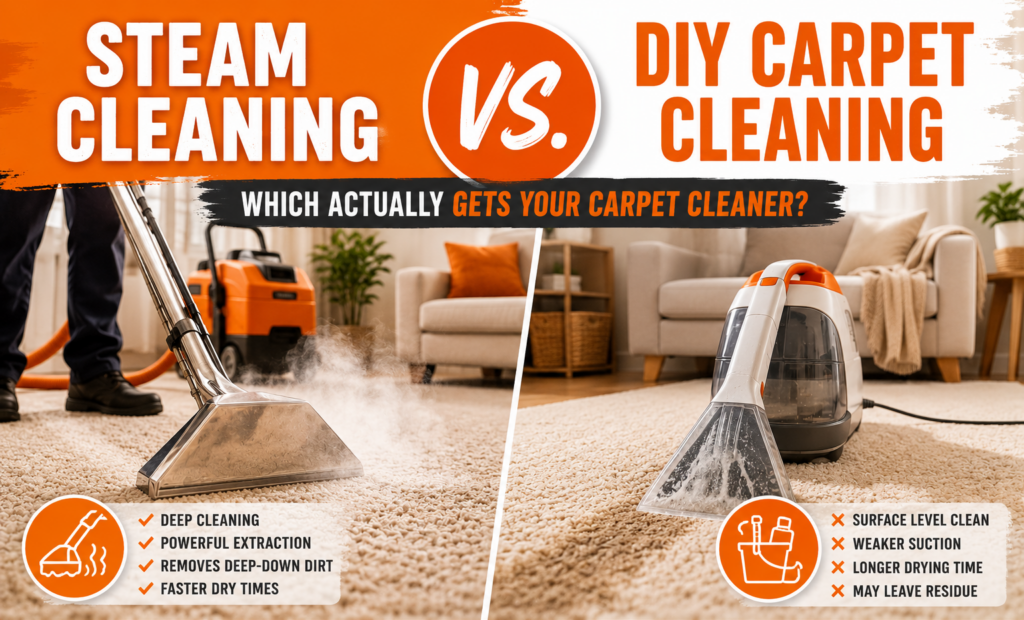

You must have been in a situation where you are standing in the hardware store aisle, and a rental carpet cleaner looks like an easy win to purchase for your DIY cleaning efforts.
Well, it’s a fraction of the cost of hiring someone; you can run it whenever you want, and how different can it really be from what a professional uses, right? That question is worth taking seriously, because the honest answer is: it depends on what “clean” needs to mean for your carpet.
A quick pass with a rental machine and a professional hot-water extraction service can both leave carpet looking presentable. But “looking clean” and “actually clean” aren’t always the same thing.
DIY carpet cleaning is a legitimate option for light maintenance and small spills. Professional cleaning earns its cost when the job involves embedded soil, stubborn stains, pet contamination, or carpet that hasn’t had a real deep clean in years.
The rest of this article breaks down why, so you can figure out which situation you’re actually in.
TL; DR
- DIY carpet cleaning works well for fresh spills, light soil, and routine maintenance between professional deep cleanings.
- Professional steam cleaning uses hot-water extraction to remove deeper soil, stubborn stains, odors, and buildup more effectively.
- DIY machines can leave excess moisture or cleaning solution behind when extraction and technique are inadequate.
- Different stains require different treatments, so using one DIY cleaner for every stain may produce disappointing results.
- Professional cleaning saves homeowners the time, effort, equipment rental, and repeated cleaning often involved with DIY carpet cleaning.
- For heavily soiled carpets, pet odors, stubborn stains, or large areas, professional carpet cleaning is usually the better choice.
- Citrus-A-Peel provides professional carpet cleaning services throughout Toms River, Summit, Westfield, Rumson, Fair Haven, Spring Lake, Belmar, and Wall.
Steam Cleaning Vs. DIY Carpet Cleaning At A Glance
Before getting into the details, here’s a side-by-side look at how the two approaches typically compare.
| Factor | DIY Carpet Cleaning | Professional Steam Cleaning |
|---|---|---|
| Upfront cost | Lower | Higher |
| Equipment | Consumer-grade rental or home machine | Commercial-grade hot-water extraction equipment |
| Cleaning depth | Surface to moderate | Deeper, reaches embedded soil |
| Extraction power | Limited suction | Significantly stronger suction |
| Stain treatment | Generic, one-size-fits-all solution | Stain-specific pre-treatment |
| Large areas | Time-consuming, physically demanding | Handled efficiently |
| Drying time | Often longer due to over-wetting | Typically shorter due to better extraction |
| Effort required | High (you do all the work) | Low (technician handles the process) |
| Risk of over-wetting | Higher | Lower |
| Best use case | Small spills, light soil, routine upkeep | Deep cleaning, stains, odors, heavy traffic |
As you can see, neither option is automatically the “right” one. A rental machine used correctly on a light stain can do a perfectly good job. A professional service used on carpet that just needs a quick touch-up might be more than the situation calls for.
The goal is matching the tool to the problem. Which begs the question…
What Is “Steam Cleaning” for Carpets, Really?
The term “steam cleaning” is common, but it’s a bit misleading.
Professional carpet cleaners aren’t blasting actual steam into your carpet fibers. What’s actually happening in most professional and consumer machines alike is hot-water extraction, which involves heated water combined with a cleaning solution appropriate for the carpet type, applied to loosen soil that’s worked its way into the fibers. That soil becomes suspended in the water and solution.
The equipment then extracts the dirty water from the carpet, along with the loosened debris.
Why Extraction Matters As Much As Cleaning
It’s easy to assume that applying hot water and cleaning solution is the important part, and pulling it back out is just cleanup. In reality, extraction is doing a lot of the actual work. If dirty water, suspended soil, and cleaning solution aren’t removed effectively, they don’t just disappear. They sit in the carpet and padding, which affects how the carpet looks, how it smells, and how long it takes to dry.
A cleaning process is only as good as its ability to remove what it just loosened up, not just what it applied. So…
How DIY Carpet Cleaning Works
Here’s how.
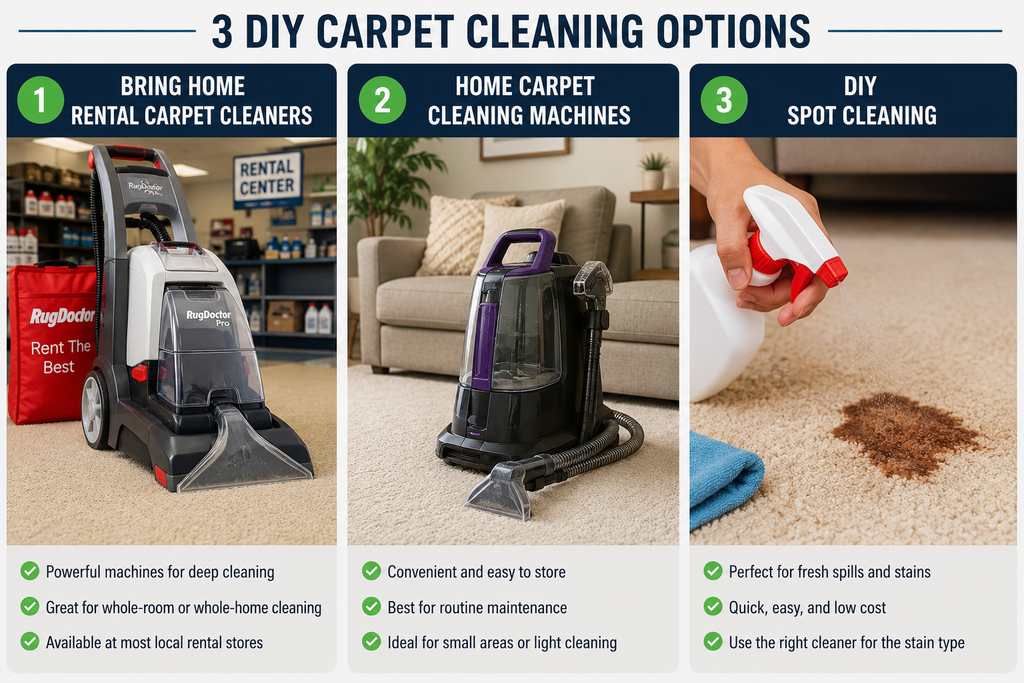
1. Bring Home Rental Carpet Cleaners
Rental units from hardware or grocery stores use the same hot-water extraction concept as professional equipment, just scaled down. They apply water and solution, then attempt to extract it with onboard suction.
2. Home Carpet Cleaning Machines
Consumer-owned machines work similarly to rentals but are typically lighter-duty, designed for occasional use on smaller areas rather than whole-house deep cleaning.
3. DIY Spot Cleaning
This covers blotting, spot-treatment sprays, and manual scrubbing for isolated spills or marks, without the use of a full extraction machine.
None of these methods are inherently ineffective. How well they work depends heavily on the specific machine, the condition of the carpet, the technique used, and the type of problem being treated.
Although…
Where DIY Carpet Cleaning Falls Short
1. Limited Extraction Power
Rental and consumer machines generally have less suction power than commercial equipment. Since extraction is central to getting carpet genuinely clean rather than just damp and soapy, weaker suction means more residual moisture, solution, and loosened soil are left behind after a pass or two.
2. Over-Wetting The Carpet
Because DIY machines don’t extract as thoroughly, it’s common to compensate by applying more water and solution to try to get a better result. This tends to backfire. Excess moisture that isn’t fully extracted has to evaporate on its own, which extends drying time and can create a damp environment in the carpet and padding for longer than is ideal.
3. Cleaning-Solution Residue
More detergent doesn’t mean more clean. If cleaning solution isn’t fully extracted, it stays in the carpet fibers. Residue can actually attract new soil faster, since dirt and dust cling more easily to sticky detergent buildup than to clean fiber.
4. One Cleaner Doesn’t Treat Every Stain
Coffee, grease, food spills, pet urine, and general biological contamination don’t respond the same way to a single all-purpose solution. Older, set-in stains are often more stubborn than fresh ones because they’ve had time to bond with the fiber. A generic cleaning pass may lighten a stain without fully resolving it, especially for grease-based or protein-based marks that need a different chemistry than a basic surface stain.
5. DIY Takes More Time Than It Looks
The machine itself is only part of the time investment. There’s picking up and returning the rental, transporting it, moving furniture out of the way, pre-treating problem spots, doing the actual cleaning pass (often more than once), and then waiting through a longer drying period.
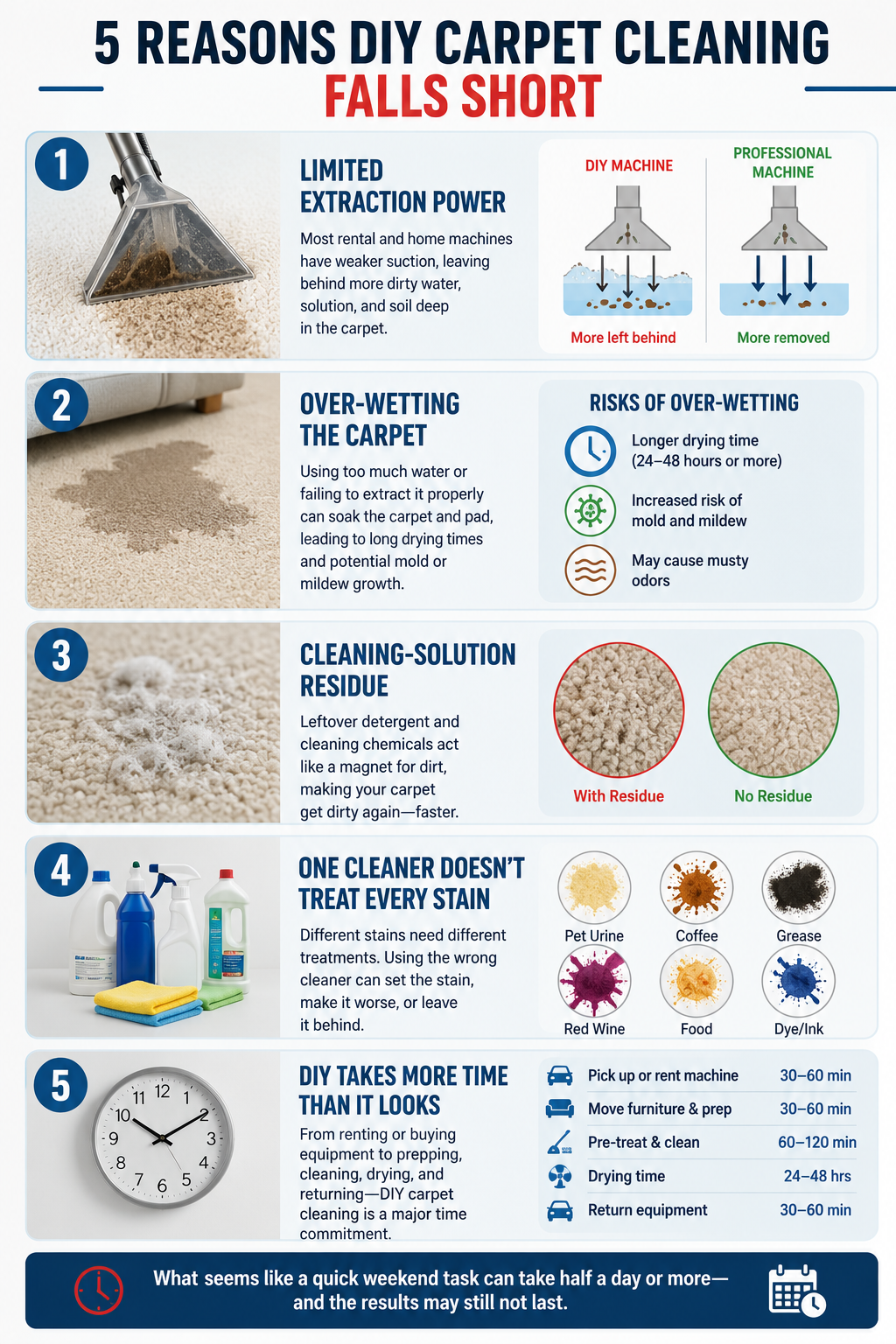
None of these steps are dramatic on their own, but they add up to a longer process than people usually expect when they picture “just running the machine over the carpet.”
So…
What Does Professional Steam Cleaning Do Differently?
Professional carpet cleaning isn’t simply a bigger version of a rental machine. It’s a structured process, and each step exists for a reason.
1. Carpet Inspection
Before any cleaning starts, a technician looks at the carpet type, fiber condition, and problem areas. This affects which solutions and techniques are appropriate, since not every carpet responds the same way to every product.
2. Pre-Treatment
Problem areas, higher-traffic zones, and visible stains are treated before the main cleaning pass. Pre-treatment helps loosen soil and address specific issues rather than relying on the main cleaning solution to do everything at once.
3. Hot-Water Extraction
Heated water and appropriate cleaning solution are applied through commercial-grade equipment, which is generally built to work more effectively through carpet fiber and padding than consumer units.
4. Moisture Extraction
This is where professional equipment tends to show its biggest advantage. Stronger suction removes more of the water, suspended soil, and solution from the carpet, which directly affects both how clean the carpet ends up and how long it takes to dry.
5. Targeted Stain And Odor Treatment
Rather than treating every mark the same way, specific stains and odor sources, including pet-related contamination, can be addressed with treatments suited to that particular issue.
6. Final Inspection
A last check confirms the carpet has been treated appropriately and flags any areas that may need additional attention or that may not fully resolve, which does happen with some older or set-in stains.
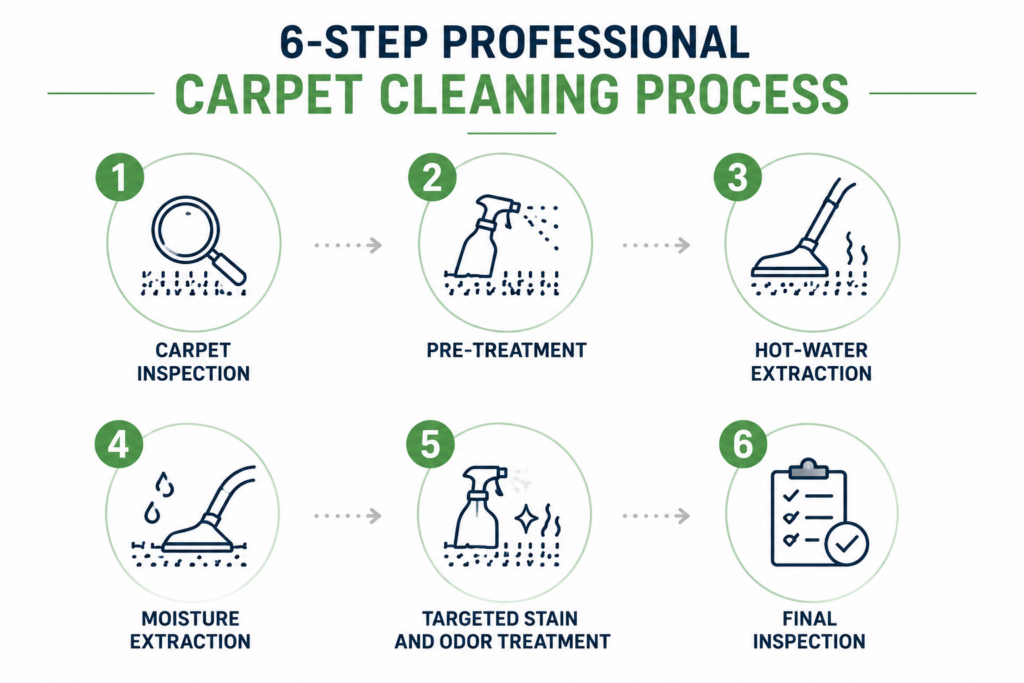
This process is designed around the idea that cleaning is a sequence, not a single step. Skipping inspection or pre-treatment, or relying on weaker extraction, is part of why DIY results and professional results can look noticeably different even when similar solutions are used.
So, which one to choose really?
DIY Vs. Professional Carpet Cleaning: Which Gets Better Results?
The better option depends on what you’re trying to accomplish.
DIY Is Usually Enough When…
- You’re dealing with a fresh, small spill.
- The carpet is only lightly soiled.
- You’re cleaning a small, contained area.
- You’re doing routine maintenance between deeper cleanings.
- You’re following a method your carpet manufacturer specifically approves.
Professional Cleaning Is Better When…
- The carpet is heavily soiled or hasn’t been deep-cleaned in a long time.
- You’re dealing with high-traffic areas that show wear or discoloration.
- Stains have persisted through one or more DIY attempts.
- Pet urine or biological contamination is involved.
- Odors persist even after cleaning.
- You need to cover a large area efficiently.
- Soil has become embedded deep in the fibers, not just sitting on the surface.
If a quick DIY pass keeps your carpet looking decent between deeper cleanings, that’s exactly what it’s good for. If you’ve already tried DIY on a stubborn problem and it didn’t fully resolve, that’s usually a sign the situation calls for stronger extraction and more targeted treatment by a professional service.
But Is DIY Carpet Cleaning Actually Cheaper?
On the surface, yes. Here’s a fuller picture of what factors into the real cost of each option.
Upfront DIY Costs
- Renting or buying a machine.
- Cleaning solution.
- Spot-treatment products for specific stains.
Hidden DIY Costs
- Your own time, spread across pickup, cleaning, and return.
- Transportation to and from the rental location.
- Moving furniture before and after.
- Repeating the process if the first pass doesn’t fully work.
- Extended drying time, which can affect how soon you can use the room.
- Risk of over-wetting or improper technique affecting carpet condition.
DIY generally has the lower upfront price, and for small or routine jobs, that lower price reflects a genuinely appropriate level of effort for the problem. Professional cleaning may provide better value when the goal is a deeper clean achieved with less personal time, effort, and trial and error.
And When Should You DIY Your Carpet?
DIY carpet cleaning makes sense when:
- The soil is light rather than embedded.
- The problem is limited to a small area.
- You’re performing routine maintenance rather than solving a stubborn issue.
- You have access to a decent machine and know how to use it properly.
- You have enough time to do the job, including drying time.
- Your carpet manufacturer’s care instructions permit the cleaning method you’re planning to use.
And When Should You Hire A Professional Carpet Cleaner?
Professional cleaning is worth considering when you’re dealing with stubborn or set-in stains, pet urine or lingering odors, heavy foot traffic areas that look worn or discolored, or soil that has worked its way deep into the carpet fibers rather than sitting on the surface.
It’s also a reasonable call for larger areas where DIY would take significant time and effort, carpet that hasn’t been deep-cleaned professionally in a long while, or situations where a DIY attempt didn’t fully resolve the issue.
If your carpet is newer or higher-value, professional treatment also reduces the risk that comes with experimenting on it yourself.
What About Professional Carpet Cleaning In Toms River, NJ, And Nearby Communities?
For homeowners looking for professional carpet cleaning in Toms River, Summit, Westfield, Rumson, Fair Haven, Spring Lake, Belmar, Wall, or Middletown, the decision often comes down to the condition of the carpet and the type of cleaning it needs. A small fresh spill may be manageable with DIY spot cleaning, while heavily soiled carpets, stubborn stains, pet odors, and high-traffic areas can benefit from professional hot-water extraction.
Citrus-A-Peel provides professional carpet and upholstery cleaning for homes throughout these New Jersey communities. Whether you’re maintaining your carpets between deep cleanings or dealing with years of embedded dirt, a professional cleaning can help restore the carpet’s appearance without the time and equipment required for a DIY project.
The Verdict
DIY carpet cleaning has a real place in carpet care. It’s a reasonable, lower-cost option for small spills, light soil, and the routine maintenance that keeps carpet looking decent between deeper cleanings. Where it tends to fall short is with embedded soil, stubborn or set-in stains, pet contamination, persistent odors, and larger areas that need more consistent extraction than consumer equipment typically provides.
Professional hot-water extraction addresses those situations more effectively because of what happens at every stage, from inspection and pre-treatment to stronger extraction and stain-specific treatment. The right choice ultimately comes down to your carpet’s condition, the type of problem you’re dealing with, how much area needs attention, and the result you’re actually trying to achieve.
Need Help Deciding?
If your carpet still looks dirty after DIY cleaning, or you’re dealing with stubborn stains, odors, or heavily trafficked areas, Citrus-A-Peel can assess the carpet and recommend an appropriate cleaning approach.
Get a Carpet Cleaning Estimate Today!
Frequently Asked Questions
Is steam cleaning better than DIY carpet cleaning?
For light maintenance, DIY can work fine. For deeper soil, stains, or odors, professional hot-water extraction generally performs better due to stronger extraction and stain-specific treatment.
Is professional carpet cleaning worth the money?
It depends on the job. For heavily soiled carpet, pet contamination, or persistent stains, the deeper clean and reduced personal effort often justify the cost.
Can a rental carpet cleaner clean as well as a professional machine?
Rental machines can handle light cleaning reasonably well, but they typically have less extraction power than commercial equipment, which affects both cleaning depth and drying time.
How long does carpet take to dry after steam cleaning?
Drying time varies based on humidity, airflow, and how much moisture was extracted. Better extraction generally means less residual moisture and a shorter drying period.
Does DIY carpet cleaning damage carpet?
Not inherently, but over-wetting, excessive detergent, or improper technique can lead to longer drying times, residue buildup, or other issues if not done carefully.
Can steam cleaning remove pet odors?
Hot-water extraction with targeted odor treatment can significantly improve pet-related odors, though results depend on how deeply the contamination has set into the carpet and padding.
Should I rent a carpet cleaner or hire a professional?
For small, fresh spills or routine upkeep, renting is often sufficient. For stubborn stains, odors, heavy traffic wear, or large areas, a professional is typically the more effective choice.
How often should carpets be professionally cleaned?
This varies by household, but homes with pets, children, or heavy foot traffic generally benefit from more frequent professional cleaning than lightly used spaces.