
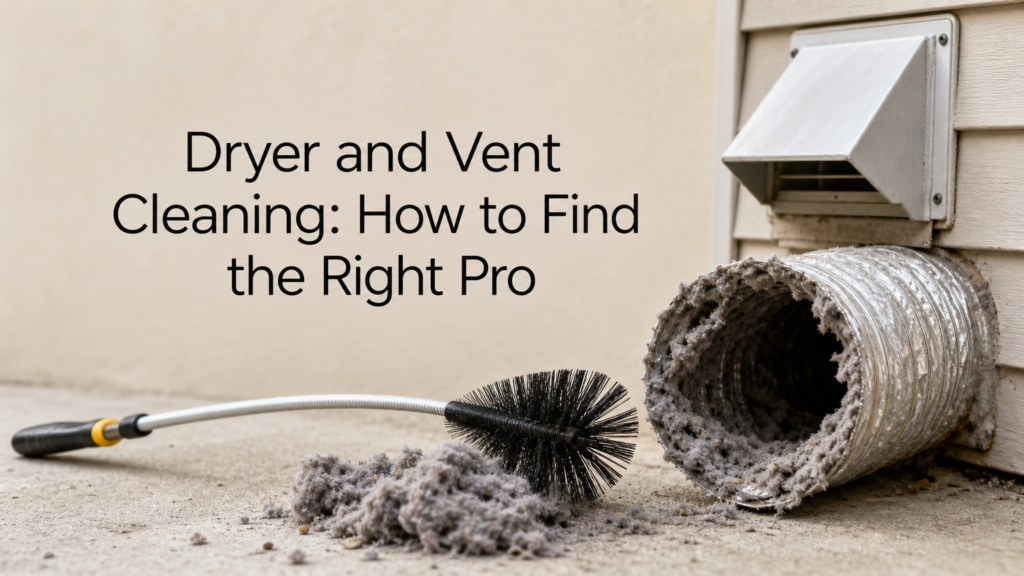

It’s 2026, and in these times, if your dryer takes two cycles to do one load of laundry, or the top of the machine feels hot to the touch, you’ve definitely got a lint problem that’s bigger than the trap catches and can be solved easily.
Dryer and vent cleaning isn’t a nice-to-have maintenance task. In fact, it’s a fire prevention measure. The National Fire Protection Association ties thousands of home fires each year to clogged dryer vents, and most of those start in homes where nobody thought twice about it.
This guide answers the question you’re actually asking: how do you find a professional dryer vent cleaning service you can trust, and what should it cost? You’ll learn what separates a real vent-cleaning specialist from someone who just runs a shop vac near the outside cap, what fair pricing looks like in New Jersey, and which questions to ask before you book anyone.
We’ll also walk through warning signs that mean you need service now, not next season, and how often a typical household should schedule it. By the end, you’ll know exactly what to look for, whether you’re comparing quotes or calling a team like ours here at Citrus-A-Peel.
TL; DR
- Clogged dryer vents trigger thousands of home fires every year and spike your electric bills by slashing drying efficiency.
- Clothes taking over an hour or a burning smell means trapped lint has restricted exhaust airflow and needs urgent attention.
- Basic brush kits work for short ducts, but long runs and roof vents require professional motorized brushes and airflow meters.
- Expect standard cleaning to cost between $100 and $225, with reputable technicians always testing airflow before and after the job.
Why Professional Dryer Vent Cleaning Matters
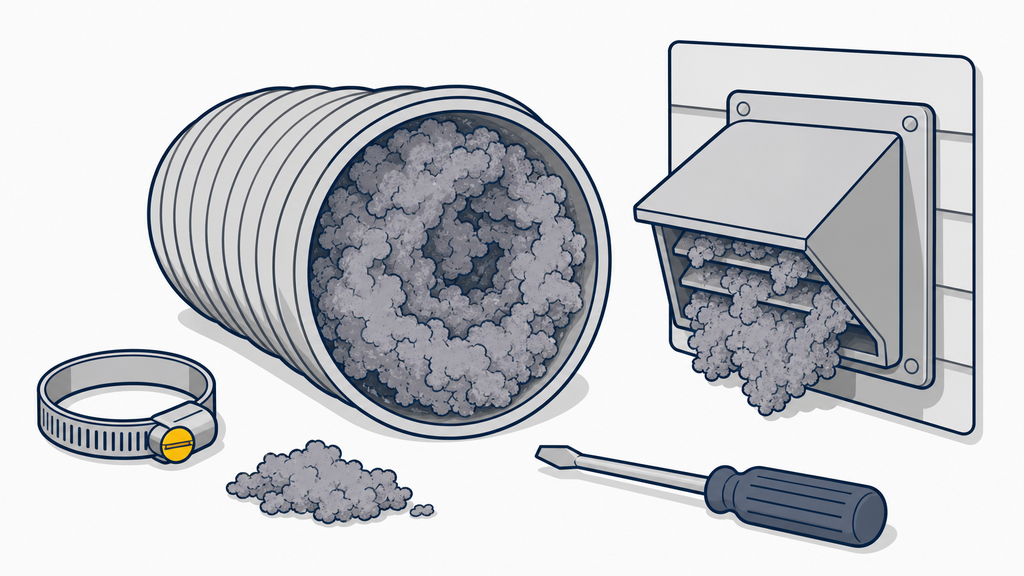
Every load of laundry pushes moist, lint-heavy air through a duct that runs from the back of your dryer to an exterior vent cap. When that path narrows with trapped lint, your dryer has to work harder, run hotter, and push exhaust against more resistance. Clogged dryer vents are the leading cause of dryer fires in the US, and the risk climbs every season the buildup goes untouched, which is why preventing dryer fires starts with clearing that duct.
The fire risk is real, not theoretical
According to the U.S. Fire Administration, dryers and washing machines account for thousands of home fires annually, and failure to clean them is the single most common factor cited. Lint is combustible. A dryer’s heating element sits inches away from it, and once airflow is restricted, heat has nowhere to go but back into the machine. That’s how a five-minute maintenance gap turns into an insurance claim.
A dryer vent packed with lint isn’t a minor inconvenience, it’s kindling sitting next to a heat source.
It’s also costing you money right now
Beyond the fire angle, a restricted vent forces your dryer to run longer cycles to get clothes dry. The U.S. Department of Energy notes that a clogged vent can cut a dryer’s efficiency by as much as 30 percent, which shows up directly on your electric bill. Longer, hotter cycles also wear down the drum bearings, belts, and heating elements faster, shortening the life of an appliance that typically should last 10 to 13 years.
And it affects your home’s air quality
A blocked vent doesn’t just slow drying, it can push humid air and lint particles back into your laundry room instead of outside. That extra moisture feeds mold growth in wall cavities and creates a musty smell that lingers no matter how often you run a fan. For households with kids or pets shedding hair and dander into the wash, that recirculated lint adds another layer of household dust you’re breathing daily.
Here’s how the risks stack up when a vent goes uncleaned:
| Consequence | What happens | Typical timeline |
|---|---|---|
| Fire risk | Lint ignites near heating element | Increases after 1+ year of neglect |
| Higher energy bills | Dryer runs 2x longer per load | Noticeable within months |
| Appliance wear | Belts, bearings, elements overheat | Shortens lifespan by years |
| Indoor air quality | Moisture and lint recirculate indoors | Mold risk grows seasonally |
That combination, fire hazard, wasted energy, and a machine that dies early, is exactly why a dryer vent cleaning service pays for itself. It’s a 30-to-60 minute job that most homeowners never think about until the dryer stops working properly or, worse, until something starts smelling like it’s burning.
Step 1. Spot The Signs Your Vent Needs Cleaning
Your dryer usually tells you something’s wrong long before it becomes dangerous. Longer drying times are the first clue: if towels that used to dry in 40 minutes now take 70, lint buildup is choking the airflow. Watch for a burning smell, a hot dryer exterior, or clothes that come out warm but still damp. These aren’t quirks of an aging machine, they’re symptoms of a blocked exhaust path.
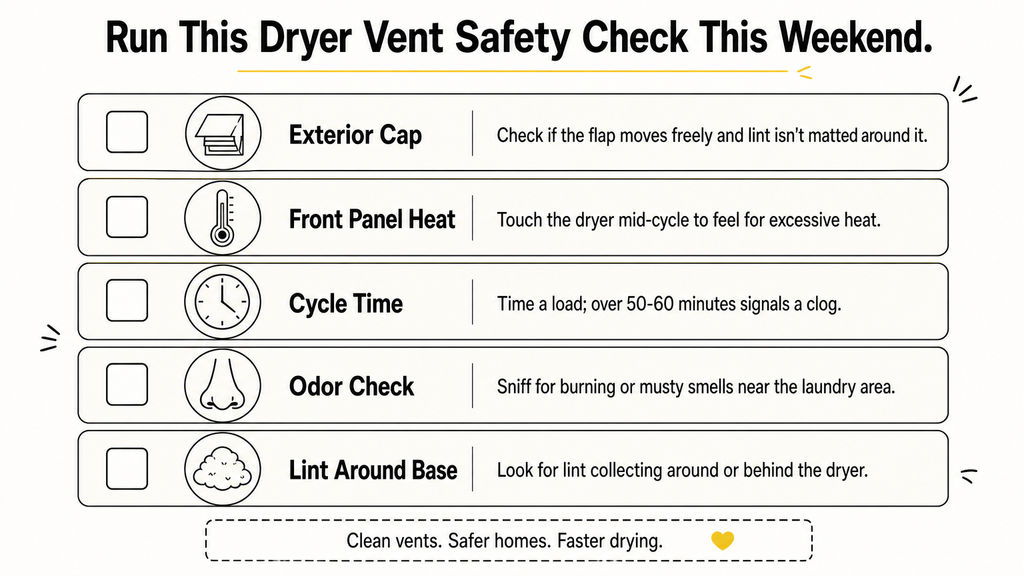
The checklist to run this weekend
Grab five minutes and walk through this before deciding whether to call anyone:
- Step outside and check the exterior vent cap. If the flap barely moves or lint is visibly matted around it, air isn’t escaping.
- Touch the dryer’s front panel mid-cycle. Excessive heat means exhaust isn’t clearing properly.
- Note how long a normal load takes. Anything beyond 50-60 minutes for a full load is a red flag.
- Sniff for a burning or musty odor near the laundry area.
- Look for lint accumulating around the dryer’s base or behind the machine.
If your dryer smells like it’s burning, stop using it and call a professional the same day, not next week.
One sign matters more than the rest
Every item on that checklist is worth noting, but a burning smell overrides all of them. That specific symptom means lint has likely reached the heating element, and running another cycle risks ignition.
Other signs like slow drying or a hot exterior mean you should schedule service soon, within the next week or two, rather than treat it as an emergency. Households with pets or long duct runs (anything over 25 feet) should check these signs more often, since hair and distance both accelerate buildup.
Step 2. Decide Between DIY And A Professional
Once you’ve run through the warning signs, you’ll land at a fork: grab a vent-cleaning kit yourself, or call in a professional dryer vent cleaning crew. The right answer depends on your duct length, how long it’s been since the last cleaning, and whether you’re comfortable working near your roofline or crawl space.
What DIY can actually handle
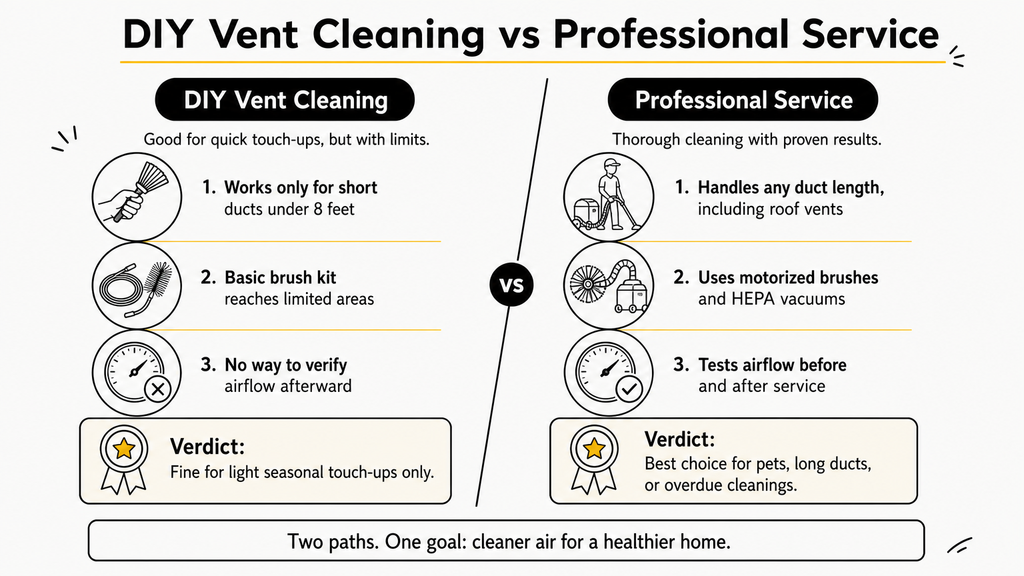
Homeowners with a short, straight duct run (under 8 feet with no bends) can often manage basic maintenance with a brush kit from a hardware store. This works fine as a quick refresh between professional visits, but it rarely reaches lint packed into elbows, transitions, or the exterior cap. DIY vent cleaning kits also can’t measure airflow, so you’re guessing whether the job actually solved the problem.
When you need a professional instead
Longer runs, roof-mounted vents, second-floor laundry rooms, or any duct you haven’t cleaned in over a year all call for a pro. Professionals use motorized brushes and high-powered vacuums rated for the full duct length, plus airflow meters that confirm the fix worked instead of just looking cleaner.
A brush kit can clean what you can reach, but only a professional can confirm the air is actually moving again.
| Factor | DIY | Professional |
|---|---|---|
| Duct length | Under 8 ft, no bends | Any length, including roof vents |
| Tools | Basic brush kit | Motorized brush, HEPA vacuum, airflow meter |
| Verification | None | Airflow tested before/after |
| Best for | Light seasonal touch-up | Homes with pets, long ducts, or 1+ year since last service |
If you’re unsure which category you fall into, treat it as a professional job. The cost of a missed clog far outweighs the price of a service call.
Step 3. Find And Vet A Local Dryer Vent Cleaning Pro
Once you’ve decided to hire out the job, don’t just grab the first name on a search results page. A local company (such as Citrus-A-Peel) with years of vent cleaning experience in your area knows the difference between a ranch-style home with a short run and a Jersey Shore beach house with a roof-mounted vent buried under twenty feet of ductwork. Local experience matters more than a national franchise’s marketing budget.
What to check before you call
Run through this list while you’re comparing providers:
- Licensing and insurance: ask directly, and get it in writing if the company hesitates.
- Equipment used: motorized brushes and HEPA vacuums beat a simple shop vac every time.
- Reviews with specifics: look for mentions of lint removal, airflow testing, or before/after photos, not just generic five-star praise.
- Response time: a company that can’t schedule within a week isn’t built for emergency calls.
- Written estimates: any tech unwilling to quote a price before starting work is a red flag.
A trustworthy vent-cleaning pro will show you the lint they removed, not just tell you the job is done.
Questions worth asking on the phone
Before booking, ask how they measure success. A real specialist will explain airflow testing before and after the job, not just describe brushing out visible lint. Ask whether they inspect the exterior cap and the full duct run, including any elbows or transitions hidden in walls. At Citrus-A-Peel, we walk every customer through exactly what we found and what we cleared, because a vague explanation isn’t good enough when fire risk is on the line.
If a company can’t answer these questions clearly, keep calling until you find one that can.
Step 4. Compare Costs And Book The Service
Pricing for dryer vent cleaning cost varies based on duct length, vent location, and whether the job includes the dryer’s interior components. Across New Jersey, most single-family homes fall in a predictable range, but roof-mounted vents or second-floor laundry rooms push the price higher because of the extra time and equipment involved.
What you should expect to pay
Here’s a general breakdown so you can spot a fair quote versus an inflated one:
| Job type | Typical price range | Why it varies |
|---|---|---|
| Standard single-story vent | $100-$150 | Short, straight duct run |
| Two-story or longer duct run | $150-$225 | More footage, possible bends |
| Roof-mounted vent | $175-$275 | Ladder access, extra labor time |
| Add-on dryer interior cleaning | +$30-$60 | Removes lint packed behind the drum |
Cheap quotes that skip airflow testing usually cost more later in repairs or missed fire hazards.
Getting three quotes before booking isn’t overkill, it’s how you learn what’s standard in your area. Watch for prices that seem too low; that often means the tech is skipping the exterior cap or not testing airflow afterward.
Booking the job
Once you’ve picked a provider, confirm a few details before the appointment:
- Ask for a written estimate that lists what’s included, not just a flat number.
- Confirm whether they test airflow before and after, and ask them to show you the results.
- Check that the quote includes clearing the exterior cap, not just the interior duct.
- Get an appointment window in writing, especially if you’re dealing with a burning smell and need same-week service.
Steady communication before the technician arrives is a good sign you’re dealing with a professional operation rather than a one-off contractor.
Keeping Your Dryer Safe Year-Round
A clean vent isn’t a one-time fix, it’s a habit. Once you’ve had a professional clear the buildup and confirm airflow, mark your calendar for a follow-up in 12 months, or sooner if you’ve got pets, long duct runs, or a household running multiple loads a day. Yearly dryer vent cleaning costs far less than a fire, an energy bill spike, or a dryer that dies five years early.
Between appointments, keep cleaning the lint trap after every load and glance at the exterior cap when you’re outside doing yard work. If you notice slower drying times or that burning smell creeping back, don’t wait for your scheduled visit. Small warning signs deserve quick attention, not a spot on next month’s to-do list.
If you’re in Ocean, Monmouth, Middlesex, or Union County and it’s time for your dryer vent to get a real inspection, not just a quick brush-out, book air duct and dryer vent cleaning with our team at Citrus-A-Peel by filling out this form, and we’ll get you on the schedule.
Frequently Asked Questions
How much does it usually cost to clean out a dryer vent?
Professional dryer vent cleaning typically costs $100–$200, depending on vent length, accessibility, buildup, and whether additional repairs or services are needed.
Can I clean a dryer vent myself?
Yes, homeowners can handle basic dryer vent cleaning with a suitable vent-cleaning brush and vacuum. However, long, blocked, or difficult-to-access ducts are better handled by a professional.
Do dryer ducts really need to be cleaned?
Yes. Lint and debris can accumulate inside dryer ducts, restricting airflow, increasing drying times, and potentially creating a fire hazard. Regular cleaning helps maintain safe, efficient dryer operation.