

It’s a good Sunday morning, and you decide to wipe down the shelf. But by Wednesday, there is a fresh gray film on it. 🙁
You glance at the vent cover, run a finger across it, and it comes back dusty too. Naturally, you start wondering what is lurking in the ducts.
As soon as you have a look, you wonder: Do I really need to wait to clean the air ducts? Or should I be cleaning them now?
Well, here is the calmer answer.
The real signs you need air duct cleaning are narrow: visible mold growth inside the ducts, pests living in them, or so much dust and debris that it clogs them or blows out of the registers into your rooms. A little dust, a stuffy week, or a stray sneeze is not on that list.
Well, no worries, as this blog covers everything you need to know about when to actually think of cleaning your air ducts.
Below is how to tell the difference, how to look for it yourself, and what to do before you pay anyone.
TL;DR
- Clear signs are visible mold inside the ducts, a pest infestation, or heavy debris clogging ducts or blowing out of vents.
- A light layer of dust in ducts and on furniture is normal and not a reason to book a cleaning.
- Check your vents yourself with a flashlight, and have anything that looks like mold confirmed by an expert.
- Fix moisture problems first, because mold in the ducts usually comes back where water keeps getting in.
What Are The Real Signs Your Air Ducts Need Cleaning?
The EPA names three situations where cleaning may be warranted.
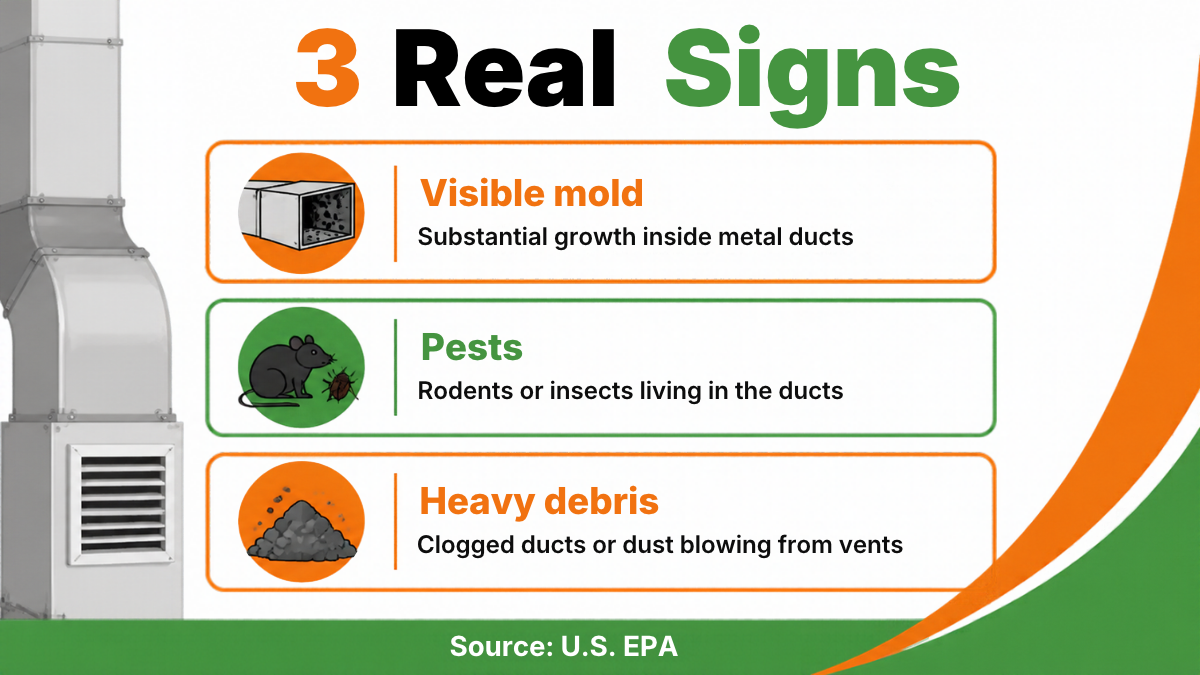
- The first is substantial visible mold growth inside hard-surface ducts, such as sheet metal.
- The second is a vermin infestation, meaning rodents or insects living in the ductwork.
- The third is ducts clogged with excessive dust and debris, or particles actually being released into the home from your supply registers.
Outside those three, the agency’s position is that cleaning is done only as needed, not on a calendar.
Industry advice adds a practical test. NADCA, the trade association for duct cleaners, tells homeowners to look at both supply and return vents, and says that if they are visibly dirty inside and outside, the ducts need cleaning.
Keep in mind that it is a group that promotes professional cleaning, so treat that as a prompt to look closer rather than as a verdict.
How Can You Check Your Vents Yourself?
You can learn a lot in ten minutes, and it costs nothing. Our guide on how often ducts need cleaning suggests a yearly look, and this is how to do it well.
- Switch the system off, then lift or unscrew a few supply registers (the vents that blow air out) and the return grilles (the larger ones that pull air in).
- Shine a flashlight inside and look at the metal, not just the cover. You want to see whether there is a heavy coating of dust and debris, droppings, nesting material, or signs of mold.
- Check around the furnace or air handler, because that is where water problems tend to show up.
- Take a photo of anything odd, so you can show it to a professional rather than describe it.
A thin, dry film of dust is normal. A heavy, matted coating, or anything that looks like droppings or chewed material, is worth a call.
What Does Mold In Air Ducts Look And Smell Like?
Mold usually announces itself with a musty smell, according to NADCA. It can also show up as visible growth on registers, grilles, or the duct surfaces just behind them. Because mold is easy to miss, the same advice suggests checking the places moisture likes to hide, such as basements, attics, under sinks, and around the HVAC unit.
Here is the catch: plenty of things look like mold and aren’t. The EPA says a positive identification can be made only by an expert, and sometimes needs laboratory analysis. So if a technician says your ducts are moldy, ask to be shown the mold. That is not rude, and it is exactly the right instinct.
Humid summers matter here, because damp air can condense inside ducts. Our post on coastal humidity shows how heavy shore air affects a home, and the same moisture can show up in your ductwork.
Does Dust On Your Furniture Mean Dirty Ducts?
Not by itself.
The EPA says a light amount of household dust in air ducts is normal, and that dust on the outside of a register does not mean the ducts hold heavy deposits of debris. Dust settles on every surface in a home, whether or not the ducts are dirty.
There is one version worth noticing. If dust returns very quickly after you wipe, and you can see debris being pushed out of the supply registers when the system starts, that matches the third condition above.
Check the vents before you decide, because fast-returning dust alone does not prove the ducts are the source.
Do Allergies Or High Energy Bills Mean Your Ducts Need Cleaning?
Many lists say yes, and the evidence is weaker than the lists suggest.
The EPA says duct cleaning has never been shown to actually prevent health problems, and that everyday activities such as cooking, cleaning, and moving around can cause greater exposure to contaminants than dirty air ducts.
If your allergies flare, a filter, pets, pollen, or damp air are all likelier suspects than the ducts. A doctor is the right first call for symptoms.
Rising energy bills are a similar story. They can come from many causes, including aging equipment and leaks in the ductwork itself, which cleaning will not fix.
Treat both as reasons to look into your system, not as proof that the ducts are dirty.
Read our guide to know more about when it’s worth cleaning your air ducts.
What Should You Do When You Spot A Sign?
Start with moisture.
The EPA says moisture should not be present in ducts, and that controlling moisture is the most effective way to prevent growth.
That means fixing leaks, making sure cooling coil drain pans drain properly, and replacing wet or moldy fiberglass insulation. Cleaning mold out of ducts without fixing the water source is a short-term fix at best.
Then match the response to what you found:
- Pests: deal with the infestation first, then clean what they left behind.
- Heavy debris or visible mold: get a professional to inspect and show you what they found, then get estimates in writing. Our air duct cleaning cost guide explains what quotes should include and which offers to question.
- Not sure: photograph it and ask for a second opinion before agreeing to anything.
If you also have a dryer vent, ask about it at the same visit. Our guide to finding the right pro lists the questions to ask any vent cleaner.
What Does An Honest Inspection Look Like?
A good inspection leaves you better informed, not more frightened. The EPA says a provider should open access ports or doors so the entire system can be cleaned and inspected, and should be able to show you what they found. That means photos or a look through the open register, not only a verbal verdict.
Be careful with a sales pitch that leans on health. The agency says to avoid cleaners who make sweeping claims about the health benefits of duct cleaning, because such claims are unsubstantiated. The same goes for a push to add chemical treatments or sealants on the spot, which the agency says to allow only when you fully understand the pros and cons.
Before you agree to any work, get written estimates from at least three companies, with the scope spelled out. If one inspection says the ducts are fine, and another says they are an emergency, that gap is information too. Ask the second one to show you exactly where the problem is, and then decide.
Remember…
Look First, Then Decide
Dirty-looking vents are easy to panic over, and a flashlight is a better first step than a phone call. Look for the three real signs, fix any moisture, and ask to be shown what a technician says they found.
If your check turns up something real, our air duct cleaning service can take a look, so bring the photos from your check and get in touch with us sooner rather than later.
Frequently Asked Questions
Can you see mold in air ducts?
Sometimes, as visible growth near registers or on duct surfaces, but many things look like mold. The EPA says only an expert can confirm it, so ask to be shown.
Is dust coming from vents a sign of dirty ducts?
A little dust is normal. Heavy debris blowing out of supply registers when the system starts is a real reason to consider cleaning, so look inside the vents.
How often should you check your air ducts?
A yearly look with a flashlight is a reasonable habit. Check sooner after water damage or a pest problem, since those can change the condition of ducts.
Do dirty air ducts cause allergies?
Duct cleaning has never been shown to prevent health problems, so allergy symptoms usually have other causes. See a doctor, then check filters, pets and humidity first.