
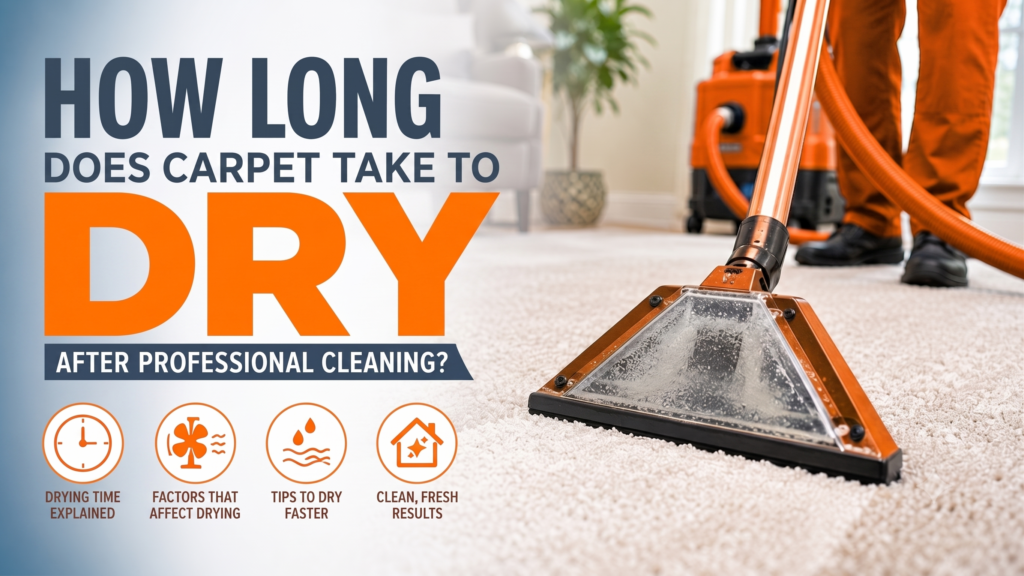

This question is pretty general for most homeowners and would seem like common sense to them, but really, there is way more reasoning to it. Most professionally cleaned carpets take roughly 6 to 12 hours to dry completely, though the exact time can range from as little as 2 hours to as long as 24 hours or more.
But the biggest variable isn’t the weather or your carpet’s age, but how much moisture went into the carpet during cleaning and how effectively it was pulled back out. Cleaning method, carpet thickness, padding, humidity, and airflow all play a role too, which is why two homes cleaned the same day can dry at noticeably different rates.
But that’s not all. This article discussed everything there is to do after the carpet is dried.
So, here’s what actually determines your drying time, and what to do if your carpet is taking longer than expected.
TL; DR
- Professional carpet cleaning typically dries faster because stronger extraction removes more moisture.
- Drying time depends on airflow, humidity, carpet type, and how much moisture remains.
- DIY machines may leave more water behind, extending drying time and increasing residue concerns.
- Good ventilation and airflow can help your carpet dry faster after professional cleaning.
How Long Do Carpets Take To Dry After Professional Cleaning?
For starters, with hot-water extraction, the method most professional carpet cleaners use, including Citrus-A-Peel, a drying window of 6 to 12 hours is typical for residential carpet under normal conditions.
Some carpets feel dry to the touch within a few hours, while others, especially thicker or plusher styles, can take closer to 24 hours to dry all the way through, including the padding underneath.
Here’s a quick summary for your reference:
| Cleaning Situation | Approximate Drying Time |
|---|---|
| Low-moisture cleaning methods | 1–4 hours |
| Light hot-water extraction with good airflow | 4–6 hours |
| Typical professional hot-water extraction | 6–12 hours |
| Thick or plush carpet, high humidity, or limited ventilation | 12–24 hours |
These are general ranges, not guarantees. A cleaning company can influence drying time through technique and equipment, but they can’t fully control your home’s humidity or airflow on cleaning day.
Even then, carpets tend to stay damp after professional cleaning. Which begs the question…
Why Does Carpet Stay Damp After Professional Cleaning?
Well, hot-water extraction works in stages, and understanding them explains why some dampness afterward is expected rather than a sign of a problem. Here’s what happens:
- A cleaning solution and hot water are applied to loosen soil trapped in the carpet fibers.
- Agitation and dwell time allow the solution to break down dirt, oils, and residue.
- A high-powered extraction tool immediately pulls the water, cleaning solution, and loosened soil back out of the carpet.
- Even with strong extraction, a small amount of moisture remains in the fibers and sometimes the padding.
- That residual moisture evaporates over the following hours as air moves through the room.
Carpet that feels cool or slightly damp right after cleaning is normal. The goal of professional extraction isn’t a bone-dry carpet the moment the technician leaves, but it’s removing enough moisture that the carpet dries fully within a reasonable window, without leaving trapped water behind.
So…
What Affects Carpet Drying Time?
Here’s what.
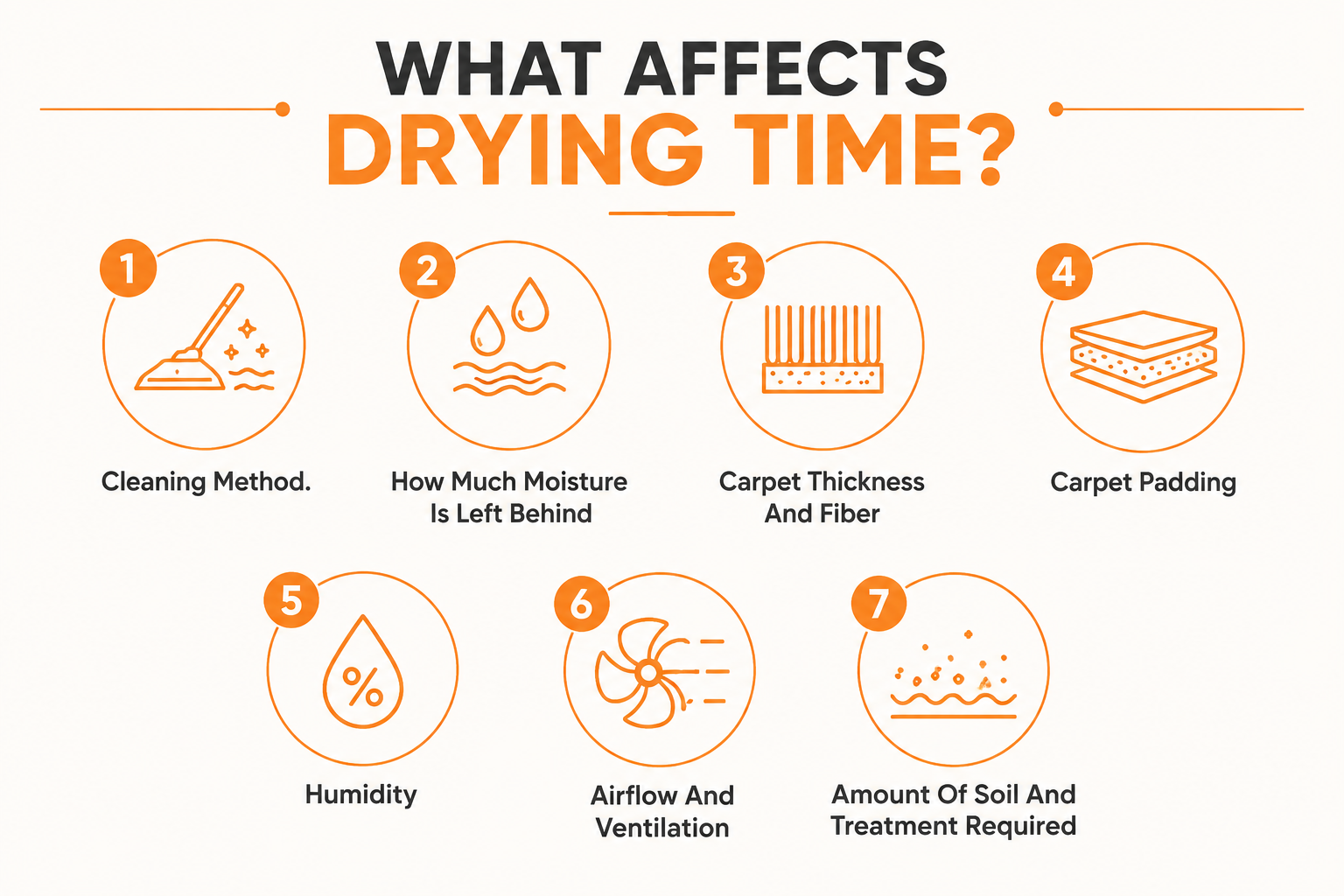
1. Cleaning Method
Hot-water extraction uses more moisture than low-moisture methods like encapsulation or bonnet cleaning, which is part of why it typically takes longer to dry. The trade-off is that hot-water extraction is generally considered the deeper clean, since it flushes soil out of the fibers rather than just lifting surface dirt.
Neither approach is automatically “better” for every situation, as it depends on the carpet, the soil level, and how the space will be used afterward.
2. How Much Moisture Is Left Behind
This is arguably the single biggest factor in drying time, and it’s also where the skill of the technician and the quality of the equipment matter most. Weak extraction leaves more water sitting in the carpet and padding, which extends drying time and increases the risk of lingering odors or a slightly damp feel days later.
Effective extraction pulls out as much moisture as possible during the cleaning itself, so what’s left behind can evaporate quickly with normal airflow. This is one reason professional equipment tends to outperform rental machines, where stronger vacuum recovery means less water left to evaporate on its own.
3. Carpet Thickness And Fiber
Dense, high-pile or plush carpet holds more moisture than low-pile or berber-style carpet simply because there’s more fiber for water to cling to. Natural fibers like wool also tend to hold moisture longer than synthetic fibers such as nylon or polyester, so a wool area rug or wool wall-to-wall carpet may need extra time compared to a synthetic carpet cleaned under the same conditions.
4. Carpet Padding
Padding sits underneath the visible carpet and can trap moisture that isn’t obvious from the surface. If a carpet was heavily soiled or over-wetted, some moisture can work its way into the padding, and padding dries more slowly than the carpet fibers above it because it gets far less direct airflow.
This is part of why a carpet can feel dry on top while still holding moisture underneath.
5. Humidity
Carpet dries through evaporation, and evaporation only works efficiently when the surrounding air is drier than the carpet itself. In humid conditions, the air is already holding a lot of moisture and can’t absorb much more, which slows the whole process down, sometimes significantly.
6. Airflow And Ventilation
Moving air carries evaporated moisture away from the carpet and replaces it with drier air, which speeds up drying considerably. A closed-up room with no air circulation will hold onto humidity near the carpet surface, extending drying time even if the extraction itself was thorough.
7. Amount Of Soil And Treatment Required
Heavily soiled carpet, pet stains, or areas that need extra pretreatment or stain-specific product often require more moisture and more passes to clean properly, which can add to drying time in those spots. This doesn’t mean the cleaning was done poorly; it usually means the technician spent the extra effort a tougher area actually needed.
Given all that…
Does “Dry To The Touch” Mean The Carpet Is Completely Dry?
Not necessarily. Carpet can feel dry on the surface within a few hours while the base of the fibers, the backing, or the padding underneath is still holding moisture. This is normal for hot-water extraction and isn’t something to be alarmed about; it just means the drying process isn’t finished yet, even if it looks and feels done from the top.
A practical way to check this is to press a clean, dry white cloth firmly into the carpet in a few different spots, including higher-traffic areas. If the cloth comes away damp or cool, the carpet likely needs more time. If it comes away dry, the carpet has probably dried through.
Thus, avoid placing furniture, especially pieces with wood or metal feet that can stain or rust, back down until you’re confident the carpet is dry all the way through, not just on the surface.
So…
How To Make Carpet Dry Faster After Professional Cleaning
You can’t force moisture out of carpet safely, but you can create conditions that help it evaporate faster. Here’s how:
- Run ceiling fans or place standing fans in the room to keep air moving across the carpet.
- Increase HVAC circulation, or run the air conditioner in warmer months to help pull humidity out of the air.
- Use a dehumidifier if the room feels humid, especially during New Jersey’s warmer, muggier months.
- Open windows when outdoor humidity is lower than indoor humidity, not the other way around.
- Limit foot traffic while the carpet is still damp, since walking on wet fibers can flatten them and reintroduce dirt from shoes.
- Keep pets off the carpet until it’s dry, both for the carpet’s sake and to avoid tracking moisture elsewhere.
- Hold off on moving heavy furniture back into place until the carpet is dry, to avoid dents, staining, or trapped moisture underneath furniture legs.
- Follow any specific aftercare instructions your cleaning company gives you, since they’ll know the conditions of your particular job.
Avoid space heaters or other high-heat methods aimed directly at the carpet. Controlled airflow, not intense heat, is the safer and more effective way to speed up evaporation.
Even with all that understood…
Can You Walk On The Carpet After Professional Cleaning?
Sure! Light, careful walking is usually fine once a cleaning company gives the go-ahead, but it’s best to minimize unnecessary traffic while the carpet is still damp.
Freshly cleaned fibers are more vulnerable to flattening and re-soiling before they’ve dried, and walking across damp carpet in shoes can track in dirt that undoes some of the cleaning. If you do need to walk on the carpet before it’s fully dry, clean socks or bare feet are a better choice than shoes. Some cleaning companies also provide protective foot coverings for this reason.
Because recommendations can vary based on the specific job and products used, it’s worth following the instructions your technician gives you for that particular cleaning rather than assuming a universal rule applies.
Why Professional Carpet Cleaning Can Dry Faster Than DIY Cleaning
Professionally cleaned carpet often dries faster than carpet cleaned with rental or consumer-grade equipment, and moisture extraction is the main reason why.
Professional truck-mounted or portable extraction units generally have significantly stronger suction than rental machines, which means more water gets pulled back out during the cleaning itself rather than left to evaporate on its own afterward.
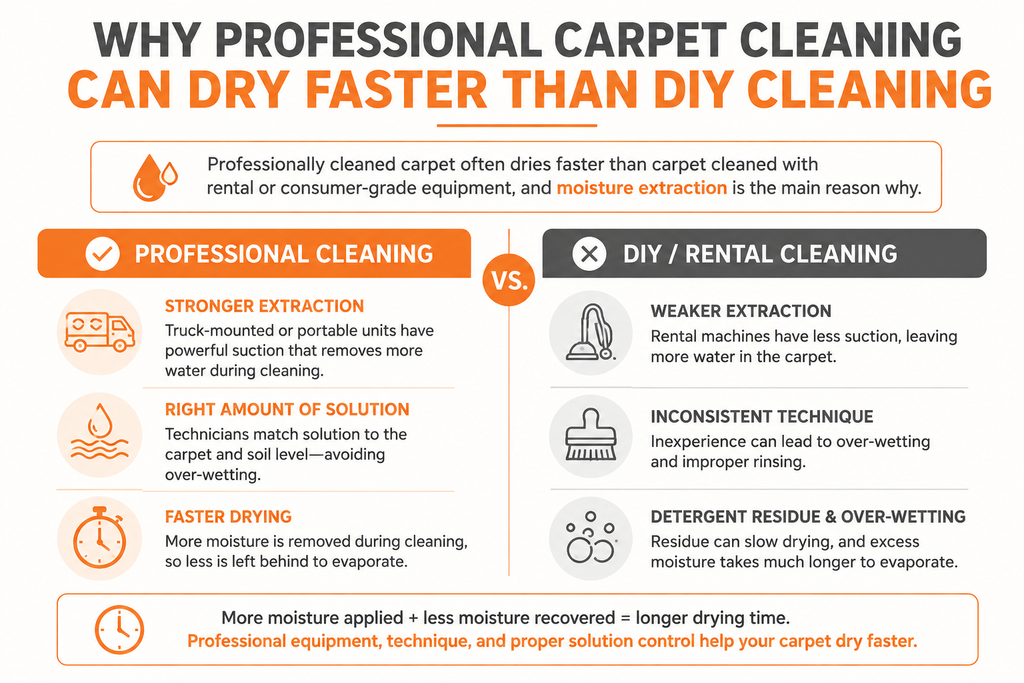
Experienced technicians also know how to calibrate the amount of solution used to the carpet and soil level, rather than over-wetting the carpet to compensate for weaker equipment.
Rental machines aren’t necessarily bad, but they’re more prone to certain issues: weaker extraction, inconsistent technique, and detergent residue left behind if the machine wasn’t rinsed thoroughly between passes.
Over-wetted carpet from a rental unit can take considerably longer to dry than the same carpet cleaned professionally, simply because more moisture was applied and less of it was recovered.
How Long Does Carpet Take To Dry In New Jersey?
New Jersey’s climate adds a real variable to carpet drying time, particularly during the humid summer months. When outdoor humidity is high, opening windows can actually slow drying down rather than speed it up, since the incoming air may be more saturated with moisture than the air already in your home.
Running the air conditioner or a dehumidifier tends to be more effective during these stretches, since it actively removes moisture from the air instead of just moving it around.
In cooler, drier months, indoor heating can help carpet dry faster, though it also tends to dry indoor air overall, which is worth keeping in mind if you’re managing both carpet drying and general home comfort.
Homes with central air and good ventilation generally see more consistent drying times year-round than homes relying on open windows alone, regardless of the season.
But what to do when a carpet remains undry? Let’s have a look.
Why Is My Carpet Still Wet 24 Hours After Cleaning?
A few things can cause carpet to stay damp longer than expected:
- Thicker or denser carpet holding more residual moisture than lower-pile styles.
- High indoor humidity slowing evaporation, especially in poorly ventilated rooms.
- Limited airflow, such as a closed-off room with no fan or HVAC circulation.
- Moisture that made it into the padding, which dries more slowly than the surface fibers.
- Heavily soiled or heavily treated areas that required more moisture to clean properly.
- Extraction that didn’t remove enough moisture during the cleaning itself.
Carpet still being damp a full day later doesn’t automatically mean something went wrong. Humidity and poor airflow alone can extend drying well past 12 hours. That said, if carpet is still noticeably wet (not just cool or slightly damp) well beyond 24 hours, or if you notice a musty smell developing, it’s reasonable to contact the company that cleaned it.
A reputable cleaner can look at the conditions in your home and let you know whether additional airflow, a dehumidifier, or a follow-up visit makes sense.
Conclusion
If your carpet needs a professional cleaning, Carpet & Upholstery Cleaning uses hot-water extraction with attention to thorough moisture removal, so your carpet gets clean without being left overly wet. For homes dealing with pet accidents or lingering odors alongside general cleaning needs, Pet Stain & Odor Removal addresses those separately.
If you’d like to talk through what to expect for your specific carpet and home, contacting Citrus-A-Peel would be a good next step.
Frequently Asked Questions
How long does carpet take to dry after professional cleaning?
Most carpets dry within 6 to 12 hours after hot-water extraction, though thicker carpet, high humidity, or limited airflow can extend that to 24 hours.
Why is my carpet still damp the next day?
Humidity, limited airflow, thicker carpet, or moisture that reached the padding can all extend drying past 12 hours. It’s usually not a sign of a problem unless the carpet is still noticeably wet well beyond 24 hours.
Can I put furniture back on carpet before it is completely dry?
It’s best to wait, particularly for furniture with wood or metal feet, which can stain, dent, or rust damp carpet. Waiting until the carpet is dry throughout, not just on the surface, protects both the carpet and the furniture.
Does professional carpet cleaning leave carpet soaked?
It shouldn’t. Professionally cleaned carpet is typically damp to the touch immediately afterward, not soaked. If carpet feels heavily saturated well after cleaning, that usually points to extraction that didn’t remove enough moisture during the job.