
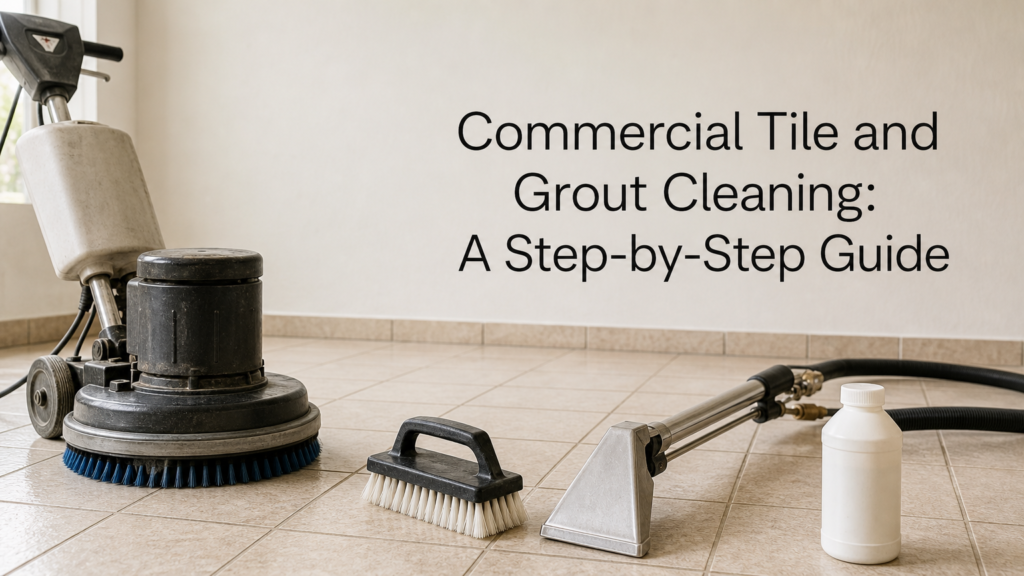

Walk into any office lobby, restaurant kitchen, or retail entryway after a few years of foot traffic, and the tile usually tells the story before anything else does. Grout lines turn gray, corners hold onto grime that a mop never touches, and mopping alone stops making a dent.
That’s when commercial tile and grout cleaning stops being a nice-to-have and becomes part of running a professional-looking space.
If you’re searching for a real answer, you want to know what actually gets embedded dirt and bacteria out of porous grout, not just a surface wipe that looks clean for a day. The short answer: it takes the right sequence of pre-treatment, agitation, hot-water extraction, and sealing, applied with commercial-grade equipment rather than a store-bought spray and a scrub brush.
This guide walks through that process step by step, based on what actually restores tile floors in busy commercial buildings across New Jersey, from Toms River offices to Jersey Shore retail spaces dealing with sand and salt air.
You’ll learn how to assess the floor, what professional-grade equipment makes the difference, and when calling in a local cleaning team beats another round of DIY scrubbing.
TL; DR
-
Regular mopping merely spreads dirty water across porous grout lines, failing commercial health standards and high-traffic demands.
-
Effective restoration requires prepping the floor and letting a pH-balanced degreaser dwell for 8 to 10 minutes to loosen embedded grime.
-
Deep cleaning relies on rotary agitation followed by pressurized hot-water extraction to physically remove dirt slurry rather than pushing it around.
-
Speed-drying floors and applying a penetrating sealer annually keeps grout protected from grease, moisture, and rapid re-soiling.
Why Commercial Tile And Grout Cleaning Is Different
Business owners often assume a mop and a bucket of degreaser can handle what a home mop handles, but commercial floors take a different kind of beating. A retail entryway might see hundreds of shoe prints a day, a restaurant kitchen deals with grease and food acids, and an office lobby collects road salt, sand, and rain half the year.
Porous, unsealed grout soaks up all of that, and once bacteria and grime settle into the microscopic pores, a surface mop just pushes dirty water around instead of removing anything.
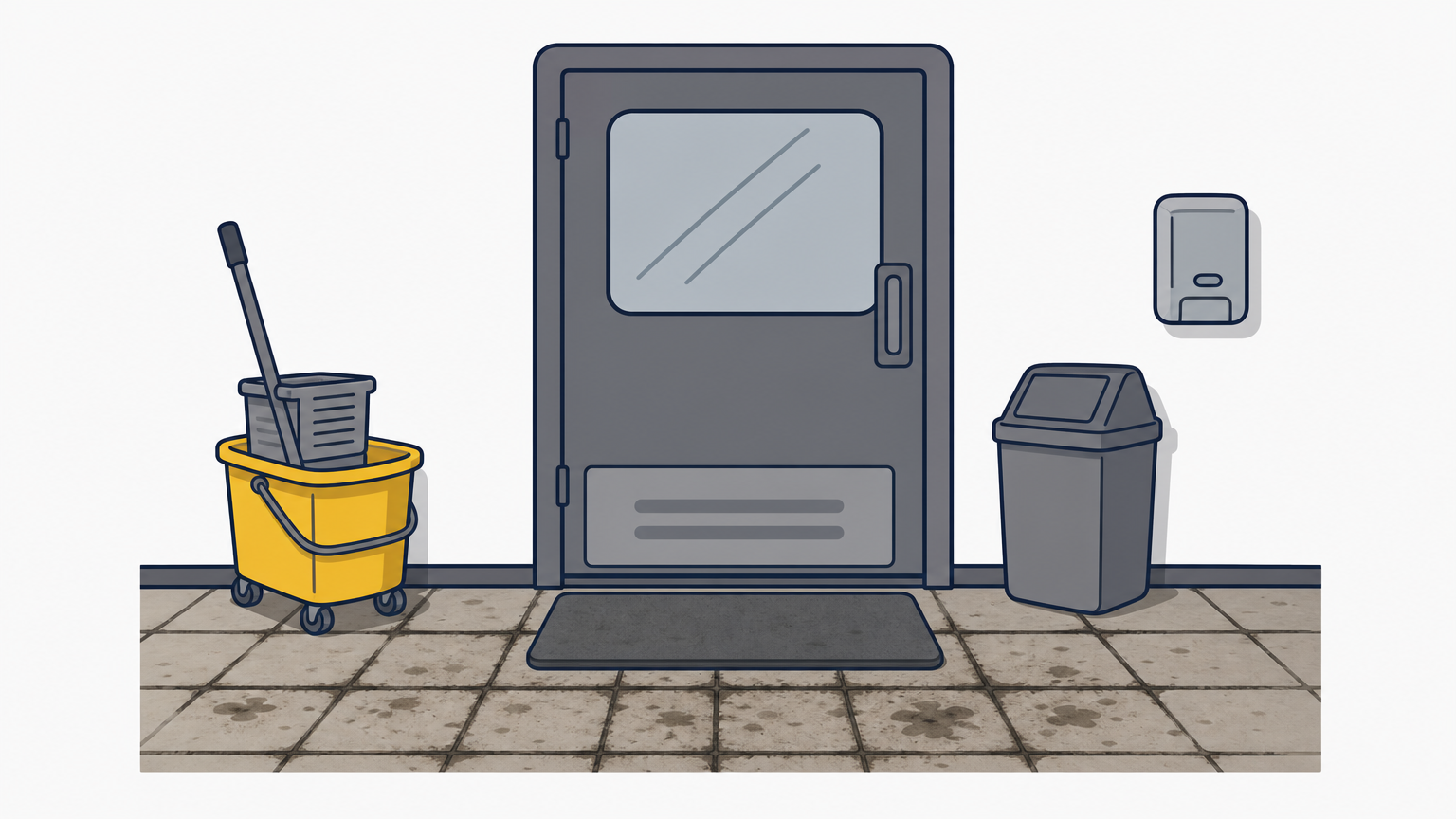
A dirty commercial floor isn’t just a cosmetic problem, it’s a health and liability issue waiting to surface during an inspection or a customer complaint.
Health codes add another layer that residential cleaning never has to consider. Restaurants, medical offices, and daycare facilities often face inspection standards that flag stained or bacteria-laden grout as a violation, not just an eyesore.
Commercial-grade cleaning has to account for that scrutiny, plus the sheer square footage involved, which is why a homeowner’s weekend project rarely translates to a business setting.
Residential Vs. Commercial Tile Cleaning
| Factor | Residential tile | Commercial tile |
|---|---|---|
| Foot traffic | Low to moderate | High, often continuous |
| Contaminants | Dust, pet dander, food spills | Grease, salt, sand, chemical residue |
| Cleaning frequency | Monthly or seasonal | Weekly to monthly, depending on traffic |
| Regulatory pressure | None | Health codes, ADA slip standards |
| Equipment needed | Mop, basic scrubber | Truck-mounted extraction, rotary agitation |
That table explains why a one-size-fits-all approach fails. Understanding these differences upfront is what separates a floor that looks clean for a day from one that actually gets restored.
Here’s how to decide what to choose.
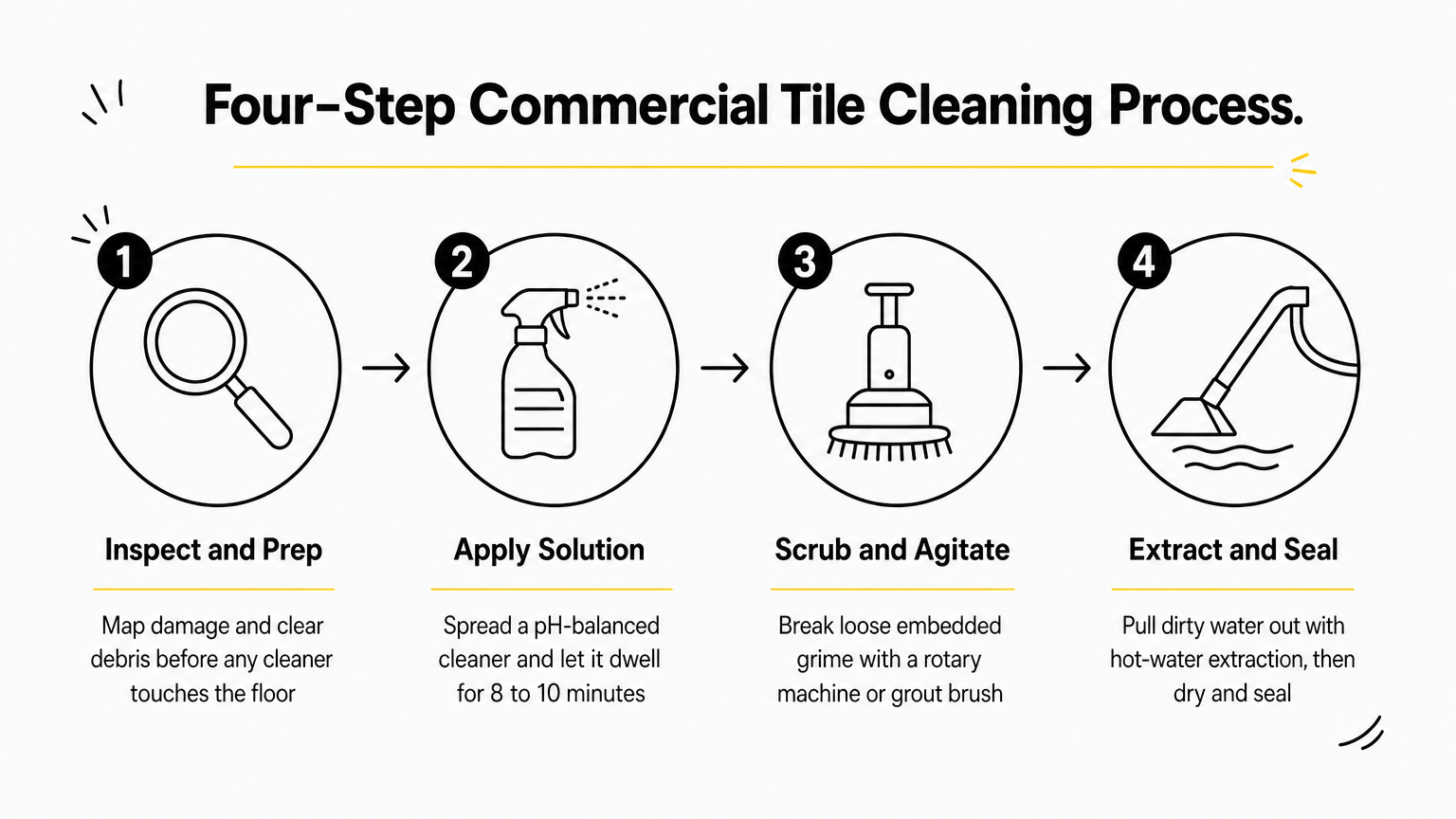
Step 1. Inspect And Prep The Space
Before any cleaner touches the floor, walk the space and map out what you’re dealing with. Grout color and condition vary room to room, and a kitchen near a fryer station needs different attention than a lobby near the front doors. Check for cracked grout, missing sealant, and loose tiles, since scrubbing over damage can make things worse instead of better.
Skipping the inspection step is how a quick cleaning job turns into an expensive repair bill.
Next, clear the area of furniture, mats, and equipment, then sweep or dry-vacuum to pull up loose debris, sand, and grit. Any gritty particles left behind act like sandpaper once you start agitating grout lines, dulling tile finishes over time. This is especially true for Jersey Shore retail spaces, where sand tracked in from the boardwalk settles deep into grout channels.
Quick Pre-Clean Checklist
- Note cracked or missing grout for repair before wet cleaning.
- Remove mats, furniture, and displays from the work area.
- Dry-sweep or vacuum all loose dirt and sand.
- Test a small tile section for color-fastness with your chosen solution.
- Confirm floor drains or extraction access points are clear.
Getting this prep right sets up every later step to actually work instead of just moving grime around.
Step 2. Apply And Dwell The Cleaning Solution
Once the floor is prepped, apply a pH-balanced degreaser or citrus-based cleaning solution across the tile and grout, working in manageable sections rather than flooding the whole floor at once. Citrus-derived formulas cut through grease and food residue without leaving the harsh chemical smell that lingers after typical commercial cleaners, which matters in restaurants and offices where people are working nearby.
The dwell time is where the real cleaning happens, not the scrubbing that comes after it.
Let the solution sit for 8 to 10 minutes so it can break down grease, mineral deposits, and embedded grime before any agitation begins. Skipping this dwell time forces you to scrub harder later, which wears down grout faster and still leaves dirt behind. Watch for the solution starting to dry out on hotter floors near windows or kitchen equipment; if it’s drying, mist a little water to keep it active.
During this phase, keep foot traffic off the section entirely. A single footprint can undo the dwell time and force you to reapply, which slows down the whole commercial tile and grout cleaning job unnecessarily.
Step 3. Scrub And Agitate The Grout Lines
With the solution still active, move to a rotary floor machine or grout brush attachment to break loose the grime that dwell time softened. A stiff nylon brush works for most commercial tile, but heavily soiled kitchen floors or industrial entryways often need a rotary agitation tool to get into deep grout channels without damaging the tile glaze itself.
Agitation moves grime out of the pores; scrubbing by hand only moves it around the surface.
Work in small, overlapping sections, following the grout lines rather than cutting across them, since that pattern lifts embedded dirt more completely. Pay extra attention to corners, thresholds, and areas near equipment legs, where grime tends to concentrate, and dry mop heads never quite reach.
Keep an eye on these trouble spots during agitation:
- Grout lines near floor drains, where bacteria collects fastest.
- Corners and edges missed by standard mop passes.
- High-traffic paths from doorways to counters or registers.
- Areas near grease traps or food prep stations.
Once the grime lifts and the water turns visibly dirty, you’re ready to move into extraction before the loosened soil has a chance to resettle into the grout.
Step 4. Extract, Rinse, And Dry The Floor
Now the loosened grime needs to leave the floor for good, and that’s where hot-water extraction earns its reputation as the gold standard for commercial tile. A truck-mounted or portable extraction unit pulls hot water through the tile and grout at high pressure, then immediately vacuums up the dirty solution along with everything it lifted. Mopping alone can’t replicate that suction, and the same limitation applies to using a steam mop on grout, which is why grime creeps back within days after a DIY attempt.
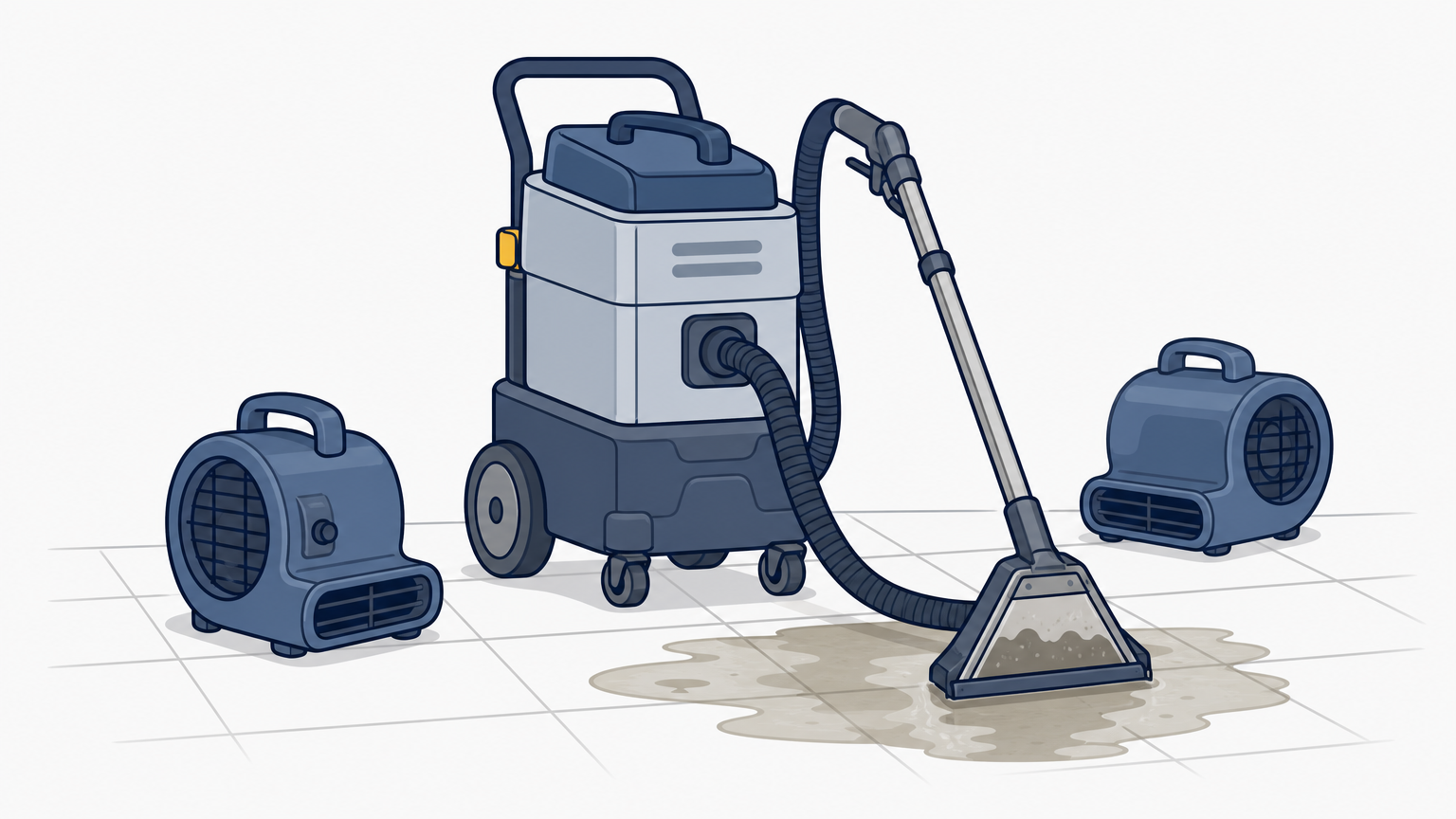
Extraction is the difference between moving dirty water around and actually removing it from the floor.
Rinse each section with clean water to flush out any leftover cleaning solution, since residue left behind attracts dirt faster than an untreated floor would. Pay attention to grout lines specifically, since they hold rinse water longer than the tile surface itself.
Drying matters just as much as the cleaning steps before it:
- Run air movers or fans across the floor to speed drying.
- Block off the area until fully dry to prevent slip hazards.
- Check grout for any remaining discoloration once dry, including the chalky white haze that calls for efflorescence removal on stone tile.
- Apply a grout sealer if the floor previously had none.
A properly dried, sealed floor resists staining far longer than one left to air-dry on its own.
Keeping Your Commercial Floors Spotless Year-Round
Getting tile and grout back to a like-new condition takes more than a mop and a Saturday afternoon. Inspection, dwell time, agitation, and hot-water extraction each play a role, and skipping any one of them leaves grime waiting to resurface within weeks. Businesses that stick to this sequence, rather than a quick surface wipe, keep their floors looking presentable through inspections, busy seasons, and everyday foot traffic.
Regular maintenance matters more than a single deep clean. A quarterly schedule for high-traffic entryways and kitchens, paired with a fresh grout seal once a year, keeps floors from sliding back into the gray, worn look that started this whole conversation. Between professional visits, dry-sweeping, prompt spill cleanup, and a few tile and grout care guides buy you time.
If your floors have reached the point where mopping just isn’t cutting it, don’t wait for a health inspector or a customer to point it out first. Reach out to Citrus-A-Peel and book professional tile and grout cleaning done the right way, with citrus-based products and equipment built for real New Jersey business traffic.
Frequently Asked Questions
How often should commercial tile and grout be cleaned?
High-traffic facilities require professional deep cleaning quarterly to satisfy health and slip-safety codes, while low-traffic commercial spaces typically need semi-annual or annual service.
Why is regular mopping ineffective on commercial grout?
Mopping spreads suspended grease and soil across the floor, pushing dirty water deep into porous grout channels instead of extracting it.
Why is hot-water extraction necessary for commercial floors?
It uses pressurized hot water to break down embedded soils and immediately vacuums away the contaminated slurry, preventing rapid re-soiling.
When should commercial grout be sealed?
Apply a penetrating sealer immediately after deep restorative cleaning and drying, then reapply annually to block liquids, grease, and permanent staining.