
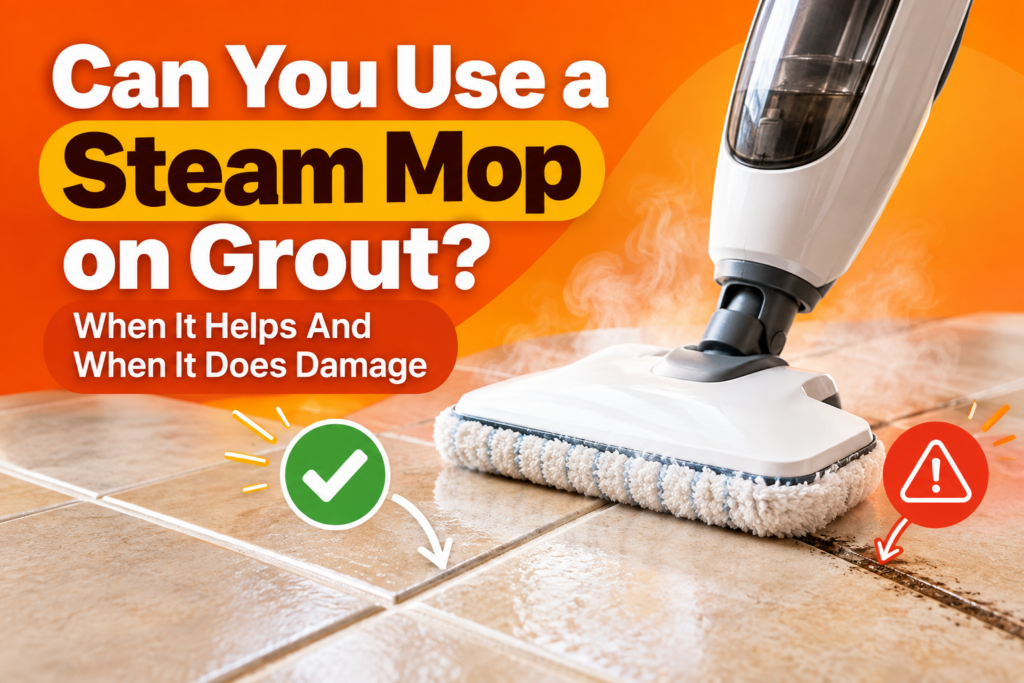

We know that the headline of this post is one of the questions you frequently ask your neighbours, right? Well, the answer is yes, you can use a steam mop on grout, provided the grout is sealed, still intact, and between ceramic or porcelain tiles. On grout like that, steam loosens everyday grime and kitchen grease with nothing but water.
However, there is more to this scenario.
Unsealed, cracked, or freshly installed grout is a different story, and so is grout around natural stone. There, steam pushes hot moisture into material that soaks it up, leaving dark patches, crumbling joints, and mildew.
There’s also a catch most people only discover after buying the mop: a steam mop mostly cleans the tile. The pad rides over the grout lines instead of reaching into them.
This guide covers how to tell what kind of grout you have, where steam helps, where it hurts, how to use it safely, and what to do when your grout needs more than a mop can give.
TL; DR
- A steam mop is safe on sealed, intact grout set between ceramic or porcelain tile.
- Unsealed, cracked, or brand-new grout absorbs steam’s heat and moisture, leading to stains, mold, or crumbling.
- Natural stone grout is especially risky, since steam can strip sealer and damage the surrounding stone.
- Steam mops clean the tile well but barely reach grout lines, since the pad rides above them.
Is A Steam Mop Safe For Your Grout?
Here’s a quick answer by situation in a table format.
| Your floor | Steam mop? | Why |
|---|---|---|
| Sealed cement grout with ceramic or porcelain tile | Yes, now and then | The tile handles heat well, and the sealer slows water from soaking in. |
| Epoxy grout | Generally yes | It’s waterproof and doesn’t need sealing. |
| Unsealed cement grout | No | It absorbs moisture, stains, and can break down. |
| Newly installed grout | Not yet | It needs time to cure first. |
| Cracked, crumbling or missing grout | No | Steam goes straight through the gaps and under the tile. |
| Marble, travertine, limestone or slate | Avoid | Heat and moisture can damage both the stone and its sealer. |
| Unglazed tile such as terracotta | Avoid unless sealed | The tile itself is porous. |
If you’re not sure which row you’re in, the next two sections will help you figure it out.
Why Grout Is Fussier Than The Tile Around It
Glazed ceramic and porcelain tile can take a lot of heat and water. Grout is the weak link. Most grout is a mix of cement, water, salt and sand that goes on as a paste and hardens within hours, and while it stays hard, it can wear down and deteriorate over time.
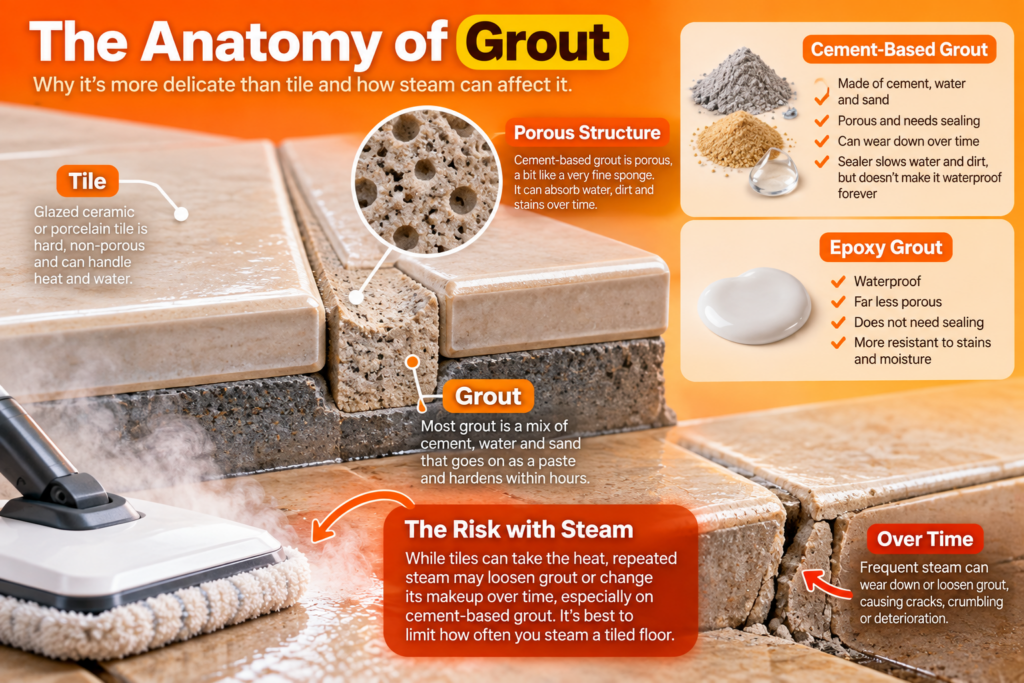
That cement-based grout is porous, a bit like a very fine sponge. Sealer soaks into it and slows down how fast water and dirt get in, but it doesn’t make grout waterproof forever. It wears off, especially in busy spots. Epoxy grout is the exception. It’s waterproof and far less porous, so it doesn’t need sealing at all.
Even on a sealed floor, repeated steam has a cost. Consumer Reports’ Haniya Rae, with lab testing by Dan Kahl and Dominque Herring, notes that ceramic and porcelain tiles can generally handle the heat and moisture from a steam mop, but the grout is more vulnerable, so it’s wise to limit how often you steam a tiled kitchen or entry floor.
How To Tell If Your Grout Is Sealed
You don’t need any special tools. A few drops of water will tell you. Here’s what to do:
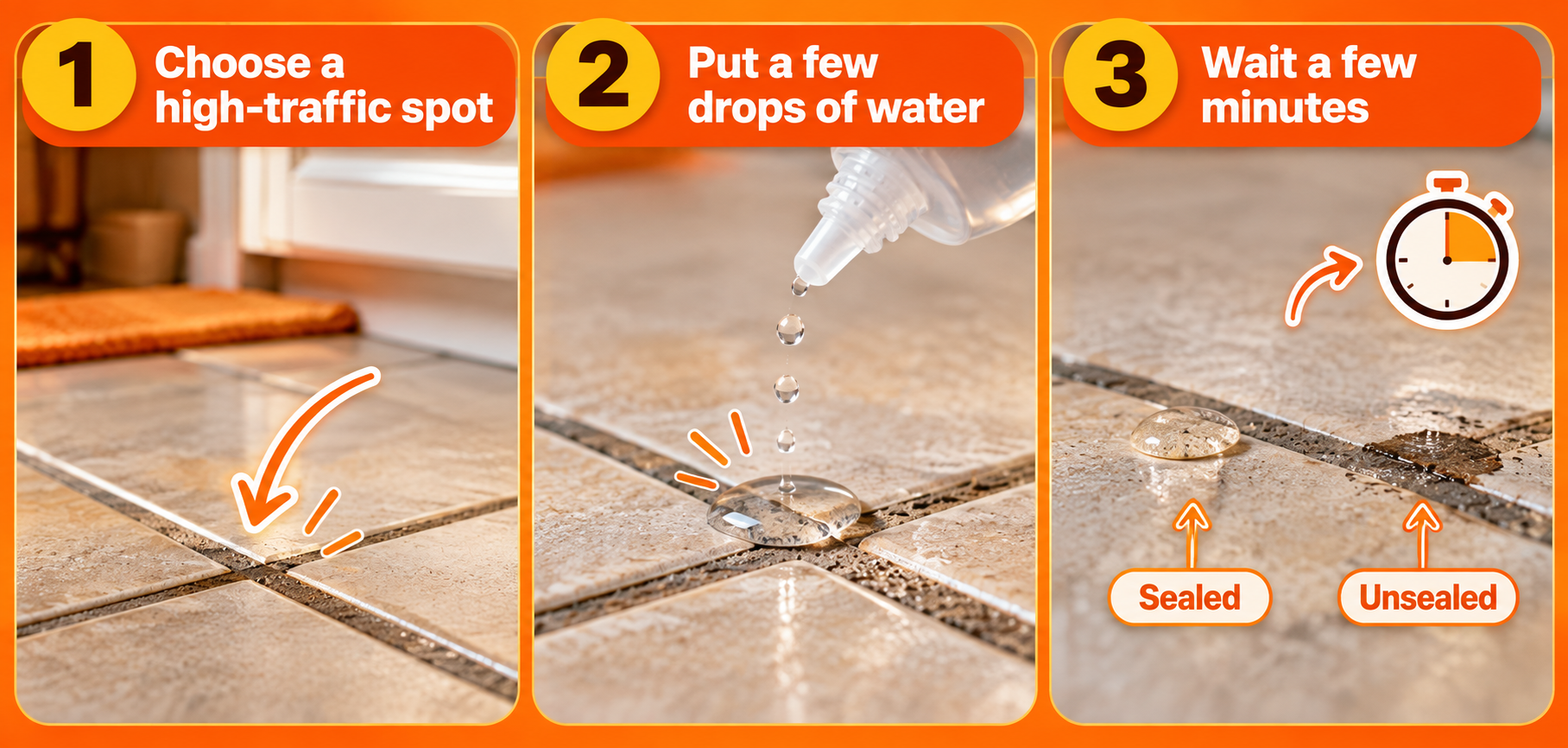
- Pick a spot that gets a lot of foot traffic, like in front of the kitchen sink or just inside the back door. Sealer wears off there first.
- Put a few drops of water on the grout line.
- Wait a few minutes.
If the water beads up and sits on top, your grout is probably sealed. If it soaks in, it’s most likely unsealed. Grout that turns darker as the water sinks in is another giveaway.
Repeat the test once in a while, even if you know the grout was sealed at some point. A floor that passed two years ago may not pass today.
When Does A Steam Mop Help Grout?
On sealed grout that’s in good shape, a steam mop is a solid tool for routine cleaning. It works well for:
- Sticky spills and light, everyday grime on kitchen floors.
- Greasy film near the stove.
- Bathroom floors where you’d rather skip strong chemical cleaners.
- Households that want a quick clean without hauling out a bucket.
That last point matters more than it sounds. A lot of dark, dingy grout comes from dirty mop water spreading around the room and drying in the grout lines, and a steam mop cleans using far less water. If your grout keeps getting darker after every mopping, the bucket may be part of the problem.
When A Steam Mop Does Damage
1. Unsealed Grout
This is the most common mistake. The heat and pressure from steam can cause unsealed grout to wear away and chip, and it drives moisture below the surface, where mold and mildew can grow. You may also see water stains that don’t fade as the floor dries.
2. Brand-New Grout
New grout should not be steam cleaned for at least 72 hours after installation so it can cure properly. Treat that as a bare minimum. Your installer or the grout manufacturer may call for longer, and their instructions win. Steam also shouldn’t go on new grout before it’s sealed.
3. Cracked Or Crumbling Grout
Grout holds tiles in place and keeps water from getting underneath. Once it cracks, steam has a direct path to the mortar and subfloor below. Over time, it can loosen tiles, and a hollow sound when you tap a tile is a sign that something has already shifted. Repair the grout before you do any wet cleaning.
4. Too Much Steam, Too Often
Even sealed grout has limits. Regular, continued steam cleaning can discolor grout, make it crack and fall apart, and strip away the sealer that was applied to it. A steam mop as your once-in-a-while deep clean is fine. Using it every day on the same floor is a different workload.
5. Grout Around Natural Stone
Stone is where steam causes the most expensive damage. The high temperature can build pressure inside porous stone and cause spalling, which shows up as pitting or flaking on the surface, and it can remove the sealer, leaving the stone unprotected.
Travertine with fillers can have those fillers pop loose, and stone that contains iron can develop rust-like stains that are very hard or impossible to remove. Slate has a layered surface, and steam forced between those layers can make thin pieces flake off.
Some stone floors with a well-kept sealer may tolerate a light steam now and then, but the risk is hard to judge from the outside. For marble, travertine, limestone, and slate, it’s safer to skip the steam mop altogether.
Where Tile Meets Wood Or Laminate
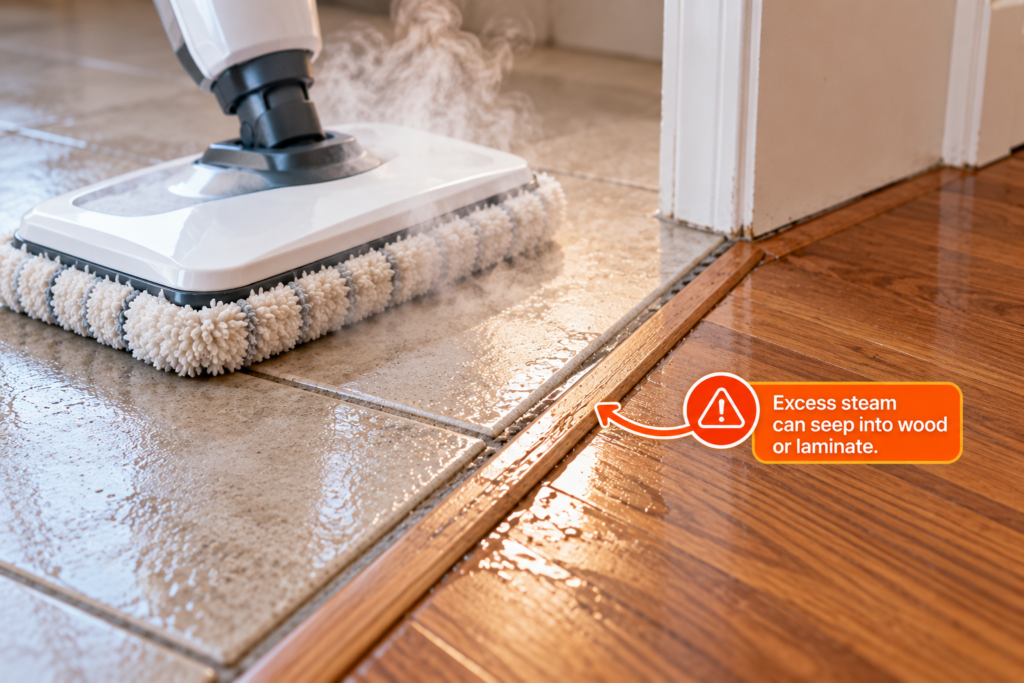
Watch the edges. If a tiled kitchen runs into a hardwood hallway or laminate family room, keep the steam mop off the transition strip. Heat and moisture can make wood swell and laminate seams lift.
Why A Steam Mop Barely Reaches Into Grout Lines
Grout sits slightly lower than the tile around it. A steam mop’s flat pad glides across the tops of the tiles and only brushes the upper edge of each grout joint. So the tile looks great, and the grout often looks about the same as before. A dirty pad makes things worse. Once the pad picks up grime, it can wipe that grime right back into the grout lines.
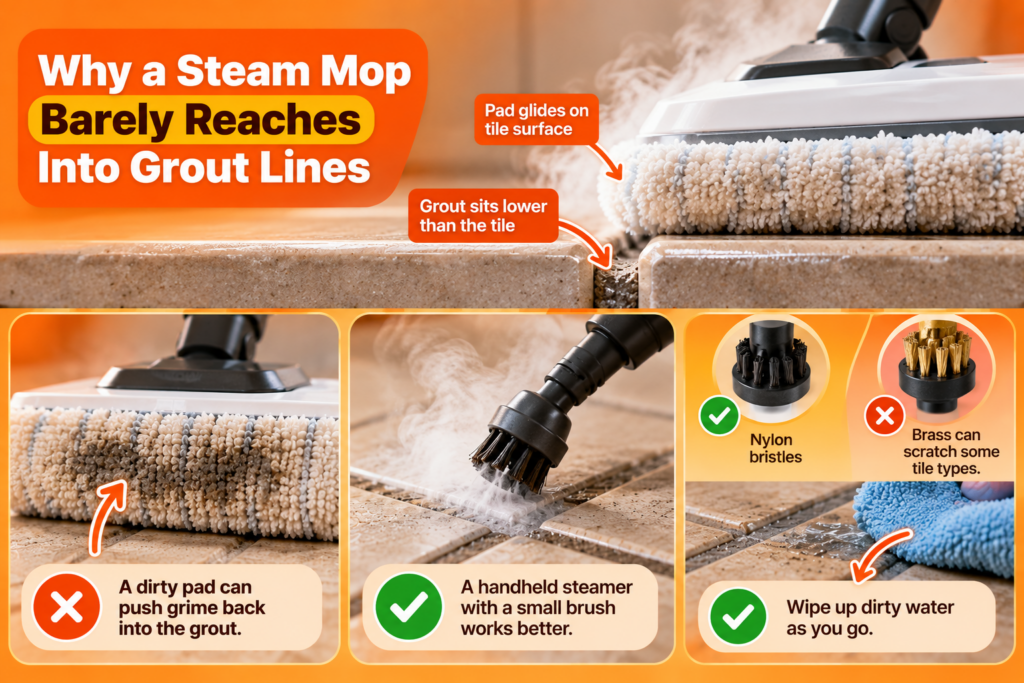
If you want steam to clean the grout itself, a handheld steamer works better than a mop. Many steam cleaners have nozzles that take small nylon or brass brushes made for grout, so you scrub and steam at the same time.
Start with nylon bristles, since brass can scratch some types of tile, and wipe up the dirty water as you go so it doesn’t settle back into the grout and dry there.
How To Use A Steam Mop On Grout Safely
If your grout passed the water test and it’s in good condition, these habits keep it that way:
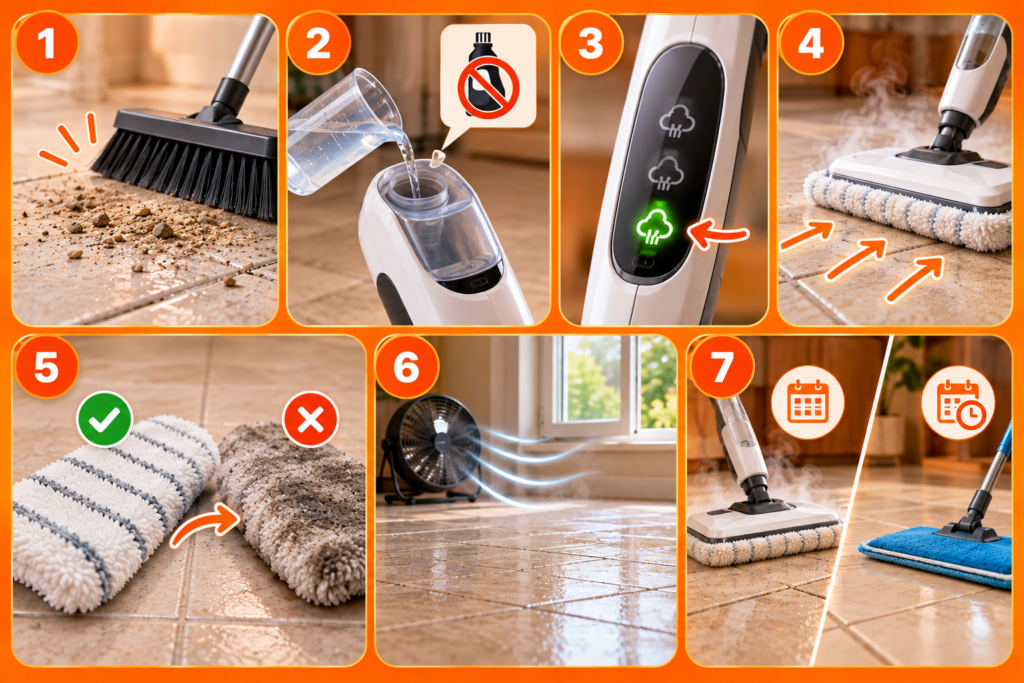
- Vacuum or sweep first. Grit mixed with steam turns into a muddy paste that the pad pushes into the grout.
- Check your mop’s manual for what goes in the tank. Many models want water only, so don’t add cleaners unless the manual says you can.
- Use the lowest steam setting that gets the job done.
- Keep the mop moving. Parking it in one spot concentrates heat and moisture on the same few inches of grout.
- Start with a clean pad and swap it once it turns grey.
- Let the floor dry fully, with a fan running or a window cracked in bathrooms.
- Save the steam mop for occasional deeper cleans. For day-to-day upkeep, a damp microfiber mop does the job.
If you mop with a regular cleaner between steam sessions, pick a pH-neutral one. Consumer Reports suggests warm water and a pH-neutral solution for routine cleaning of ceramic and porcelain tile, and warns that harsh chemicals like ammonia can damage tile and grout and may void your flooring warranty.
What To Use Instead When Steam Isn’t A Good Fit
| Situation | A better approach |
|---|---|
| Unsealed grout in good condition | Clean with a pH-neutral cleaner and a soft brush, dry it well, then seal it. |
| Stained grout with ceramic or porcelain tile | A grout brush and a diluted bleach solution; Consumer Reports suggests half a cup of bleach per gallon of water. Never mix bleach with ammonia or other cleaners. |
| Natural stone floors | Dust mop often, since sand and grit are abrasive and can scratch stone, and use a pH-neutral cleaner, which the Natural Stone Institute treats as the standard for stone care. |
| Cracked or missing grout | Repair or regrout before any wet cleaning. |
| Epoxy grout | A steam mop or a regular damp mop is fine. |
One tip if you’re planning to seal: clean first. Grout should be thoroughly clean before sealer goes on, because sealing over dirt locks the stains in for as long as the sealer lasts.
New Jersey Habits That Wear Grout Down Faster
A few local conditions make grout care a bit harder here.
- If you live down the shore, sand is the big one. It comes in on feet, towels, and beach bags, settles into grout lines, and grinds at them every time someone walks by. Vacuuming before any kind of mopping is especially important in shore homes.
- Winter brings road salt and slush into mudrooms and entryways, and that gritty, salty water collects in the grout by the door.
- Then there are humid New Jersey summers. Bathroom floors and shower grout dry slowly in muggy weather, and damp grout is where mildew likes to settle. After steam cleaning in July, a fan or dehumidifier is worth running a little longer than you think you need.
When To Call In Professional Tile And Grout Cleaning
A steam mop is a maintenance tool. It keeps clean grout looking clean, but it won’t bring back grout that’s been darkening for years. It might be time for a professional clean if:
- Your grout stays dark or blotchy even after scrubbing.
- The color looks uneven across the room, lighter in corners and darker in walkways.
- Mildew keeps coming back in the same spots.
- You’re planning to seal and want the grout properly clean first.
- You have natural stone and don’t want to risk the wrong method.
Final Takeaways
Citrus-A-Peel offers tile and grout cleaning alongside its carpet and upholstery services. If your grout has reached the point where the mop isn’t making a difference, a technician can take a look at your tile and grout and recommend a cleaning approach that suits the floor, using products chosen with kids and pets in mind.
Frequently Asked Questions
Will a steam mop remove old grout stains?
It can lift light surface grime from sealed grout. Deep stains that have soaked into unsealed grout usually need scrubbing with a brush, and a steam mop can sometimes spread the discoloration around instead of lifting it.
Does steam cleaning remove grout sealer?
It can over time. Regular steam use may strip sealer that was applied to grout. Redo the water drop test every few months, and reseal when water starts soaking in instead of beading.
How often can I steam mop sealed grout?
There isn’t an official number. Think of it as an occasional deeper clean, not a daily routine. For everyday cleaning, a damp microfiber mop with a pH-neutral cleaner is gentler on the grout and the sealer.
Can I put vinegar in my steam mop?
Check the manual first, because many steam mops are designed for water only. Acidic cleaners also aren’t a good match for cement grout or natural stone, so keep vinegar away from both.
Is a steam mop safe for shower grout?
Steam mops are built for floors. For shower walls, a handheld steamer with a brush attachment is easier to control, and the same rules apply: sealed, undamaged grout only, and good ventilation afterward.