

How to clean a couch safely starts with a tag most people never read.
Lift a cushion and look for a small label with a letter code (W, S, WS, or X), because that code tells you what the fabric can take. After that, vacuum, test your cleaner on a hidden spot, blot stains instead of rubbing, use as little moisture as you can, and let everything dry fully. The code matters because the wrong cleaner can leave a water ring or damage the fabric.
Below you’ll find how to read the code, a step-by-step method, the mistakes to avoid, and the point where handing the job to a professional is the smarter move.
TL;DR
-
- Check the cleaning code on the tag first, because W, S, WS, and X tell you which cleaners your fabric can safely take.
-
- Vacuum first, test your cleaner on a hidden spot, then blot stains from the outer edge toward the center instead of scrubbing.
-
- Use as little moisture as possible, and dry the couch fully, ideally within 24 to 48 hours, to help prevent mold.
-
- Call a professional if the tag says X, the fabric is a mystery, or your spot test goes wrong.
What Do The Cleaning Codes On A Couch Tag Mean?
Most couches carry a label that says how the fabric should be cleaned. Furniture maker American Leather says the label is often hidden under the cushions or at the base. Go and look. Whatever else you find down there is a separate problem.
Here is what each code means, based on that manufacturer’s guidance:
| Code | What It Means | What to Use | What to Avoid |
|---|---|---|---|
| W | Water-based cleaners are safe | Mild soap or a water-based upholstery cleaner | Soaking the fabric |
| S | Solvent-based cleaners only | A water-free (solvent) cleaner | Water, which can damage the fabric or leave rings |
| WS (also written SW) | Both water-based and solvent-based cleaners are safe | Either type, after a spot test | Skipping the spot test |
| X | Don’t clean it yourself | A professional, or advice from the store you bought it from | Any home cleaner |
For each code in more detail, see our upholstery cleaning codes guide.
Solvent cleaners need care. American Leather advises ventilating the room and considering gloves, and NMSU Extension warns that some cleaning solvents are flammable and others are poisonous.
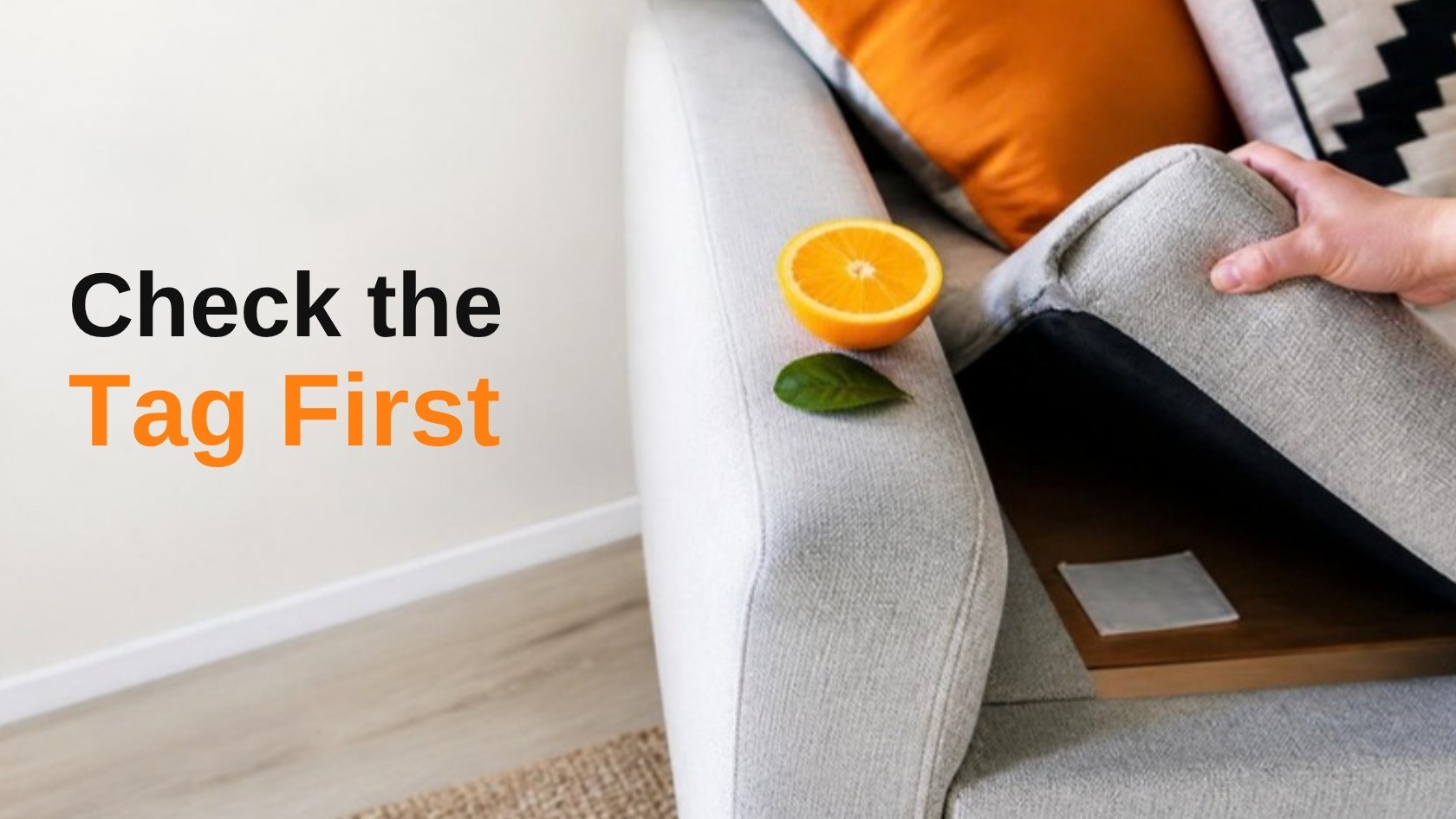
The cleaning code tag tells you what your couch fabric can take.
What If Your Couch Has No Tag?
Tags fade, get cut off, or go missing. If you know where the couch came from, the store or maker may be able to tell you the code. If not, treat the fabric as delicate and run a spot test before you use anything.
NMSU Extension advises pretesting in an inconspicuous spot to check for discoloration, surface damage, or color fading or running. Some couches also come with a hang tag, and NMSU Extension says to read labels and hang tags for the specific care the fabric needs. If the test goes badly, or you can’t tell what the fabric is, stop and call a professional.
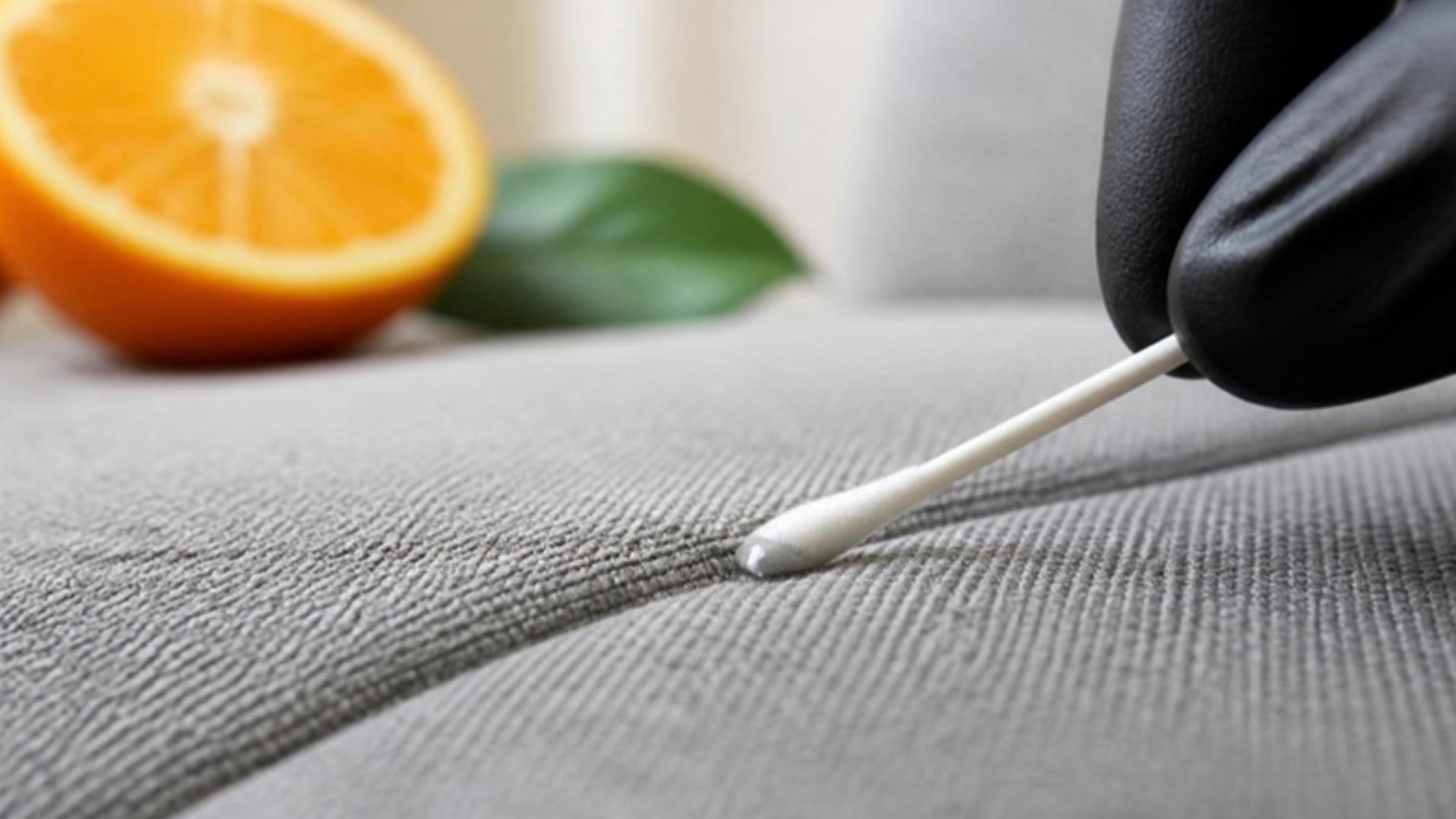
Test every cleaner on a hidden spot before it touches the visible fabric.
What Supplies Do You Need To Clean A Couch?
You don’t need much, but the right basics make the job safer:
-
- A vacuum with a brush or upholstery attachment for the seams and the space under the cushions.
-
- A cleaner that matches your tag: a water-based upholstery cleaner or mild soap for W, a water-free solvent cleaner for S, and either one for WS.
-
- White cloths or paper towels. NMSU Extension suggests a soft cloth, a white facial tissue, or a white paper towel for blotting liquids.
-
- A spatula or knife to lift solids off the surface.
-
- Gloves and an open window if you’re using a solvent.
-
- A fan for the drying stage.
How Do You Clean A Couch Step By Step?
The order matters here. Each step protects the one after it.
-
- Vacuum the whole couch. Use the brush or upholstery attachment and get into the seams and under the cushions. NMSU Extension recommends brushing or vacuuming upholstered furniture about once a week. How often a professional should step in is a different question, and our guide to professional cleaning frequency answers it.
-
- Check the code and pick a matching cleaner. W means water-based, S means solvent only, WS means either. If it’s X, stop here. Whatever you choose, follow the directions on the product.
-
- Test it on a hidden spot. The back, the underside, or behind a cushion works. Let the spot dry, then look for color change, fading, running, or surface damage.
-
- Lift the mess first. Scrape solids away with a spatula or a knife. Blot liquids with a soft cloth or a white paper towel.
-
- Blot the stain, don’t scrub it. Dab with your cleaner on a clean white cloth. NMSU Extension says to work from the outer edge of the stain toward the center, unless the fabric tends to leave rings. If it does, work from the center outward instead and keep the moisture very low.
-
- Use as little moisture as you can. That goes for water and solvent alike. NMSU Extension also says to vacuum carefully once the spot is removed, so give it a gentle pass when it’s dry.
-
- Let it dry completely. More on that below.
There’s one catch. If the whole couch looks tired, cleaning a single stain can leave one bright patch on a dull seat. NMSU Extension warns that treating isolated stains on something that needs a complete cleaning creates unsightly contrasts. In that case, a full clean is the better move.
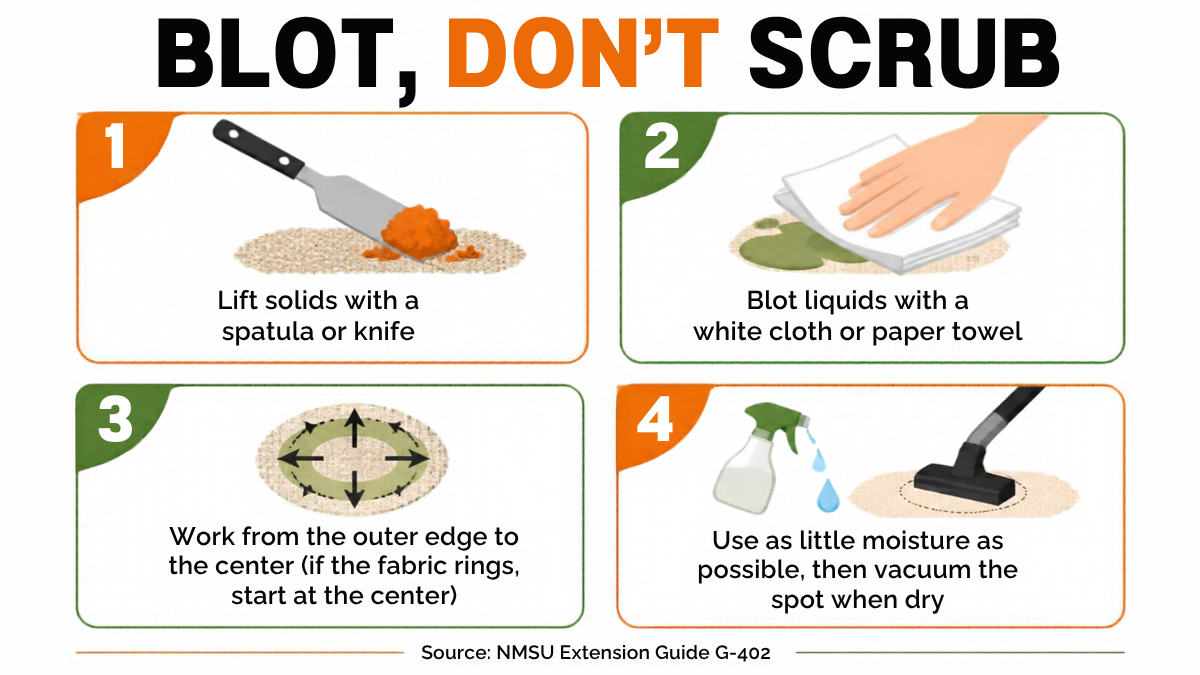
The blotting method recommended by NMSU Extension for upholstery.
How Do You Match The Cleaner To The Stain?
Before you pick a cleaner, work out what you’re dealing with. NMSU Extension says to decide whether a stain is oil-based, water-based, a mix of both, or unknown, then to use a solvent for oily stains and a water solution for water-based ones.
Your tag sets the limits. A W couch only gets the water-based option, an S couch only gets solvent, and WS lets you pick whichever suits the stain. When you can’t tell what made the mark, choose the gentlest cleaner your tag allows and test it first.
Speed matters too. Fabrics with a durable or permanent-press finish tend to hold oil-based stains, and NMSU Extension says not to delay removing them or they may become permanently set.
Spilled coffee? Our coffee stain guide covers the first few minutes.
What About Slipcovered Couches?
A slipcover changes the rules a little. NMSU Extension says a slipcovered piece can be treated like upholstered furniture, or the whole slipcover, cushions, and skirt included, can be removed and laundered. Check the care label first, because the right choice depends on the fabric.
Zippered cushion covers on regular upholstered furniture are a different story. NMSU Extension advises leaving them on, since washing them separately can cause shrinkage, damage the fabric backing, or change the color.
What Should You Never Do When Cleaning a Couch?
These are the mistakes that NMSU Extension and American Leather warn against:
-
- Don’t scrub. Excessive rubbing can stretch the fabric or damage its texture.
-
- Don’t use water on an S-coded fabric. It can cause damage or leave unsightly rings.
-
- Don’t soak the fabric. Use as little water or solvent as you can.
-
- Don’t press a stained area with an iron. Heat can set a stain permanently.
-
- Don’t park a freshly cleaned couch in direct sun. Sunlight can fade and damage upholstery fabric.
How Long Does A Couch Take To Dry?
There’s no single answer. It depends on the fabric, how much moisture went in, and how much air is moving through the room. Any water-based method, including steam cleaning a couch, leaves moisture behind, and damp fabric can grow mold. The EPA says that in most cases, mold will not grow if wet or damp materials are dried within 24 to 48 hours.
Thick upholstered furniture can be slow, and the EPA’s guidance on water damage notes it may be difficult to dry completely within 48 hours and suggests fans and dehumidifiers to speed things up. On a muggy New Jersey day, damp fabric dries more slowly, so point a fan at the couch and run the air conditioning or a dehumidifier.
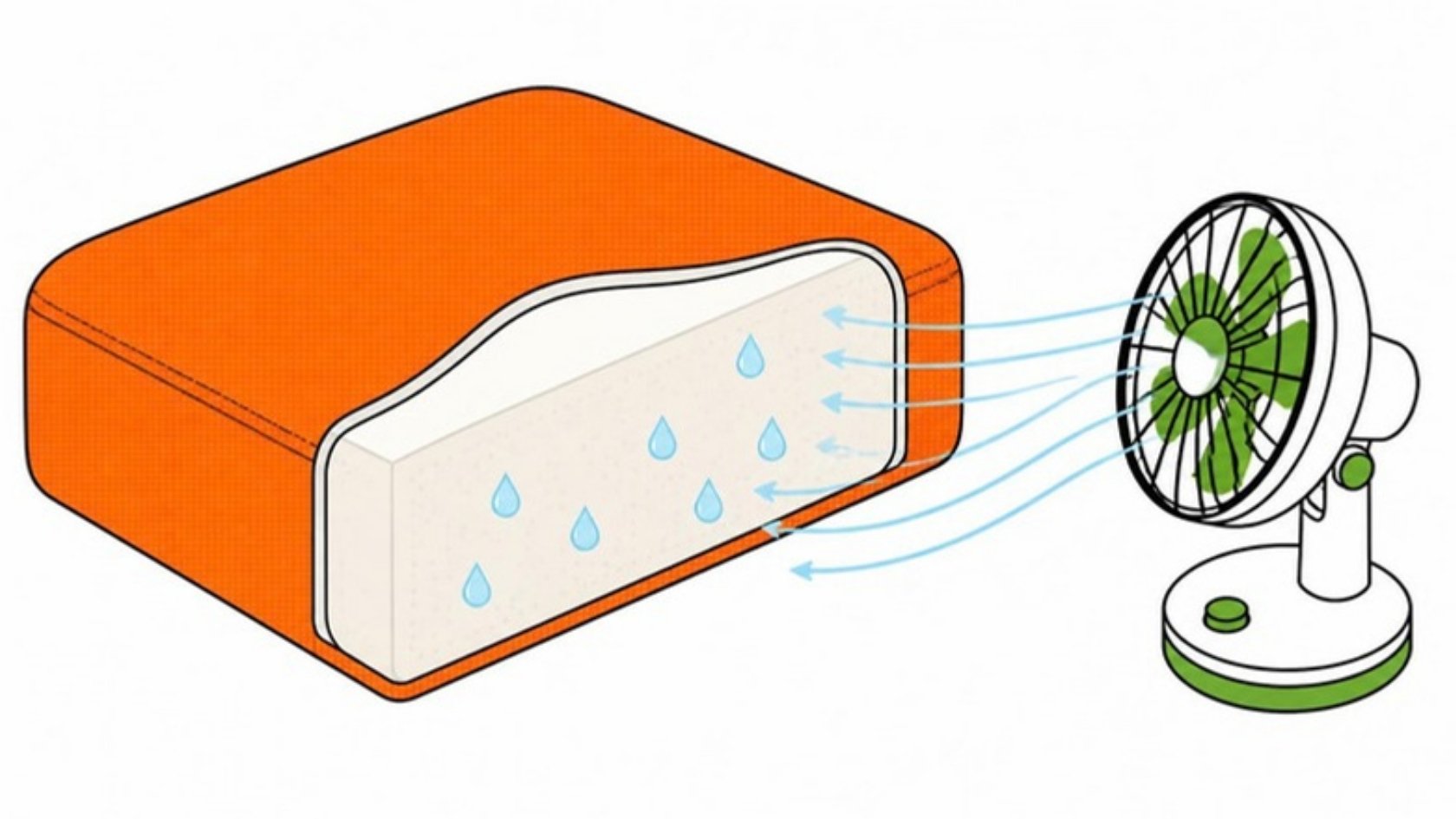
Thick cushions hold moisture, so airflow helps them dry.
When Should You Call A Professional?
Some jobs are better left to someone with the right equipment and a lot of practice reading fabric. Call a pro when:
-
- The tag says X, or says S and you’d rather not handle solvents.
-
- There’s no tag, and you can’t tell what the fabric is.
-
- Your spot test changes the color or texture.
-
- The whole couch looks dingy, not just one spot.
-
- A stain or smell keeps coming back.
Citrus-A-Peel uses hot-water extraction for professional carpet and upholstery cleaning. Because that method uses water, the tag is the first thing worth checking, and a good cleaner will read it before choosing a method.
What Should You Do Next?
Start with the tag, keep the moisture low, and give the fabric time to dry. That sequence is the whole method in one sentence. If you’d rather have someone look at it first, Citrus-A-Peel can assess the fabric and recommend an appropriate cleaning approach. Contact us for a quote, and we’ll take it from there.
Frequently Asked Questions
How Often Should You Clean A Couch?
Vacuum about once a week, as NMSU Extension recommends, and treat spills right away. Professional cleaning depends on your household, pets, and how much the couch gets used.
Can You Steam Clean A Couch?
Only if the tag allows water. S-coded fabric should never get water, X means call a professional, and W or WS fabrics need a spot test first.
Can You Wash Couch Cushion Covers?
Usually not. NMSU Extension advises leaving zippered covers on upholstered furniture because washing them separately can shrink the fabric, damage the backing, or change the color. Check your tag first.
What Happens If You Use Water On An S-Coded Couch?
It can damage the fabric or leave unsightly rings, according to American Leather. S-coded fabrics need water-free, solvent-based cleaners, and the room should be ventilated while you work.