


You spill coffee on the couch, and the first instinct is almost always to grab a towel and start scrubbing. Isn’t it? But that’s usually the wrong move!
If you’re standing over your sofa right now in a Westfield, NJ living room with a half-empty mug in one hand, take a second before you do anything else. Because what you do in the next two minutes matters more than anything you do after that.
This guide walks through what to do the moment coffee hits your upholstery, how fresh spills are different from stains that have already dried in, and when it actually makes sense to call in professional upholstery cleaning instead of handling it yourself.
TL; DR
- Blot a fresh coffee spill right away with a dry cloth instead of scrubbing, since scrubbing pushes the stain deeper and can spread it.
- Check your couch’s care tag (W, S, WS, or X) before applying any cleaner, since fabrics react differently to water and solvents.
- Dried coffee stains are tougher to remove and usually need gentle reactivation with an appropriate cleaner rather than simple blotting alone.
- If the stain is old, spread, or resistant to DIY methods, professional upholstery cleaning is a reasonable next step for Westfield homeowners.
Firstly, Don’t Scrub The Coffee Stain
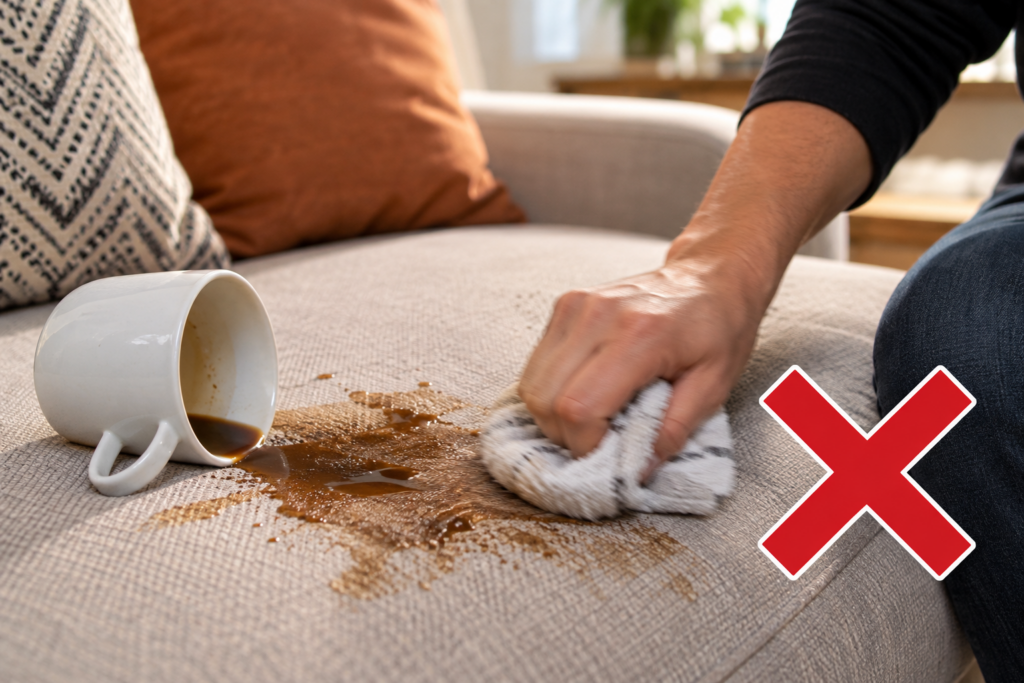
Here’s the thing. Scrubbing feels productive. It feels like you’re doing something about the problem. But rubbing a coffee stain usually just pushes the liquid deeper into the fabric and the cushion padding underneath it. Instead of lifting the stain out, you’re driving it further in.
Scrubbing can also spread the stain outward, turning a small spill into a bigger, blurrier mark. On some fabrics, especially anything with a nap like velvet or certain microfiber blends, aggressive rubbing can also change the texture of the material or leave a shiny patch where the fibers have been crushed or flattened. Once that happens, it doesn’t always come back to normal, even after the stain itself is gone.
The safer move is blotting, not scrubbing. It takes more patience, but it actually works better.
What We Did First When Coffee Spilled On The Couch
Every time we get a call about a fresh coffee spill, the advice is basically the same, and it starts before anyone even reaches for a cleaning product. Here’s the sequence that actually helps:
- Clear the area. Move pillows, blankets, mattresses, or anything else sitting nearby so the coffee doesn’t transfer onto other fabric.
- Blot right away. Use a clean, dry cloth or paper towels and press down gently. Don’t rub.
- Switch to a fresh section of cloth as soon as the one you’re using starts picking up coffee. Reusing a soaked cloth just moves the liquid back onto the couch.
- Work from the outside of the stain toward the center. This helps keep the stain from spreading outward into a wider ring.
- Avoid soaking the area. Blot with light pressure. Pouring water or cleaner onto the spill to “flush it out” usually makes things worse.
- Check the fabric before applying anything else. This is the step people skip, and it’s the one that matters most.
If the stain is fresh, you have a much better chance of dealing with it without any lasting mark. That’s exactly why step six matters so much, because what you do next depends entirely on what your couch is made of.
Spilled Red Wine instead? Check out how to handle that on our ‘red wine on a couch‘ post.
Next, Check Your Couch Fabric Before Using A Cleaner
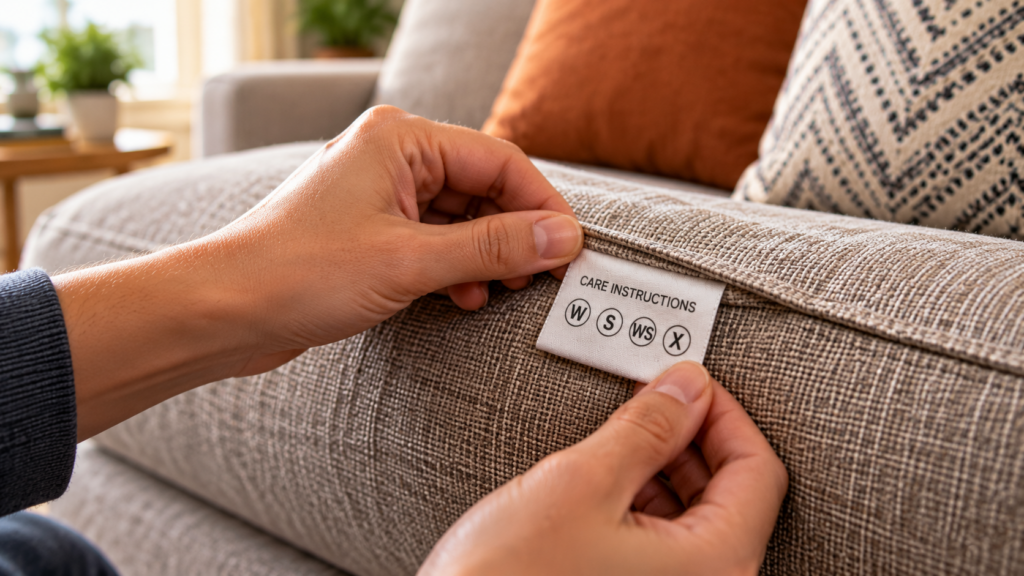
Before you reach for the cleaning spray, take a second and find the care tag. It’s usually tucked under a cushion, zipped into a seam, or attached somewhere on the frame underneath the fabric. That little tag tells you what your couch can actually handle.
Most upholstery is labeled with one of these codes:
- W means the fabric can be cleaned with water-based cleaning solutions.
- S means only solvent-based cleaners should be used. Water can cause shrinking, staining, or rings on these fabrics.
- WS or SW means either water-based or solvent-based cleaners are generally safe.
- X means the fabric should only be vacuumed or brushed. No liquid cleaners at all. If your couch has an X code, professional cleaning is really the safer route.
Not sure what each code means? Our guide explains what each code means in plain words
This is where things can go wrong. A lot of common household fixes like vinegar, dish soap, baking soda, bleach, or hydrogen peroxide might work fine on one fabric and cause real damage on another. Vinegar and dish soap can leave residue or discoloration on some materials. Bleach can strip color entirely, even in small amounts. Hydrogen peroxide can lighten fabric in ways that aren’t reversible. Different upholstery reacts differently, and there’s no universal safe product that works on all of them.
That’s why checking the fabric first matters more than knowing a clever DIY trick.
How To Remove A Fresh Coffee Stain From A Couch
After a label check, the best way to remove a fresh coffee stain from a couch is to test any cleaner on a hidden spot before applying it to the stain itself.
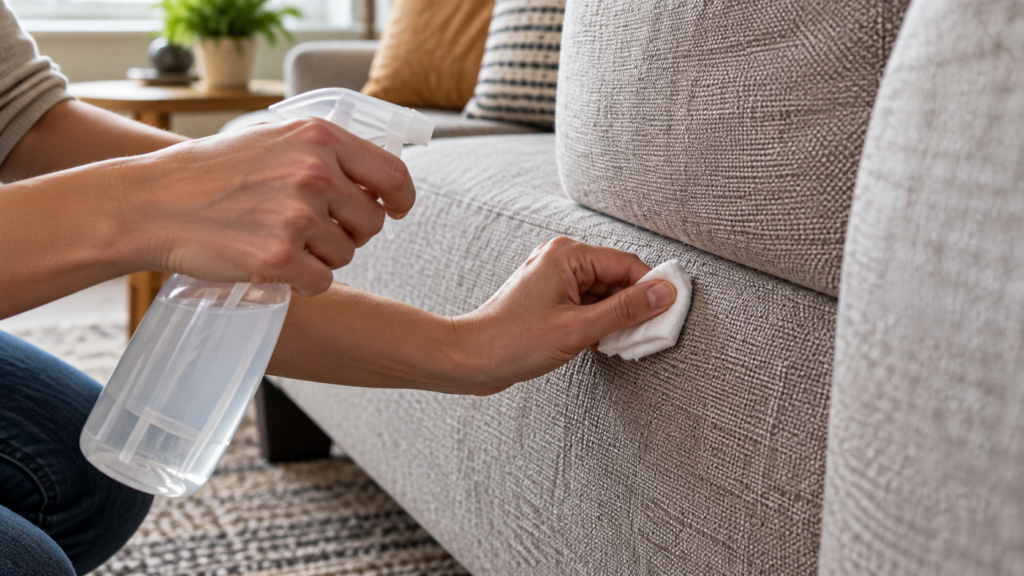
Once you know the cleaner is safe, apply a small amount and blot gently rather than scrubbing, then let the area air dry fully before anyone sits on it.
Here’s the rest of the process broken down:
- Test any cleaning solution on a hidden spot first, like the underside of a cushion or the back of the couch.
- If there’s no discoloration or texture change after a few minutes, apply a small amount to the stain.
- Blot, don’t rub, working from the edges in.
- Rinse with a clean, barely damp cloth if the label allows water.
- Blot dry, then let the area air dry completely before using the couch again.
You don’t need to panic if the stain doesn’t disappear completely on the first try. Coffee with milk or cream can leave a faint residue even after the visible stain is gone, and some fabrics hold onto tannins more stubbornly than others. A fresh, properly blotted spill still has the best odds of coming out clean, but “better odds” isn’t the same as a guarantee.
What If The Coffee Stain Has Already Dried?
Dried coffee stains are harder to remove because the coffee has had time to bond with the fabric fibers, and any milk or sugar in it can crystallize and settle deeper into the material.
Blotting alone usually won’t lift it. You typically need to gently reintroduce moisture with an appropriate cleaner to loosen the stain before you can blot it out.
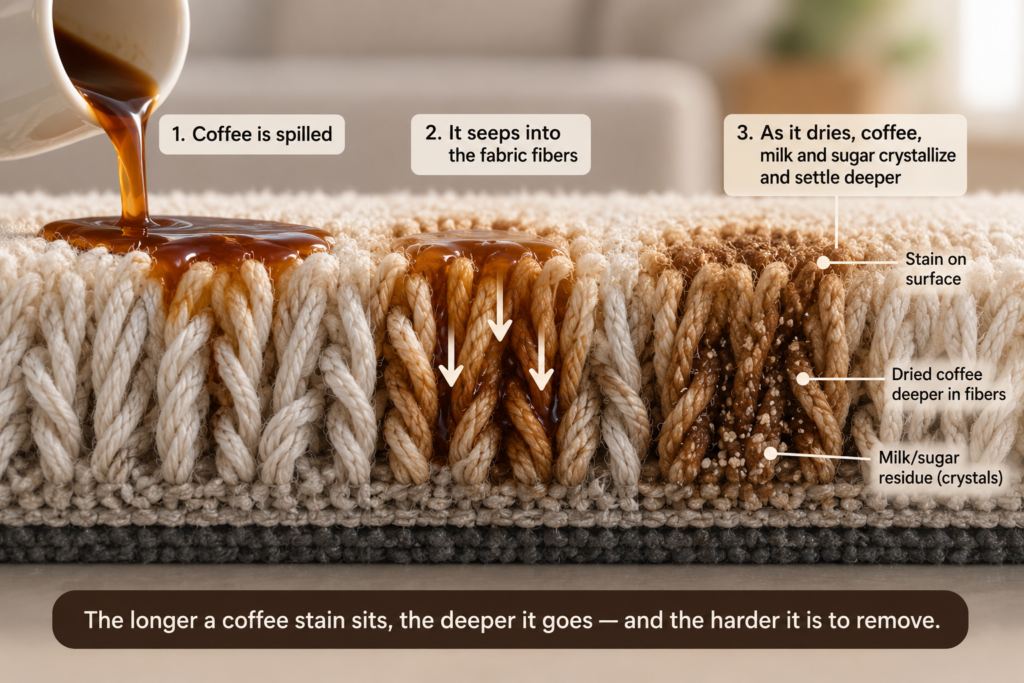
Old coffee stains often show up as a ring rather than a solid patch. That’s because the edges of a spill tend to dry with a higher concentration of coffee solids than the center, leaving a darker outline once everything dries. If someone already tried treating the stain with something like club soda, baking soda, or a random stain remover, that can sometimes set the discoloration further or leave its own faint residue on top of the coffee stain, which makes the whole thing more complicated to sort out.
If a stain has been sitting for a while, especially one that’s been treated more than once, it’s worth being realistic about what a DIY approach can accomplish at that point.
Things You Should NOT Do To A Coffee-Stained Couch
- Don’t scrub aggressively. It spreads the stain and can damage delicate fabrics.
- Don’t soak the cushion or fabric. Excess moisture can seep into the padding and take a long time to dry, sometimes leading to odor or mildew.
- Don’t mix cleaning chemicals. Combining products like bleach and ammonia-based cleaners can create dangerous fumes, and mixing random household products on upholstery is unpredictable at best.
- Don’t use bleach without checking what the manufacturer recommends. Even diluted bleach can strip color from fabric permanently.
- Don’t assume every couch can be steam cleaned. Heat and moisture can warp, shrink, or discolor certain materials.
- Don’t apply product after product hoping one will work. Layering different cleaners on top of each other often makes the stain and the fabric condition worse.
- Don’t sit on the cushion while it’s still wet. This can push moisture and coffee residue back into the fabric right after you just worked to lift it out.
When DIY Couch Cleaning Isn’t Enough
Some coffee stains are genuinely manageable at home. Others aren’t, and it’s worth knowing the difference before you spend an afternoon working on something that needed a different approach from the start.
Professional upholstery cleaning tends to make more sense when you’re dealing with:
- A large spill that soaked into the cushion rather than sitting on the surface.
- A stain that’s already dried in.
- Coffee that had milk or cream in it, since that can leave both a stain and an odor.
- A stain that’s spread or turned into a wider, blurrier mark.
- A lingering smell that doesn’t go away after cleaning.
- Visible discoloration that didn’t lift with blotting.
- Delicate upholstery like silk, velvet, or certain specialty blends.
- Furniture that’s expensive, antique, or otherwise not something you want to experiment on.
- A stain that keeps reappearing days after you thought it was gone, which usually means residue is wicking back up from deeper in the cushion.
When To Call A Professional Couch Cleaner In Westfield, NJ
Westfield has a lot of homes with furniture that’s been around for a while, and plenty of upholstery that’s more delicate than the average big-box sofa. If you’re dealing with a coffee stain on something like that, or on a couch you just don’t want to risk experimenting on, professional upholstery cleaning is worth considering rather than working through a string of DIY attempts.
The same goes for homeowners in the surrounding Union County towns like Scotch Plains, Cranford, or Mountainside dealing with similar furniture and similar stains. Coffee stains aren’t unique to any one town, but the decision to bring in a professional usually comes down to the same factors everywhere: how old the stain is, what the fabric is made of, and whether previous attempts at cleaning it have already complicated things.
How Professional Upholstery Cleaning Handles A Coffee-Stained Couch
A professional visit for a coffee-stained couch typically follows a similar process like this:
- Inspect the upholstery to understand the fabric type, condition, and any existing wear or previous treatments.
- Identify the fabric using the care code and a physical check, since labels aren’t always accurate or present.
- Assess the stain, including how old it is, whether milk or sugar was involved, and whether it’s spread beyond the visible mark.
- Pre-treat where appropriate, often with a citrus-based preconditioner designed to help break down oils and residue before the main cleaning step.
- Clean or extract the upholstery using a method suited to that specific fabric, which for many materials involves hot water extraction to lift dissolved residue out of the fibers.
- Dry the furniture properly, since removing excess moisture is a key part of preventing new problems like odor or a stain returning later.
- Inspect the result and let you know realistically what came out and whether any faint marking remains.
If any of the above is true, it’s time to get those carpets cleaned. Citrus-A-Peel also leans on green-friendly, child and pet-safe products throughout that process, which matters if you’ve got kids or animals who are back on the couch within hours of it being cleaned.
How Long Does It Take For A Couch To Dry After Cleaning?
There’s no single answer here, because drying time depends on several things happening at once:
| Factor | How It Affects Drying Time | Approx. Drying Time |
|---|---|---|
| Upholstery material | Dense fabrics and thick cushions hold moisture longer than thinner materials | 4–12 hours |
| Amount of moisture used | Lighter cleaning methods dry faster than deep extraction | 2–6 hours for lighter cleaning; 6–12+ hours for heavier moisture |
| Cleaning method | Some methods use less water to begin with | 2–6 hours for low-moisture methods; 6–12 hours for water-based cleaning |
| Ventilation | Airflow through the room speeds up evaporation | Can reduce drying time to around 2–6 hours |
| Room temperature | Warmer air helps moisture evaporate faster | Around 3–8 hours in a warm room |
| Humidity | New Jersey’s humid summer stretches can noticeably slow drying time | 8–24+ hours in high humidity |
Because of all these variables, a couch might feel dry to the touch within a few hours or take longer, especially with thicker cushions or on a particularly humid day. If you’re not sure whether it’s safe to sit on the furniture yet, it’s better to wait a bit longer than to risk pushing moisture back into fabric that hasn’t finished drying.
Can Professional Upholstery Cleaning Remove Coffee Stains Completely?
Often, yes, but not always, and it depends on a handful of specific factors:
- How old the stain is. Fresh stains generally respond better than ones that have set for weeks or months. This works for pet stains too!
- The upholstery material. Some fabrics release stains more easily than others.
- Whether previous chemicals were used. Household products applied earlier can sometimes react with professional cleaning solutions or have already set the discoloration.
- Whether the coffee contained milk or sugar. These can leave behind residue that behaves differently than black coffee alone.
- Whether the fabric has been permanently discolored. In some cases, what’s left behind isn’t the stain itself but a change in the fabric’s color from the original spill or from sun exposure over time.
- Whether the upholstery has sustained damage, such as fiber breakdown from scrubbing or prior harsh chemical use.
A professional cleaner can generally tell you after inspecting the couch what kind of result is realistic. Anyone who promises a guaranteed full removal without even looking at the fabric first isn’t giving you an honest answer.
Final Takeaway: Blot First, Don’t Panic
If you remember nothing else from this, remember these:
- Blot the coffee immediately. Don’t scrub.
- Check the fabric care code before applying any cleaner.
- Test any product on a hidden spot first.
- Don’t soak the couch or mix cleaning chemicals.
- Dried and spread-out stains are harder to treat and may need more than a household fix.
If the stain has already dried, spread across the cushion, or just isn’t budging after a reasonable DIY attempt, professional upholstery cleaning is a reasonable next step rather than something to feel like you failed at. Homeowners in Westfield and the surrounding Union County area dealing with a stubborn coffee stain can have their upholstery assessed and cleaned by someone who does this regularly, rather than continuing to experiment on their own couch.
If your couch still has a stubborn coffee stain after trying these steps, or you’re dealing with delicate upholstery you’d rather not test cleaners on yourself, Citrus-A-Peel offers professional upholstery cleaning for homeowners in Westfield and throughout Union County.
Frequently Asked Questions
How do you get coffee out of a couch?
Blot the spill immediately with a dry cloth, check the fabric’s care code, test a cleaner on a hidden area, then apply a small amount and blot gently. Avoid rubbing or soaking the area.
Should you scrub a coffee stain on upholstery?
No. Scrubbing pushes the stain deeper into the fabric and padding and can spread it outward. Blotting is more effective and safer for most fabrics.
Can I use vinegar on my couch?
Not without checking the fabric code first. Vinegar (or any other salt-based solution) can be fine on some water-safe (W-coded) fabrics but can cause discoloration or damage on solvent-only (S-coded) materials. Always test on a hidden area first.
How long does a professionally cleaned couch take to dry?
It depends on the fabric, the cleaning method, humidity, and airflow in the room. Some couches feel dry within a few hours, while others, especially thicker cushions or during humid weather, take longer.