


In today’s times, the question “how to remove red wine from a couch?” comes down to three moves: blot right away, read the fabric code on the tag, and use only what that code allows.
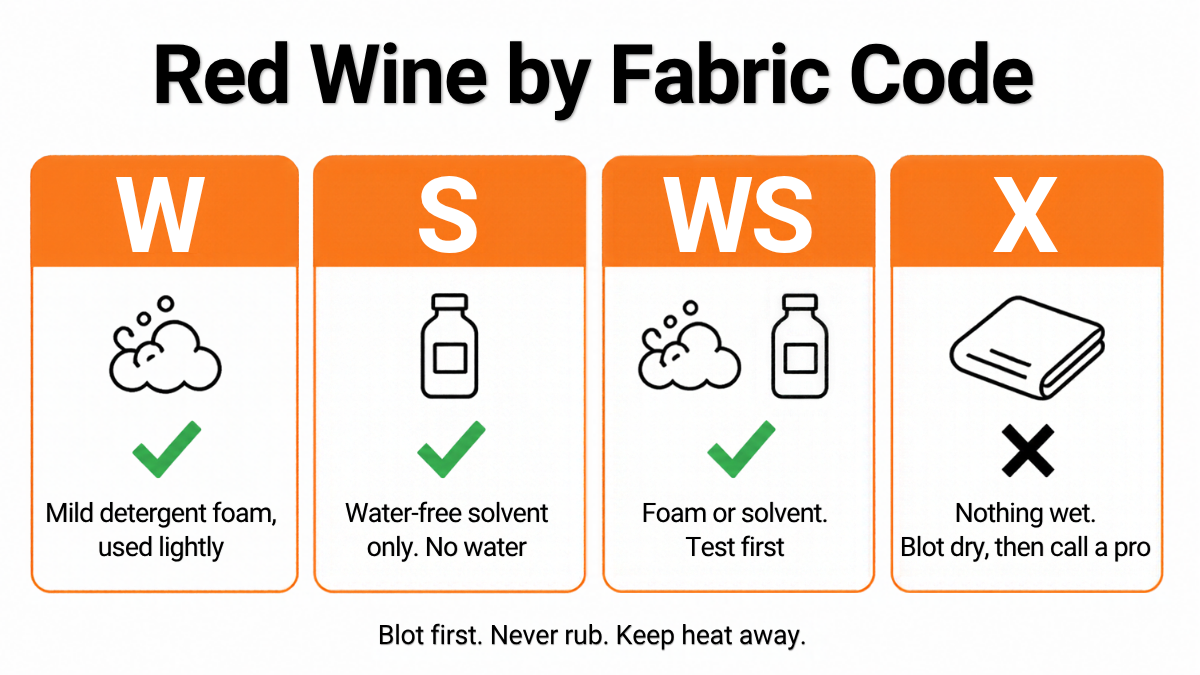
The process involves blotting with a clean white cloth and never rubbing, because rubbing spreads the wine and can damage the fabric. Then match the cleaner to the letter (look for a mild detergent foam for W, a water-free solvent for S, either one for WS, and no liquids at all for X).
Next, skip the heat, steam, and a flood of water, since heat can set a stain for good. Then, test any product on a hidden spot first, dry the cushion fully, and call a professional if the stain is old, the couch is light-colored, or the tag says X.
Easy peasy, right? Not quite; there’s more to understand. The steps below follow that order.
Let’s get into it, shall we?
TL;DR
- Blot the wine at once with a clean white cloth, working from the outside edge in, and never rub.
- Check the tag first: W allows detergent foam, S needs a water-free solvent, and X allows no liquids.
- Avoid heat, steam, and soaking, because heat can set the stain and too much water leaves rings.
- Dry the cushion within 24 to 48 hours, and call a professional for old stains or X fabrics.
What Should You Do In The First Minute?
The speed of cleaning matters here more than any type of product considered for cleaning. NMSU Extension says to blot liquids up with a soft cloth, a white facial tissue, or a white paper towel, and to work from the outer edge of the stain toward the center so the wine doesn’t spread into a wider ring.
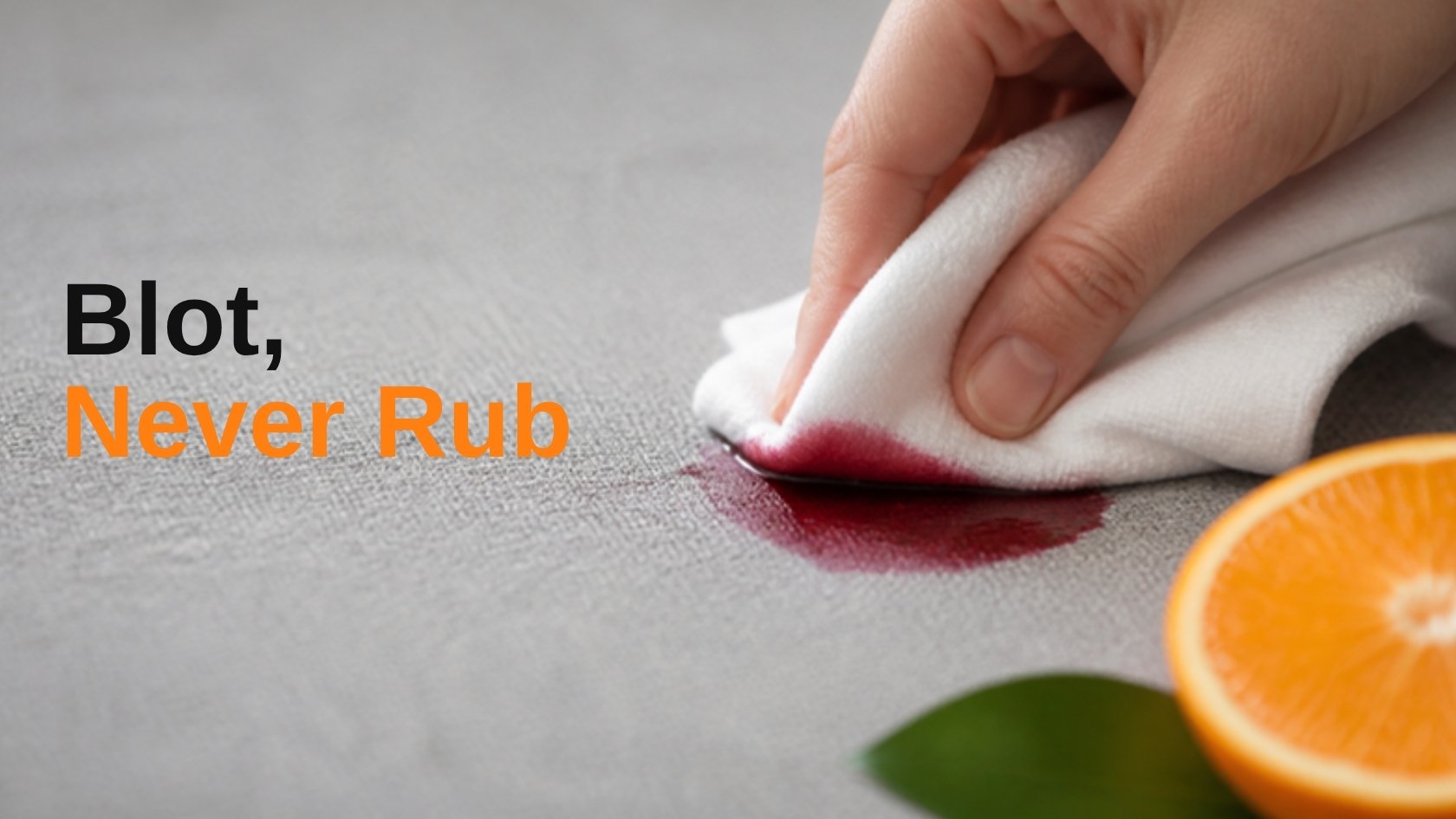
Then, press, lift, move to a clean part of the cloth, and press again. A white cloth lets you see the wine coming up and keeps dye from transferring to your fabric.
Don’t rub and don’t scrub with a brush, because rubbing works the wine deeper and can stretch the fabric or damage its texture.
Keep heat away, too. Heat can set a stain permanently, so put down the hair dryer and the iron, and don’t reach for a steamer yet.
The same first-minute rules apply to any drink, and our case study of a coffee-stained couch walks through them.
Why Does The Fabric Code Come Before Any Cleaner?
Most cleaning recipes online start with water and dish soap, and that is wrong for a lot of couches.
American Leather says S fabric should never be cleaned with water, because it can cause damage or leave unsightly rings, and it calls X a clear sign not to attempt cleaning it yourself. So, lift a cushion and find the tag.
If the letters are new to you, our upholstery cleaning codes guide explains each one.
| Code | What You Can Use on Red Wine | What to Avoid |
|---|---|---|
| W | A mild detergent foam, used lightly | Soaking and heat |
| S | A mild water-free solvent or dry cleaning product, spot cleaning only | Water and steam |
| WS (or SW) | Detergent foam or a mild solvent, tested first | Saturating the fabric |
| X | Nothing wet: blot up fresh liquid with a dry cloth, then ask the store or a professional | Any foam, liquid, or solvent |
How Do You Remove Red Wine From A W Or WS Couch?
The thing to understand is that wine is a water-based stain, so the detergent foam is the right tool on W and WS fabrics.
So, test it on a hidden spot first and wait for the test patch to dry. Then follow the foam method from NMSU, which keeps moisture low:
- Mix half a cup of mild liquid dishwashing detergent with a pint of boiling water, let it cool, and whip it into a thick foam with an electric mixer.
- Apply only the foam with a damp sponge, working from the outside of the stain toward the center, then wipe the suds off with a clean cloth.
- Rinse by wiping with a cloth dipped in lukewarm water with a cup of white vinegar per gallon, using as little liquid as possible and changing the water often.
- Press a clean white towel on the spot to lift the moisture, and don’t rub.
On WS fabric, don’t saturate the cushion, and use the same foam. If a shadow remains once the fabric is dry, repeat the light rinse once and stop. More rubbing and more water will do more harm than the stain.
What If The Tag Says S Or X, Or There Is No Tag?
On S fabric, water is the problem. C.R. Laine says steam and water-based cleaners may cause excessive shrinkage and staining, and recommends a mild water-free solvent or dry cleaning product for spot cleaning only.
So, work in a well-ventilated room and keep flames away. Solvent is the right tool for oily stains, not wine, so expect it to lighten the mark rather than erase it, and call a professional if it stays.
On X fabric, nothing wet is allowed. So blot up what you can with a dry cloth, then stop and call the store where you bought the couch or a professional. American Leather’s advice is the same: this is not a job for home products.
With no tag at all, test a hidden part of the couch for damage or color change before anything touches the stain. NMSU’s guide says to call a professional cleaner when there is no code, and our guide to cleaning a couch lists the dry-first steps in order.
Do Salt, Baking Soda And White Wine Actually Work?
They are the most repeated wine tips online, so here is a straight answer. Covering a fresh spill with salt, baking soda, or cornstarch is meant to draw the wine up. It adds no moisture, which makes it the least risky of the three, but no university or manufacturer guide we reviewed recommends it.
Thus, treat it as optional: leave it a few minutes, then vacuum every grain up so nothing stays in the fabric.
Pouring white wine on red wine is the one to skip. It adds more liquid to a stain you are trying to keep small, and the guides we reviewed ask for as little moisture as possible.
Peroxide and bleach-style products can change a dye, which is exactly what the hidden-spot test is for, so leave those to a professional.
What If The Stain Is Old Or Keeps Coming Back?
An old stain is harder to remove, and every extra round of scrubbing or water adds risk. NMSU’s guide notes that prompt attention increases success, which is why the first minute matters so much.
If the wine has dried, try one gentle round of the foam method on a W or WS fabric, check it once the cushion is dry, and stop there.
The urge to reach for a steam cleaner is strong at this point, but steam adds both water and heat to a stain that does not need either.
Our post on steam cleaning a couch explains which codes can take it and which can’t.
How Should You Dry The Couch After Cleaning Wine?
This part is where the moisture is the next risk. The EPA says to dry wet items within 24 to 48 hours, because in most cases mold will not grow if damp materials are dried in that window.
So, stand the cushion on its side, point a fan across it, and run the air conditioner or a dehumidifier when the New Jersey air is muggy.
Don’t sit on it until it feels fully dry, and judge the stain only once it is dry, because wet fabric always looks darker.
When Should You Hire A Professional?
Call a professional when the tag says X, when an S fabric didn’t lift the mark, when the stain is old or has spread, when the couch is light-colored or valuable, or when you can’t find a tag (our post on professional sofa cleaning lists other signs it is time).
Those are the cases where another home attempt is most likely to leave a ring or a faded patch. Professional upholstery cleaning has a published standard, ANSI/IICRC S300, which covers pre-cleaning inspection, cleaning methods, and spot and stain removal.
If your couch is W or WS and the stain won’t budge, our carpet and upholstery cleaning service uses hot-water extraction, so tell us the code on your tag and when the spill happened.
Remember, Blot First, Then Let The Tag Decide
A red wine spill is stressful, but the order of operations is simple: blot, read the tag, use only what the code allows, and dry the cushion fast. Skip heat, skip rubbing, and stop when you are unsure. If the stain wins, get in touch and mention the code on your tag.
Frequently Asked Questions
Does Salt Remove Red Wine From a Couch?
It may help draw up a fresh spill, but no university guide we reviewed recommends it. Blot first, use salt only if you wish, then vacuum it up completely.
Should You Put White Wine on a Red Wine Stain?
No. It adds more liquid to a stain you want to keep small. Blot with a clean white cloth and use only what the fabric code allows.
Can You Use Hot Water on a Red Wine Stain?
No. Heat can set a stain permanently, so keep irons, hair dryers, and steam away. Use cooled foam and lukewarm rinse water on W or WS fabrics instead.
Can You Get Red Wine Out of an S Code Couch?
Sometimes. Use only a mild, water-free solvent or dry-cleaning product, spot-clean in a ventilated room, and never use water. Call a professional if the stain remains.