


Picture this scenario. It’s a familiar Jersey Shore afternoon. The kids come in from the beach, sandals get kicked off at the door, and someone drops a damp towel on the way to the shower.
An hour later, the air conditioning is fighting a humid August evening, and nobody thinks twice about any of it.
But repeat that scene a few dozen times over a summer, and your carpet has absorbed more than memories of a good beach day.
Well, folks, Fall is almost here, and this problem is only going to increase.
You see, the carpet cleaning Jersey Shore homeowners deal with is a little different from that in inland areas. It’s not usually one big spill or one dramatic mess. It’s the slow accumulation of sand, salt residue, and moisture that builds up quietly until the carpet just doesn’t look or feel the way it used to.
So, understanding how these three factors work together can help you catch the problem earlier and keep your carpet in better shape between professional cleanings.
That’s what this article is all about. Let’s get going.
TL; DR
- Jersey Shore carpets face extra wear from recurring sand, salt residue, moisture, and heavy summer foot traffic.
- Sand can work deep into carpet fibers, while repeated foot traffic can gradually contribute to abrasive wear.
- Salt residue adds to carpet soil, while humidity can slow drying and contribute to musty odors.
- Regular vacuuming and moisture control help, but professional cleaning removes deeper buildup that routine maintenance cannot fully reach.
Why Jersey Shore Homes Put Carpet Through More Wear
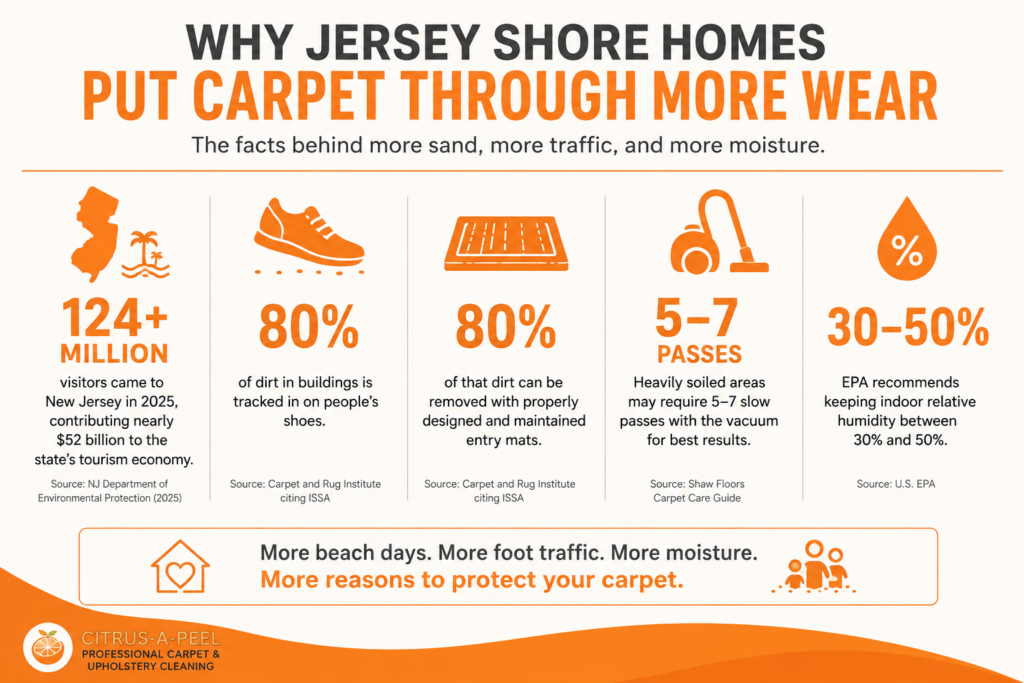
For starters, homes near the water tend to see more foot traffic than a typical inland house, especially between Memorial Day and Labor Day. Kids track sand in from the yard or the beach. Pets come inside with damp paws after a walk near the bay. Visiting family and rental guests move in and out all season, each bringing their own layer of dirt, sunscreen, and moisture with them.
Add in beach chairs, coolers, and bags set down just inside the door, plus wet swimsuits and towels draped over furniture, and you’ve got a carpet that’s absorbing far more than an average living room floor. None of this is unusual for a Toms River or Ocean County home, but it’s just part of living close to the water. But it does mean carpet in these homes often needs a bit more attention than a standard maintenance routine covers.
How Beach Sand Gets Trapped In Your Carpet
Sand looks harmless enough sitting on a shoe or a beach bag, but once it lands on carpet fibers, it behaves differently than most household dirt. Each grain is small, hard, and slightly angular. When someone walks across the carpet, that pressure pushes sand particles down past the visible surface of the fibers and toward the base of the carpet, closer to the backing.
Once sand works its way that deep, it’s harder to remove with a quick pass of the vacuum; repeated foot traffic over the same particles can also cause a mild abrasive effect on the fibers themselves, similar to how sandpaper wears down a surface with repeated friction, but much slower and less dramatic. Over time, this is part of why high-traffic areas near entryways can start to look duller or more worn than the rest of the room, even if no one has ever spilled anything there.
Why Vacuuming Doesn’t Always Remove Everything
A good vacuum will pull up the sand sitting near the top of the carpet fibers. What it often misses is the portion that’s already worked its way down toward the base, especially in denser or higher-pile carpet.
A few habits can help:
- Vacuum slowly rather than quickly, giving the machine time to lift embedded particles.
- Go over high-traffic areas. Entryways, hallways, the path from the door to the kitchen. More than once.
- Use a vacuum with strong suction and, if possible, a beater bar or brush roll, which helps agitate fibers and loosen trapped sand.
- Vacuum more often during peak beach season rather than sticking to a once-a-week routine.
Even with a solid vacuuming habit, some sand tends to stay behind. That’s normal, and it’s one of the reasons Shore carpets often benefit from a deeper cleaning more than once a year.
What Salt Air And Salt Residue Can Do To Carpet
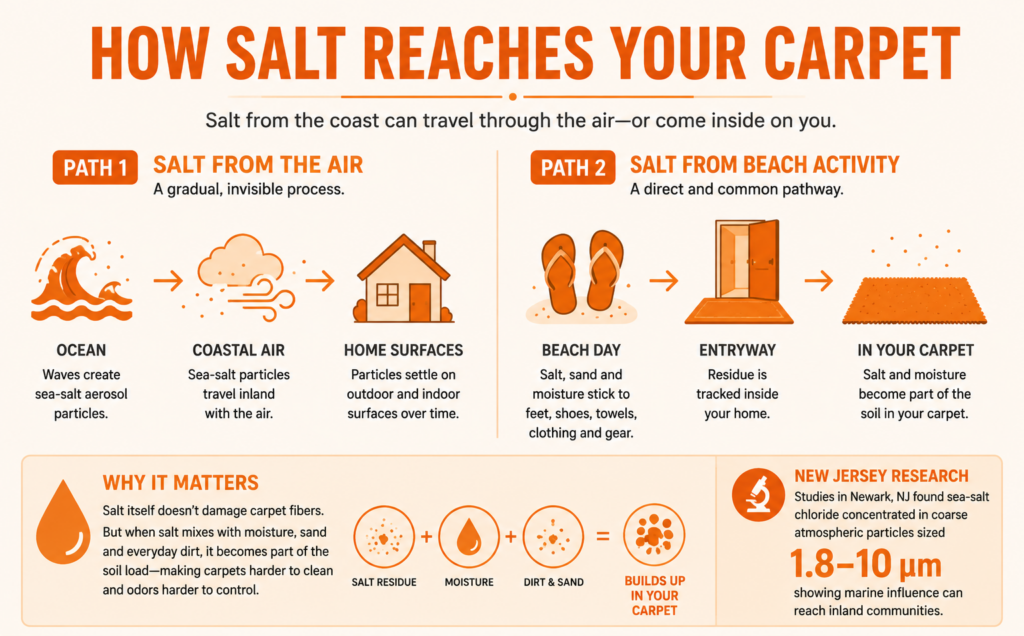
It’s worth separating two things that often get lumped together: salty coastal air and actual salt residue that ends up on your carpet.
The air along the Jersey Shore does carry a fine salt content, but that alone isn’t what’s affecting your carpet fibers day to day. The more direct issue is residue that gets physically deposited, like salt from ocean water drying on skin and clothing, residue left on shoes after walking through wet sand, or salt carried in on beach towels and gear that get set down indoors.
That residue becomes part of the general soil load your carpet is dealing with. It’s not a dramatic chemical reaction, and it’s not going to eat through carpet fibers the way people sometimes assume. What it can do is combine with everyday dirt, oils, and moisture to make carpet feel gritty or look a little flatter than it should, particularly in the areas closest to doors and beach-gear storage spots. It’s one more ingredient in the mix rather than a standalone threat.
How New Jersey Humidity Affects Your Carpet
Summer humidity along the Shore is a different challenge, and it has more to do with moisture management than with dirt itself. When the air holds more moisture, carpet takes longer to fully dry after cleaning, after a spill, or even after normal daily foot traffic tracks in dampness from outside.
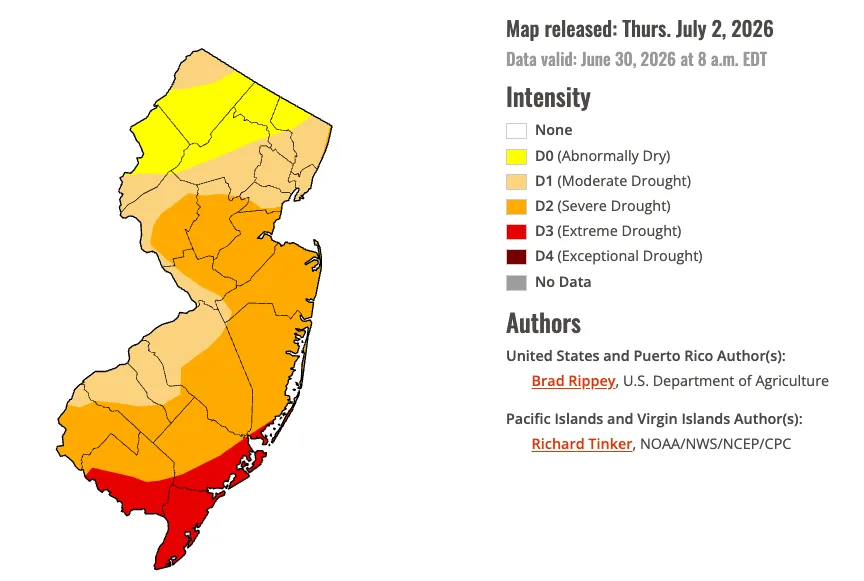
Carpet that stays even slightly damp for longer periods gives soil and residue more time to settle into fibers instead of drying and lifting away with light vacuuming. It also creates a slower-drying environment at the base of the carpet, near the padding, where air doesn’t circulate as easily. This is less about any single humid day and more about the cumulative effect of a season where the air rarely gets a chance to feel truly dry.
Why Carpet Can Smell Musty In Summer
A musty smell in carpet during humid months usually comes down to a combination of trapped moisture and accumulated organic material, with skin cells, pet dander, food particles, and general household soil. When humidity keeps that combination slightly damp for extended stretches, conditions become more favorable for the kind of microbial activity that produces odor.
This doesn’t mean every humid Shore home is dealing with a mold problem. Most of the time, it’s a lower-level buildup that shows up as a stale or musty smell rather than a visible issue. Improving airflow, using a dehumidifier or air conditioning to manage indoor humidity, and addressing spills or wet spots quickly all help reduce the conditions that lead to that smell in the first place.
The Sand + Salt + Humidity Combination Is The Real Problem.
Looking at sand, salt, and humidity separately only tells part of the story. The reason Jersey Shore carpet care can feel harder than it does inland is that these three factors tend to show up together, and each one makes the others a little more persistent.
Here’s the practical cycle homeowners often experience:
- Sand gets tracked in from the beach or yard and, through daily foot traffic, works its way deeper into the carpet fibers rather than staying on the surface where a vacuum can easily reach it.
- At the same time, salt residue from swimsuits, towels, shoes, and skin adds to the overall soil sitting in the carpet, blending in with sand, dust, and everyday household dirt.
- Humidity then slows down how quickly all of that moisture and residue dries out, giving it more time to settle into the fibers instead of lifting away on its own.
The result isn’t one dramatic event, but it’s a carpet that accumulates soil faster than a typical inland home, dries more slowly after exposure to moisture, and needs more frequent attention to stay looking and smelling the way it should. Understanding this cycle is the difference between wondering why your carpet “just seems dirtier” every summer and actually knowing what to do about it.
7 Signs Your Jersey Shore Carpet Needs A Deep Cleaning
- Carpet looks dull even after vacuuming. This often points to soil that’s settled below the surface, where regular vacuuming can’t reach it.
- Sand keeps appearing around high-traffic areas. If sand seems to resurface days after a beach trip, some of it is likely still embedded deeper in the fibers.
- Carpet feels gritty underfoot. This is usually a sign that fine particles, sand included, have built up faster than they’re being removed.
- Musty smell returns after airing the room. If opening a window or running a fan doesn’t solve the smell, moisture may be trapped further down in the carpet or padding.
- Entryways look darker than the rest of the carpet. Heavier traffic near doors means more accumulated soil, sand, and residue in those specific spots.
- Stains or spots keep returning. This can happen when a spill isn’t fully removed, and residue keeps working its way back to the surface as the carpet dries and is walked on.
- Carpet hasn’t been professionally cleaned in a long time. Routine vacuuming maintains carpet, but it isn’t designed to remove deep, accumulated soil the way a professional cleaning can.
How To Protect Your Carpet From Coastal Sand, Salt & Humidity
A few consistent habits go a long way toward slowing down how much sand, salt, and moisture end up in your carpet in the first place:
- Ask family and guests to remove shoes near the entrance, especially after beach trips.
- Use a washable, high-traction entry mat both outside and inside main doors to catch sand before it spreads.
- Vacuum high-traffic areas more frequently during summer months, not just on a weekly schedule.
- Avoid setting wet towels, swimsuits, or beach bags directly on carpet — a bench or hook near the door helps.
- Keep beach chairs, umbrellas, and other gear stored somewhere other than directly on carpeted floors.
- Blot spills and damp spots as soon as you notice them rather than letting them air-dry on their own.
- Run air conditioning or a dehumidifier during especially humid stretches to help carpet and padding dry faster.
- Schedule a professional cleaning when these habits are no longer keeping up with how the carpet looks and feels.
None of these steps require special equipment, and they help regardless of whether or not you ever bring in a professional cleaning company.
How Often Should Jersey Shore Homes Have Their Carpets Professionally Cleaned?
There’s no single answer that fits every household. A general guideline for many homes is somewhere in the range of every 6 to 12 months, but that range shifts depending on how the carpet is actually used.
A quiet, adults-only household with minimal beach traffic might comfortably stay on the longer end of that range. A home with young kids, pets, and regular beach days often benefits from cleaning closer to the 6-month mark, simply because more sand, residue, and moisture are moving through the house on a regular basis.
Vacation homes and short-term rentals along the Shore tend to need more frequent attention too, since every new set of guests brings another round of foot traffic, sand, and moisture, often with less consistency in day-to-day upkeep than an owner-occupied home. Entryways and main living areas in any of these situations typically show wear faster than bedrooms or less-used rooms, so it’s worth paying closer attention to those spots specifically when deciding if it’s time for a cleaning.
Why Professional Carpet Cleaning Helps Shore Homes
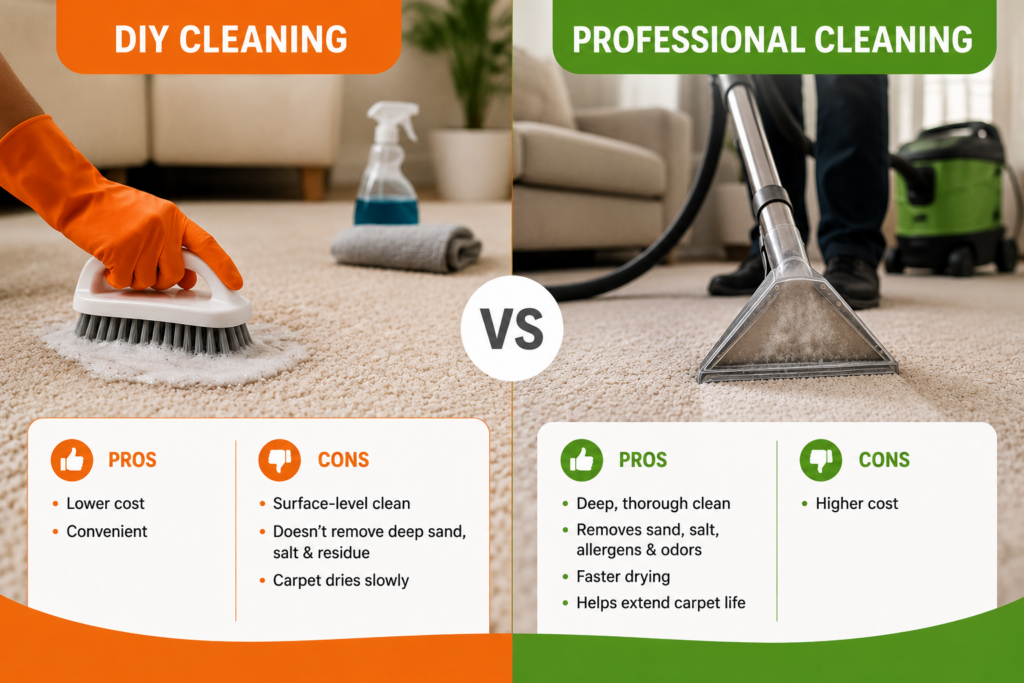
Professional routine vacuuming and the occasional spot treatment handle a lot of day-to-day maintenance, but they’re not designed to reach everything that accumulates over a Shore summer. Vacuuming lifts surface debris. Spot cleaning addresses a specific stain in a specific spot. Neither one is built to remove the finer sand particles, salt residue, and moisture-related buildup that settle deeper into the carpet over months of consistent use.
Professional cleaning is built around reaching that deeper layer, including the accumulated soil, residue, and dampness that routine care can’t fully address on its own. For a home that’s absorbing an entire beach season’s worth of sand, salt, and humidity, that deeper level of cleaning tends to matter more than it would for a typical inland household.
Keep Your Jersey Shore Carpet Cleaner For Longer
You can’t stop sand from coming in on little feet, keep every trace of salt off a beach towel, or control how humid a New Jersey summer gets. What you can control is how quickly those things get removed from your carpet, and how much time they spend sitting in the fibers before that happens.
A consistent vacuuming routine, a few smart habits around entryways and wet gear, and attention to indoor humidity will keep most Shore carpets looking better for longer. When that routine maintenance stops keeping pace with the season, a professional carpet cleaning can reach the soil, residue, and moisture that’s settled in deeper than everyday care can manage. If your carpet feels like it’s fighting a losing battle against another Jersey Shore summer, Citrus-A-Peel can take a look and recommend a cleaning approach suited to how your home actually gets used.
Frequently Asked Questions
Does beach sand ruin carpet?
Not from a single exposure. Sand is abrasive, and repeated foot traffic can push it deeper into fibers over time, which contributes to gradual wear in high-traffic spots. Regular vacuuming and occasional professional cleaning help prevent that buildup from becoming a bigger issue.
Can salt damage carpet?
Salt itself isn’t corrosive to carpet fibers. Salt residue from beach activity does add to the overall soil load, though, especially when combined with moisture, which can make carpet look duller or feel gritty in high-traffic areas near entryways.
Why does my carpet smell musty in the summer?
Humidity slows down how quickly moisture evaporates from carpet, giving trapped dampness more time to interact with everyday soil and organic material. That combination is often what produces a musty smell, particularly in less ventilated rooms.
How do you get beach sand out of carpet?
Vacuum slowly and go over high-traffic areas more than once, ideally with a vacuum that has strong suction and a brush roll. Some sand tends to settle deeper than a vacuum can reach, which is where periodic professional cleaning helps.
Does humidity make carpet dirty?
Not directly, but it slows drying time, which gives dirt, sand, and residue more opportunity to settle into carpet fibers instead of lifting away easily. Managing indoor humidity with air conditioning or a dehumidifier can help offset this.
How often should carpets be professionally cleaned at the Jersey Shore?
A common range is every 6 to 12 months, though homes with kids, pets, frequent beach traffic, or rental turnover often benefit from cleaning closer to the shorter end of that range.
Is vacuuming enough for beach sand in carpet?
Vacuuming handles a good portion of surface-level sand, but particles that have worked deeper into the fibers usually require a more thorough professional cleaning to fully remove.