

You clean the carpet. It looks great for a few days. Then, somehow, it starts looking dirty again, almost like the cleaning never happened.
If that sounds familiar, you’re not imagining things, and you’re probably not doing anything wrong either. It happens with everyone.
A carpet that keeps getting dirty after cleaning usually has more going on than what you can see on the surface.
We recently came across a carpet like this in Toms River (a household that can’t be named, of course). It had been cleaned before, more than once, actually, but it kept looking dull and dingy again within a short time. Instead of just cleaning it the same way and calling it a day, we took a closer look at what was actually happening underneath and around it.
Here’s the thing: dirt on top of a carpet is usually just part of the story. The rest of the story is often hiding in the padding, the fibers, or even in how the room gets used every day.
This article talks exactly about that. Below are the seven things we found, and what they can tell you if your own carpet keeps getting dirty faster than it should.
TL; DR
- A carpet that keeps getting dirty may have problems beneath the surface, including trapped soil, residue, and dirty padding.
- Everyday foot traffic, shoes, pets, and slow drying can cause carpets to look dirty again sooner than expected.
- Worn carpet fibers can make high-traffic areas look dirty even when they have been properly cleaned.
- When several issues overlap, another quick cleaning may not be enough, and the carpet may need a deeper approach.
1. The Carpet Padding Was Holding Onto Dirt
Most people don’t think much about carpet padding. It sits underneath the carpet, out of sight, doing its job of adding cushion and a bit of insulation. But padding isn’t sealed off from the world above it.
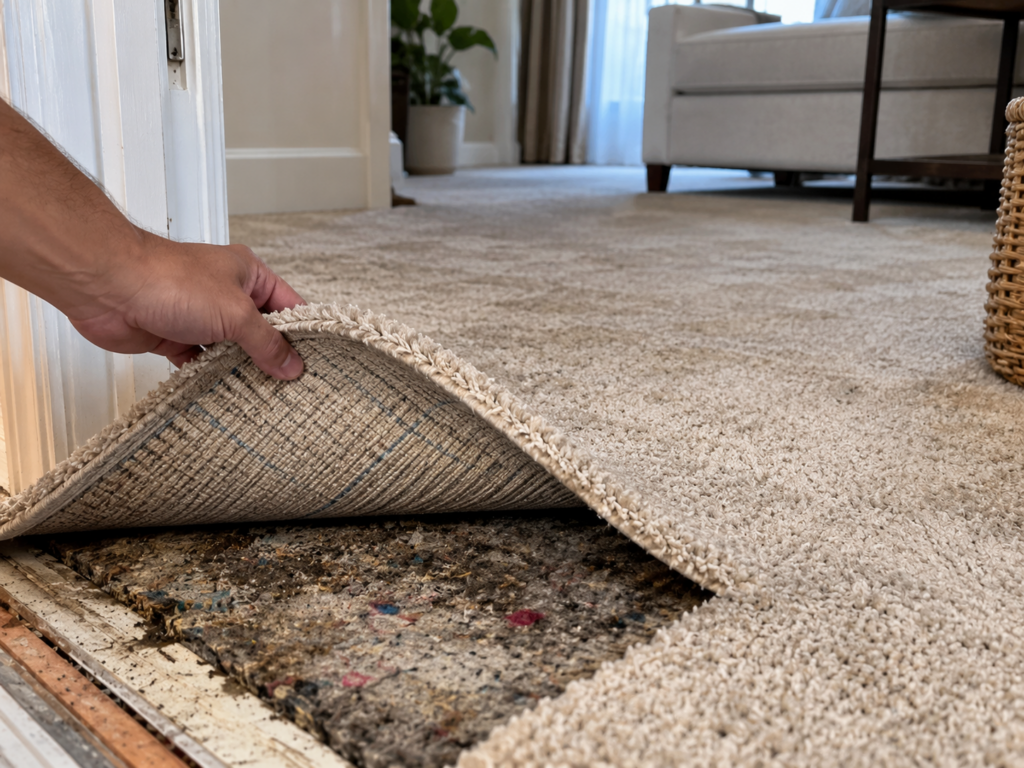
Dirt, dust, and even moisture can work their way down through the carpet fibers and settle into the padding underneath. Once that happens, cleaning the top layer of carpet doesn’t really touch what’s sitting below.
Imagine spilling a little water on a paper towel that’s sitting on top of a sponge. Wipe the paper towel dry, and the sponge underneath might still be damp. Carpet and padding can work in a similar way. That dampness or trapped soil can slowly work its way back up, especially in areas that get walked on a lot.
Now, this doesn’t mean every carpet with a re-soiling problem has bad padding underneath. But it’s one of the first things worth considering, especially if the carpet is older or has dealt with spills or pet accidents in the past.
2. There Was More Dirt Under The Surface Than We Expected
At first, the carpet didn’t look all that dirty once you got past the top layer. But when we looked closer, there was clearly more soil embedded down between the fibers than what showed up just from a glance or even a regular vacuum pass.
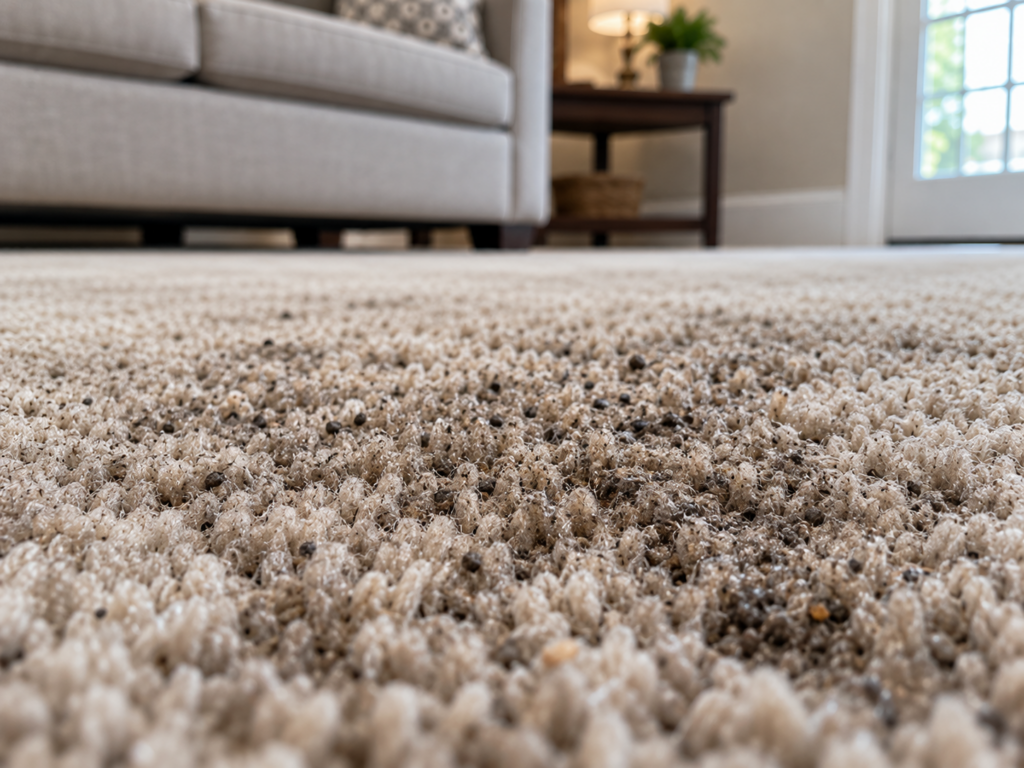
This is what’s usually called embedded soil, and it builds up gradually. Every time someone walks across the carpet, tiny bits of dirt and grit get pressed further down into the fibers. Over time, it packs in there, kind of like sand settling into the bottom of a rug.
Regular vacuuming does a good job of pulling up loose surface dirt, especially when there are pet stains present. What it often can’t reach is the soil that’s been pushed down deep, especially in high-traffic spots like hallways, in front of couches, or near doorways. That’s the first clue that a carpet needs something more thorough than routine upkeep.
3. Some Cleaning Residue Was Being Left Behind
Here’s something that surprised us a little. Part of the re-soiling problem seemed tied to leftover cleaning residue from a previous cleaning.
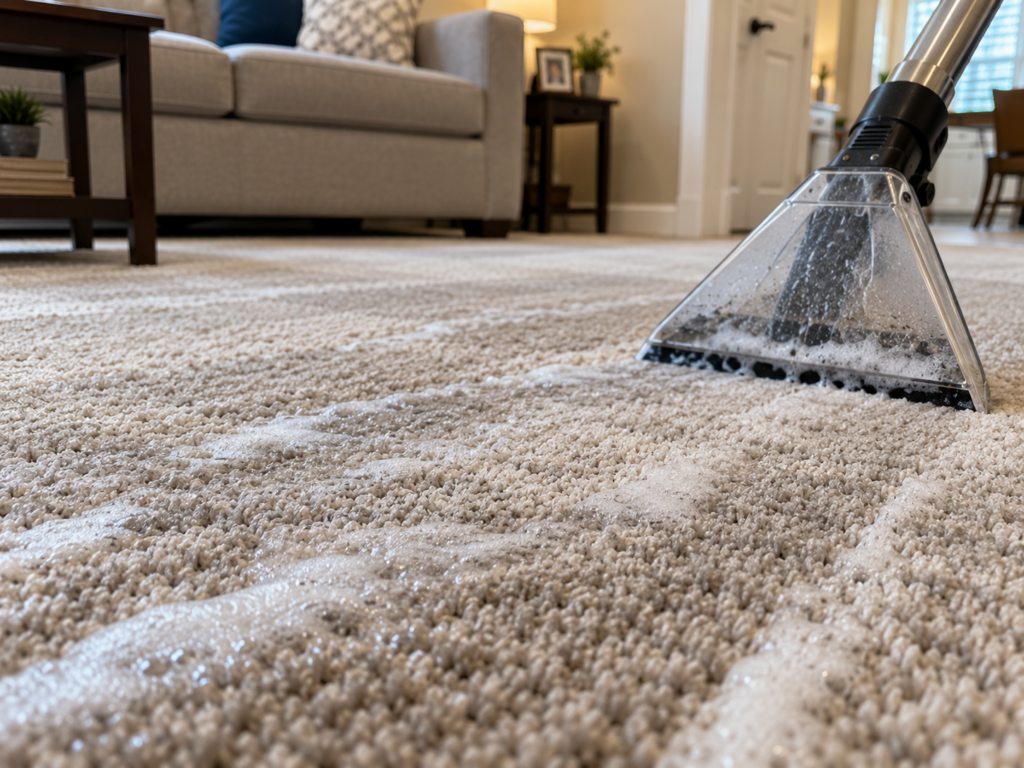
When too much cleaning solution is used, or when it isn’t rinsed and extracted properly afterward, some of that product can stay behind in the carpet fibers. And residue like that can actually act a bit like a magnet for dirt and dust, which means the carpet can start looking dirty again faster than expected.
That sounds simple, but it’s easy to miss, because the carpet often looks perfectly clean right after it dries. The problem shows up later, once dust and everyday grime start sticking to whatever residue is left behind.
This isn’t the case every single time a carpet gets dirty quickly again. But it’s common enough that it’s worth mentioning, and it’s part of why proper rinsing and thorough extraction matter so much during a cleaning, whether it’s done by a homeowner or by a professional carpet cleaning service.
4. More Dirt Was Being Tracked In Than Anyone Realized
This one isn’t really anyone’s fault. It’s just how homes work.
Shoes, pets, kids, grocery bags set down on the floor, backpacks dragged in from outside: all of it carries in small amounts of dirt, dust, and debris. Individually, none of it seems like much. Added up over a week or two, though, it can be a lot more than people expect.
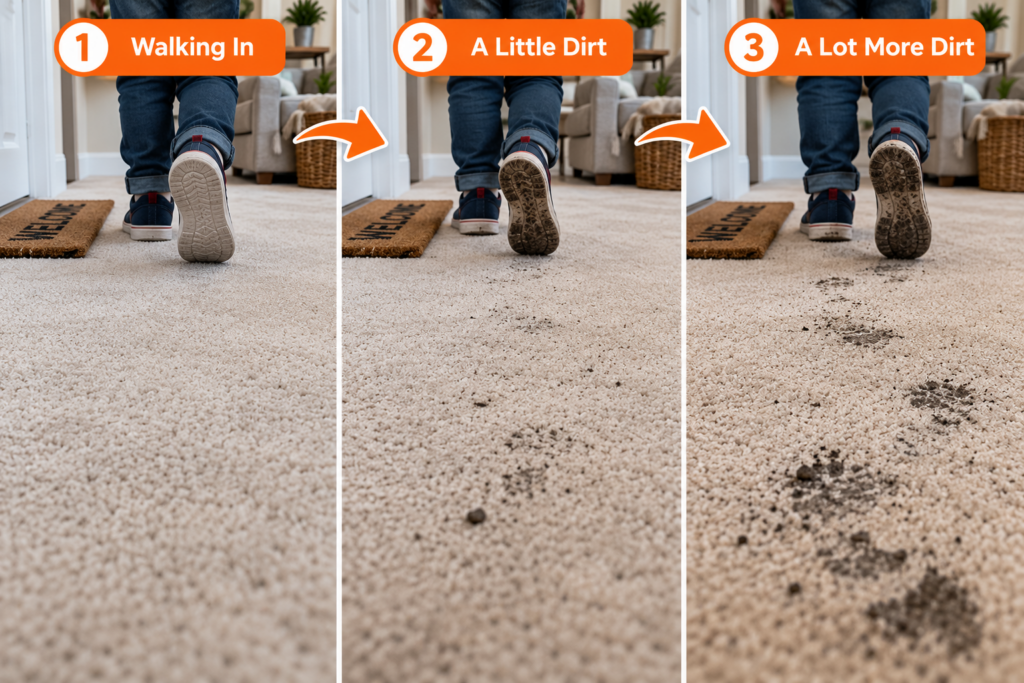
And honestly, this is something we see quite often. A carpet gets cleaned, looks great, and then normal daily life picks right back up. Entryways and high-traffic paths usually take the brunt of it.
A few practical things can help here without turning your household upside down:
- Keep a doormat outside and inside main entry points.
- Ask family members to leave shoes at the door when it’s realistic to do so.
- Wipe down pet paws after they’ve been outside, especially in wet or muddy weather.
- Vacuum entryways and hallways a little more often than other rooms.
None of this eliminates tracked in dirt completely, but it can slow down how fast it builds up.
5. The Carpet Was Staying Damp For Too Long
This was another piece of the puzzle. The carpet was taking longer than it should to dry out fully after cleaning.
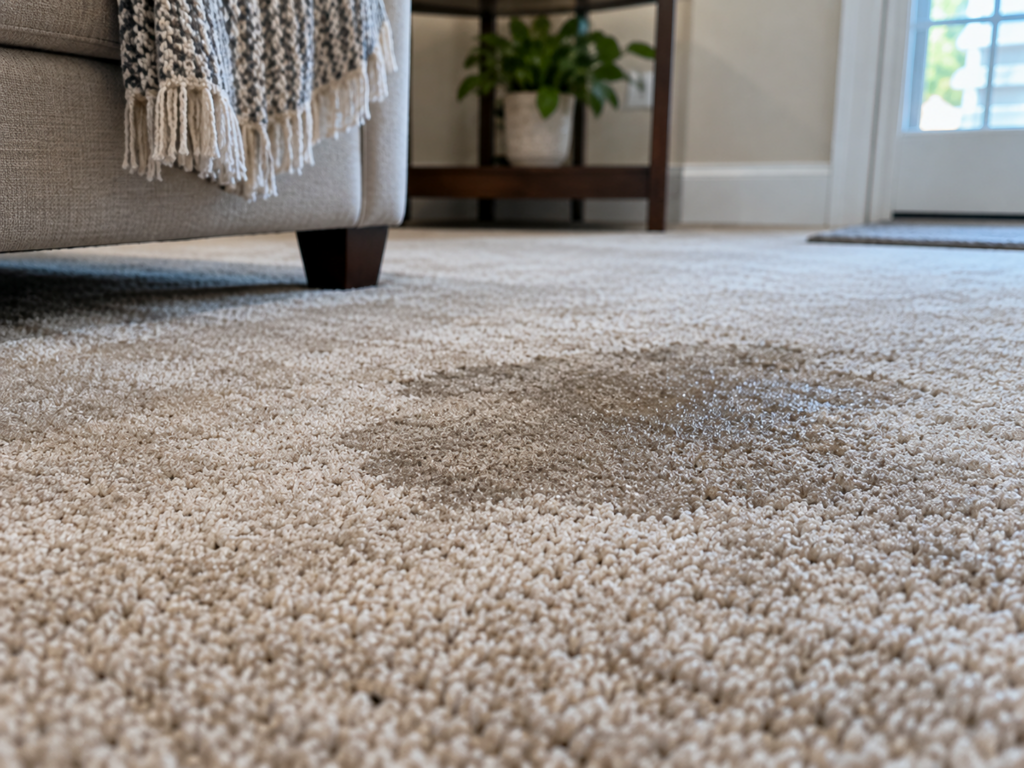
Drying time matters more than people usually realize. When a carpet stays damp for an extended period, it can start to develop a musty smell, and it can also become more likely to attract dirt while it’s still slightly moist. That doesn’t mean a damp carpet will automatically lead to mold, but staying wet longer than necessary isn’t ideal either.
A few things affect how quickly carpet dries: airflow in the room, humidity levels, how much moisture was used during cleaning, and how well that moisture gets extracted afterward. In New Jersey, especially during humid stretches of summer, drying time can stretch out longer than people expect.
Opening windows when the weather allows it, running fans or a dehumidifier, and making sure the cleaning process includes proper moisture extraction can all help the carpet dry faster and more evenly.
6. The Carpet Fibers Were Worn Down In High-Traffic Areas
Here’s where things get a little tricky, because this one isn’t really about dirt at all.
In certain spots, like the main walking path through a living room, the stairs, or the area right in front of a couch, the carpet fibers had worn down and flattened out from years of foot traffic. Worn or crushed fibers don’t reflect light the same way healthy, upright fibers do, which can make that area look dingy or dirty even when it’s actually clean.
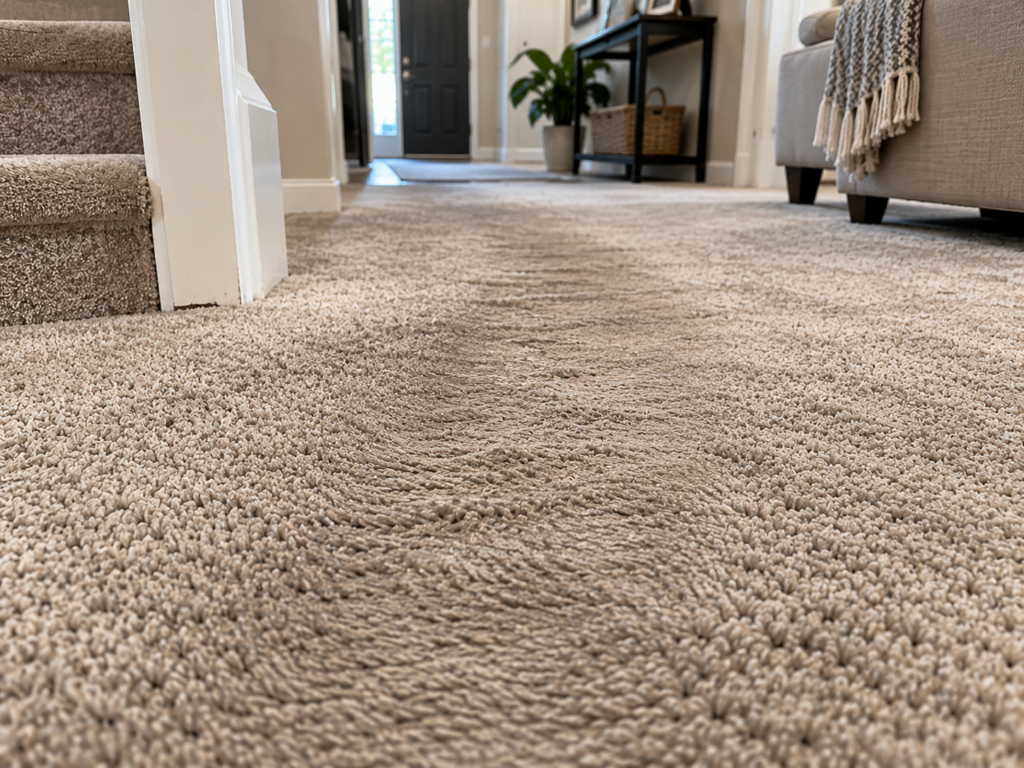
Once we saw that, the problem made a lot more sense. No amount of cleaning is going to fully restore fibers that have been physically flattened or worn thin over time. Cleaning removes dirt and stains, but it can’t rebuild carpet material that’s simply worn out.
In other words, clean doesn’t always mean it looks brand new. It just means the dirt, oils, and buildup have been removed. If the fibers themselves are worn, some dullness may still remain, and that’s a texture issue rather than a cleaning issue.
7. The Carpet Needed More Than Another Quick Cleaning
Once we added up everything we’d found, the pattern became pretty clear. Padding holding onto old soil, embedded dirt deeper in the fibers, some leftover residue, everyday tracked in dirt, slow drying time, and worn traffic areas. That’s a lot of separate issues stacking on top of each other.
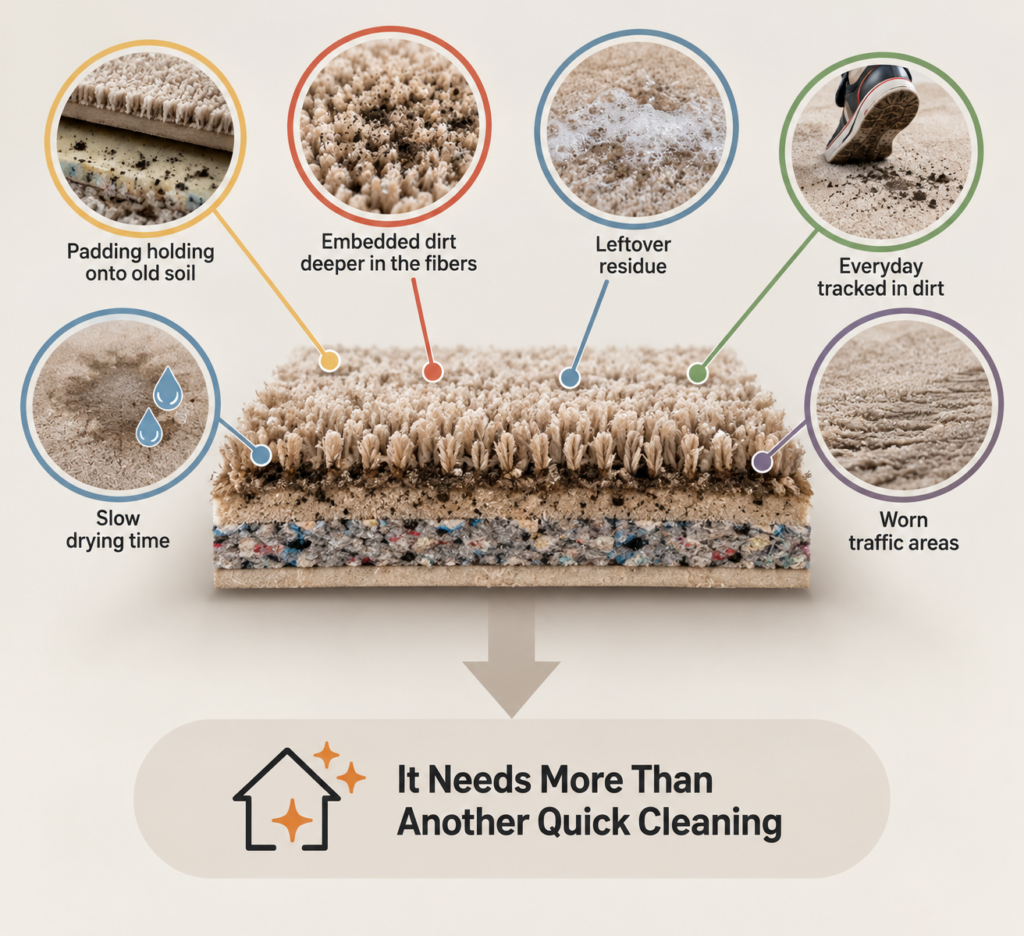
Cleaning the surface again, the same way as before, probably wasn’t going to solve much. The carpet needed a more thorough approach, one that actually addressed what was going on underneath and not just what showed up on top.
This is where things get a little tricky to explain without sounding like a sales pitch, so we’ll just say it plainly: the right approach really does depend on the carpet’s age, material, padding condition, how much soil has built up, and how it’s been cleaned before. Sometimes a deeper inspection or a professional deep carpet cleaning makes more sense than repeating the same basic routine.
How To Stop Your Carpet From Getting Dirty So Quickly
You can’t eliminate re-soiling completely, carpets are meant to be walked on, after all, but a few small habits can slow it down quite a bit.
- Vacuum regularly, and go over high-traffic areas more than once if needed.
- Pay extra attention to entryways, hallways, and spots near furniture.
- Use doormats at every entrance, inside and out.
- Remove shoes when it’s practical for your household.
- Clean up spills as soon as they happen instead of letting them sit.
- Avoid using more cleaning product than necessary when spot cleaning.
- Let the carpet dry fully and avoid heavy foot traffic while it’s still damp.
- Schedule a professional cleaning when the carpet actually needs a deeper clean, not just a quick touch up.
None of this requires a complicated routine. It’s mostly about being a little more consistent with the basics.
When Should You Have Your Carpet Professionally Cleaned?
There’s no single answer that fits every household, but a few factors tend to matter most: how many people live in the home, whether you have pets or young kids, how much foot traffic the carpet sees, and whether anyone in the house deals with allergies or sensitivities.
As a general rule of thumb, many households find that having carpets professionally cleaned every twelve to eighteen months works well, with busier or pet-friendly homes sometimes needing it more often. This isn’t a strict requirement, just a reasonable starting point. Visible soil, lingering carpet odor, stains that keep resurfacing, or a carpet that just doesn’t feel or look right after regular vacuuming are all good signs that it’s time for a deeper clean.
Final Thoughts
If your carpet keeps getting dirty no matter how often you clean it, it doesn’t necessarily mean you’re doing something wrong. There’s often more happening below the surface than what you can see, whether that’s soil trapped in the padding, dirt worked deep into the fibers, leftover residue, moisture that’s taking too long to dry, or fibers that have simply worn down from years of use.
Sometimes it’s one of these things. Sometimes it’s a few of them working together. Either way, understanding what’s actually going on underneath makes it a lot easier to figure out the right next step, whether that’s adjusting a few daily habits or bringing in professional carpet cleaning to handle what a quick clean can’t reach.
If you need help with your regular carpet cleaning, contact Citrusapeel and book your cleaning today!
Frequently Asked Questions
Why does my carpet get dirty again after cleaning?
It usually comes down to a combination of things, not just one cause. Dirt can be trapped in the padding underneath, embedded deep in the fibers, or left behind as residue from a previous cleaning. Everyday foot traffic and tracked in dirt also play a big role. In most cases, it’s not that the carpet was cleaned incorrectly, it’s that recurring dirt often has more than one source.
Why does my carpet look dirty after professional cleaning?
Sometimes this happens because the carpet is still drying and hasn’t fully settled yet. Other times, worn or crushed fibers in high-traffic areas can make a clean carpet look dull, since flattened fibers reflect light differently than upright ones. It doesn’t always mean the cleaning didn’t work.
How do I stop my carpet from getting dirty so quickly?
Regular vacuuming, doormats at entrances, removing shoes when possible, and cleaning up spills quickly all help. Avoiding excess cleaning product and letting carpet dry fully after cleaning can also reduce how fast dirt builds back up.
Can dirty carpet padding make the carpet look dirty?
Yes, in some cases. Padding can hold onto soil, moisture, or residue that eventually works its way back toward the surface. This is more likely in older carpets or ones that have dealt with spills or pet accidents over time.
How often should carpets be professionally cleaned?
It depends on the household, but every twelve to eighteen months is a reasonable general guideline for many homes. Pets, kids, heavy foot traffic, or allergy concerns can mean cleaning more often makes sense.