

Picture this. You’re carrying a mug of coffee across the living room, someone brushes past you, and half of it lands on your wool rug. Or the dog has an accident on the Persian rug you inherited from your grandmother. Or the kids tracked in mud after a rainy afternoon. Whatever the mess, your first instinct is probably to grab a bucket of water and start scrubbing. Right?
Well, here’s the thing. That instinct works fine on a lot of synthetic carpet. But on a wool or Persian rug, it can turn a small problem into an expensive one.
You see, Wool and Persian rugs are made from natural fibers that soak up moisture, and many of them use dyes that don’t like getting soaked. Too much water can lead to:
- Color bleeding.
- Shrinking.
- Fiber damage.
- Backing damage.
- Very slow drying.
- Mildew or musty odors.
- Water marks.
- Distortion, like a rug that ripples or won’t lie flat.
But the good news is that you don’t have to avoid water completely. The safest approach comes down to controlled moisture, gentle cleaning, and proper drying.
That’s what this article is all about. Below, you’ll see how to clean wool rugs at home, which mistakes cause the most damage, how to dry a wool rug the right way, and how to tell when a rug is better off with a professional.
TL; DR
- Wool and Persian rugs can be cleaned with water, but only in small, controlled amounts, since soaking risks color bleeding, shrinking, and slow drying.
- Check the care label, test a hidden spot for colorfastness, vacuum gently, and blot spills with white cloths instead of scrubbing.
- Dry the rug quickly with fans and airflow, skip high heat, and keep furniture off it until it’s completely dry.
- Call a professional for antique, valuable, or heavily stained rugs, extensive pet urine, mold concerns, or dye bleeding you can’t stop.
Why Wool And Persian Rugs Need Special Care
Wool is a natural fiber, and it doesn’t act like nylon or polyester. It soaks up liquid easily and holds on to it. It also has natural oils that help it resist dirt, and harsh cleaners or heavy scrubbing can strip those away. Add hot water and a lot of rubbing, and wool fibers can mat together (this is called felting). You can’t undo that.
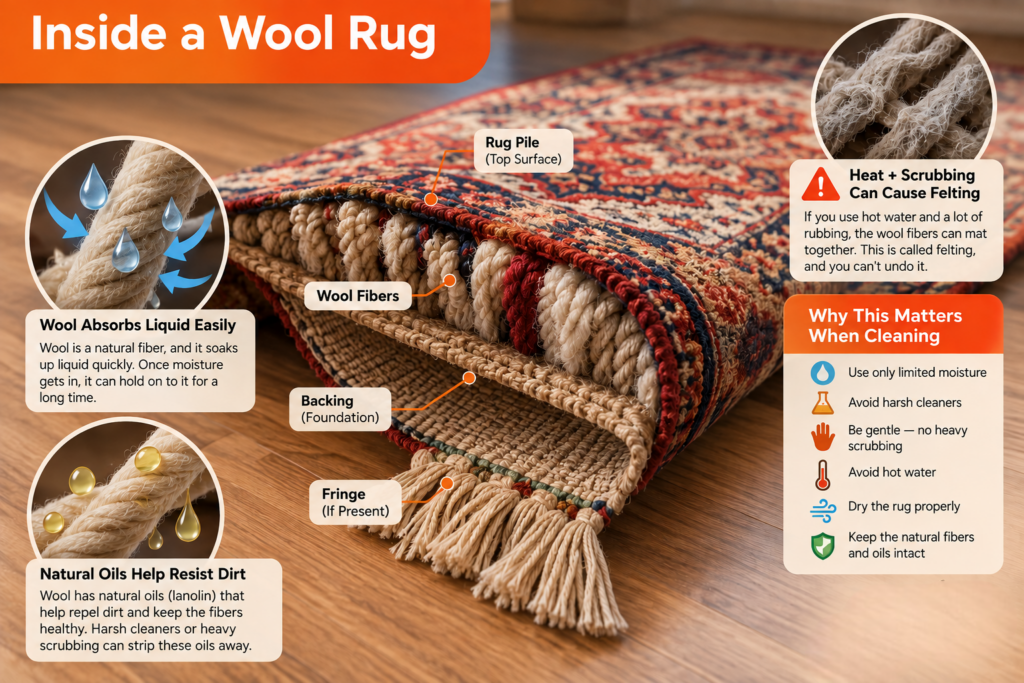
Then there are the dyes. Persian rugs are often handmade, and the dyes used to color them vary a lot from rug to rug. Some are very stable. Others, especially in older rugs or in deep colors like red, can run when they get wet. You usually can’t tell just by looking.
Here’s a quick look at what makes these rugs different from a standard carpet:
| Rug feature | Why it matters when cleaning |
|---|---|
| Wool fibers | They absorb moisture, and heat plus rubbing can make them mat or felt. Harsh, high-pH cleaners can damage them too. |
| Natural oils | These help wool shed soil, but strong products can strip them and leave fibers dull or rough. |
| Dyes | They can be natural or synthetic and vary from rug to rug. Some may bleed when wet. |
| Foundation | These are the threads that hold the pile in place, often cotton and sometimes wool. They can shrink or stay damp for a long time. |
| Handmade construction | Tension and thickness aren’t perfectly even, so one area can react to moisture differently than another. |
| Fringe | It’s part of the foundation, so it can be damaged by vacuum brushes and rough handling, and it can pick up dye from a wet rug. |
| Age and wear | Older fibers can be weaker, and past repairs may not hold up well to moisture. |
Now, a fair warning in the other direction. Not every Persian rug is an antique, and not every one is fragile. Some are newer, some are machine-made, and plenty are sturdier than people expect. But if you don’t know what you have, treat it as delicate until you learn otherwise.
Persian rugs belong to the wider family of Oriental rugs, and cleaning Oriental rugs generally calls for the same cautious approach. So if you’re wondering how to clean Persian rugs, the short answer is gently, with less water than you’d expect, and with a lot of patience.
If the rug is antique, valuable, or sentimental, the rules change a bit. We’ll get to that in the professional cleaning section.
Can You Clean A Wool Or Persian Rug With Water?
Yes, in most cases you can use a small amount of water on a wool or Persian rug, but how much you use matters. Light damp cleaning and careful spot cleaning are often fine if the dyes hold up. Soaking the rug at home is where trouble starts, since it can cause bleeding, shrinking, and slow drying.
Water isn’t the villain here. The problem is uncontrolled moisture: too much of it, too hot, mixed with the wrong product, and left sitting too long.
It helps to think of it as three different levels:
| Approach | What it looks like | Risk at home | Best for |
|---|---|---|---|
| Spot cleaning | Treating one small area with a damp white cloth and a little wool-safe cleaner | Lower, if you go slowly | Fresh spills and small marks |
| Light damp cleaning | Lightly dampening a larger area, blotting it, then drying it fast | Moderate | Dull patches on sturdy rugs that passed a colorfastness test |
| Full soaking | Wetting the rug all the way through to the foundation | High | Usually better left to a professional who can control rinsing and drying |
So why is soaking such a big deal at home? Because you lose control. A soaked wool rug is heavy, hard to rinse evenly, and slow to dry. While it sits wet, dye can move, the foundation can shrink, and the underside can stay damp, sometimes for days. There’s no undo button for any of that.
What You Need Before Cleaning A Wool Rug
Gather your supplies first. Trying to hunt down a clean towel while a stain sets is no fun. Here’s the list:
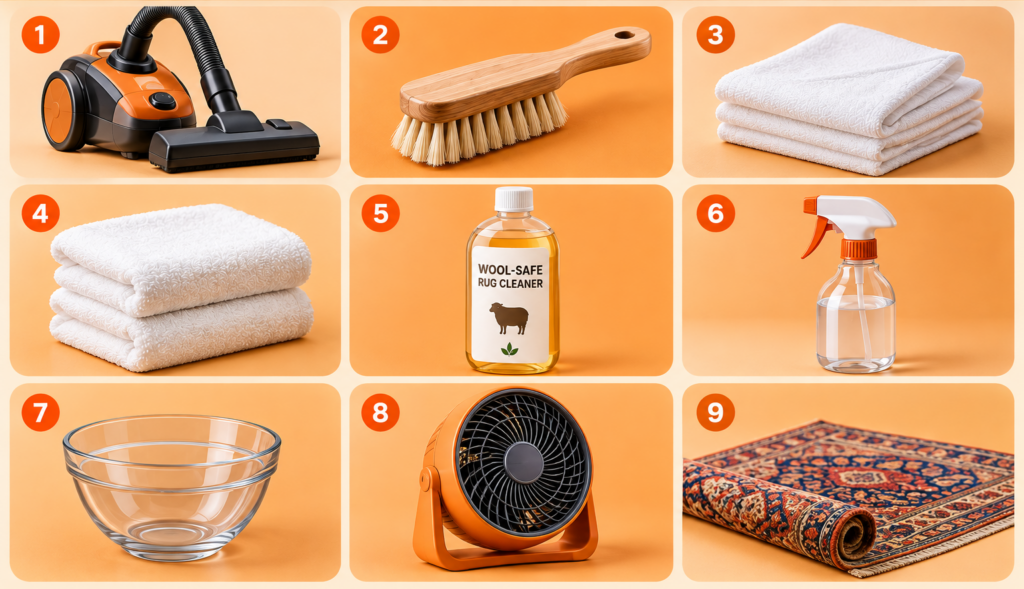
- A vacuum with adjustable settings. Ideally, you can turn off the beater bar or use a suction-only attachment.
- A soft-bristle brush. Only use it if the pile can handle it, and keep your touch light.
- White microfiber cloths. Plain white ones only.
- Clean white towels. These are for blotting and pressing out moisture.
- A mild, wool-safe cleaning solution. Look for a product labeled safe for wool and follow the dilution directions on the label.
- A spray bottle. Use it to lightly mist your cloth, not the rug.
- A bowl or small container. It’s handy for mixing your solution and for a separate bowl of plain water.
- A fan or two. Airflow is your best friend during drying.
- A clean, dry, flat spot. You need a place where the rug can lie while you work and while it dries.
Why white cloths? Colored cloths can transfer dye onto a damp rug, and then you won’t know whether the color on your cloth came from the towel or from the rug. White cloths also make it easy to spot if the rug’s dye is starting to lift. That’s your early warning.
And a quick word on what to leave in the cabinet. Skip bleach, ammonia, and general-purpose household cleaners. They’re too harsh for wool and for many rug dyes.
How To Clean Wool Rugs Safely At Home (Step-by-Step)
To clean a wool rug at home, follow the steps below. Each step protects the next one, so try not to skip ahead. The same steps work whether you’re figuring out how to clean a wool area rug in a bedroom or a larger rug in the living room.
1. Check The Care Label
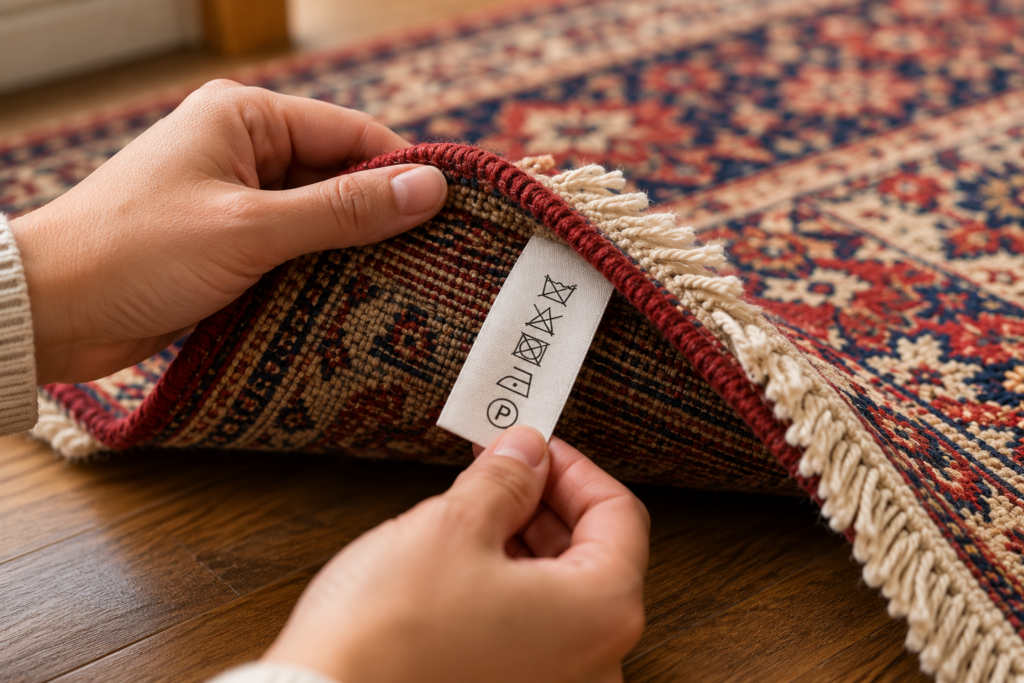
Before you do anything else, check the rug. Most newer rugs have a tag on the back with the fiber content and care notes. Sounds obvious, right? But this step gets skipped all the time. Especially during harsh weather times when things really need cleaning.
If the label says “professional cleaning only” or “dry clean only,” believe it. If there’s no label at all, which is common with older or handmade Persian rugs, treat the rug as delicate and be extra careful with the next step. If you bought the rug from a dealer, their paperwork may include care notes too.
2. Test For Colorfastness
This is where you want to slow down. A colorfastness test takes a few minutes and can save the whole rug. Here’s how to do it:
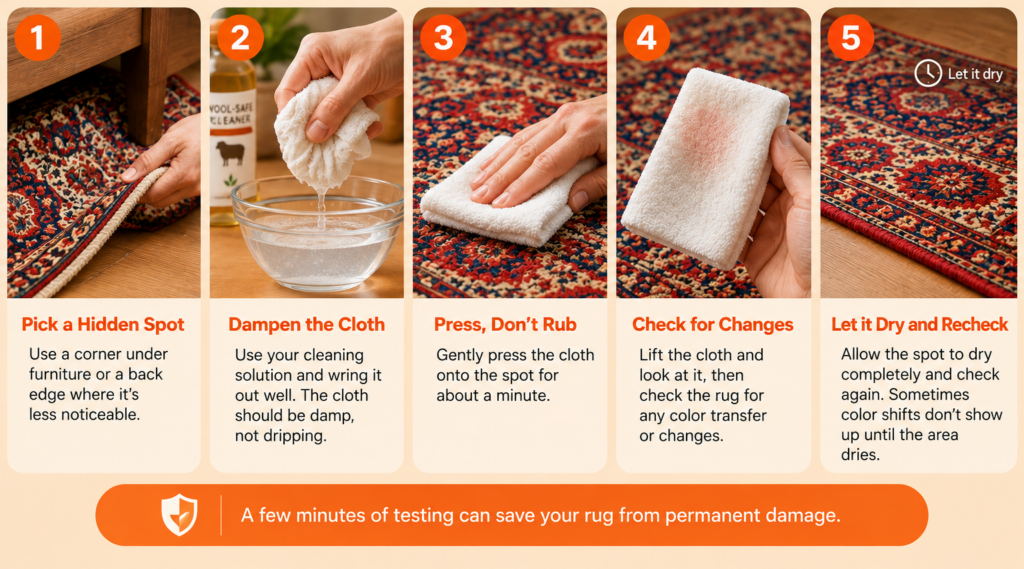
- Pick a hidden spot, like a corner that sits under furniture or a bit of the back edge.
- Dampen the white cloth with the cleaning solution you plan to use. Wring it out well. It should be damp, not dripping.
- Press the cloth onto the spot for about a minute. Don’t rub.
- Lift the cloth and look at it, then look at the rug.
- Let the spot dry and check it again. Sometimes color shifts don’t show up until the area dries.
Test more than one color if you can, especially reds, dark blues, and any dark shade sitting next to a light one. Those are the usual suspects for bleeding.
Here’s what bleeding can look like:
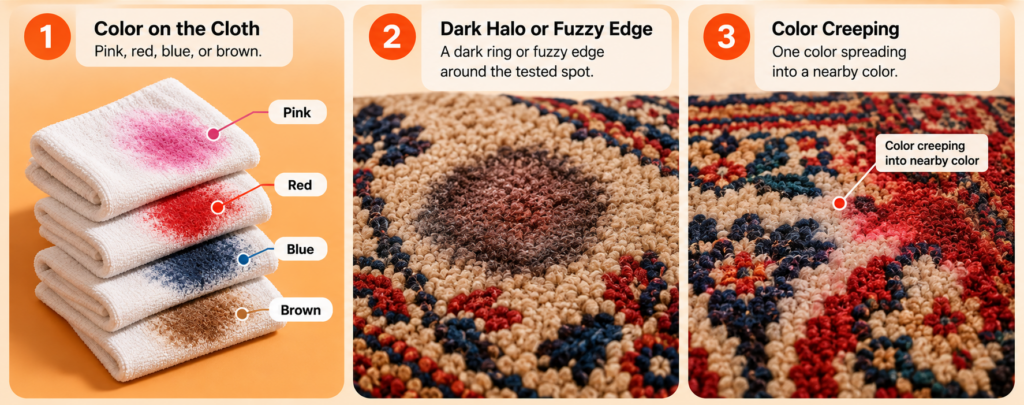
- Pink, red, blue, or brown color on the white cloth.
- A dark halo or fuzzy edge around the tested spot.
- One color creeping into the color beside it.
A few loose fibers on the cloth are normal. Color is not.
If the cloth comes away with dye on it, stop. Don’t keep cleaning at home. Blot the area dry and talk to a professional rug cleaner.
3. Vacuum The Rug Carefully
Vacuuming comes before any moisture. Otherwise, loose dirt turns into mud the moment things get damp. If you’re wondering how to vacuum a Persian rug, or any delicate wool rug, these habits help:
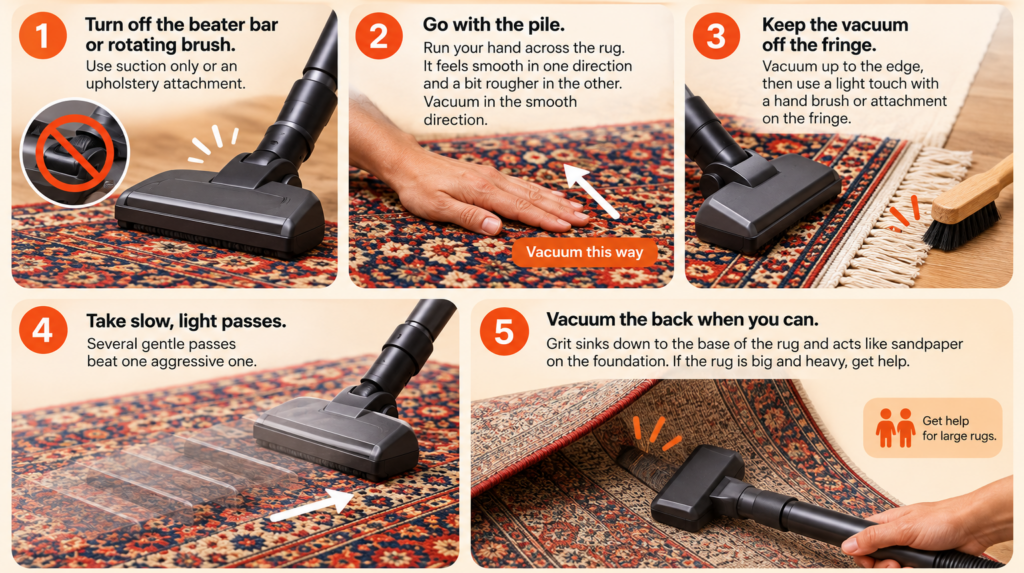
- Turn off the beater bar or rotating brush. Use suction only or an upholstery attachment. Beater bars can snag fringe, fuzz up the pile, and wear down delicate fibers.
- Go with the pile. Run your hand across the rug. It feels smooth in one direction and a bit rougher in the other. Vacuum in the smooth direction.
- Keep the vacuum off the fringe. Vacuum up to the edge, then use a light touch with a hand brush or attachment on the fringe.
- Take slow, light passes. Several gentle passes beat one aggressive one.
- Vacuum the back when you can. Grit sinks down to the base of the rug and acts like sandpaper on the foundation. If the rug is big and heavy, get help. Dragging or folding it by yourself can do more harm than good.
And skip beating or shaking the rug hard. That can stress the foundation, especially on older rugs.
4. Treat Spills Quickly
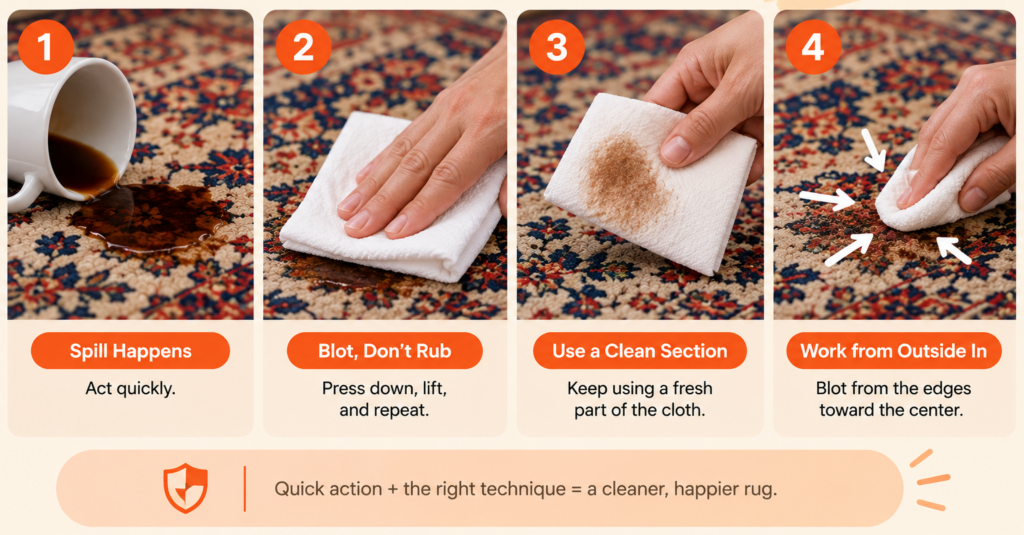
Speed matters, but so does technique. Grab a clean white cloth or plain white paper towel and blot. Press down, lift, and repeat with a fresh section of the cloth. Work from the outside edge of the spill toward the center so you don’t spread the spill.
Why not rub? Rubbing pushes liquid deeper toward the foundation and roughs up the fibers, which can leave a fuzzy, worn patch even after the stain is gone.
The first move changes a little depending on the mess. Coffee and wine need fast blotting. Food needs the solids lifted off first, with a spoon or dull knife. Mud is easier to deal with once it dries. Pet accidents need as much blotting as you can manage, and then a closer look, since urine can travel down into the rug. There’s more on each of these in the stain section below.
5. Use Very Limited Moisture
This is the heart of safe wool rug cleaning at home. The goal is to clean the affected area without wetting the rug through.
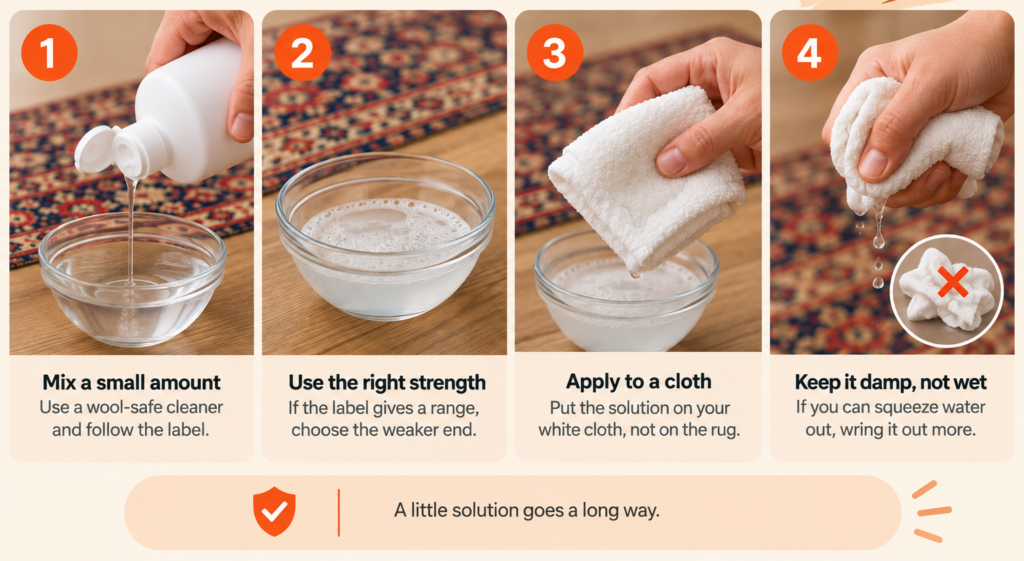
Mix a small amount of your wool-safe cleaner in a bowl according to the label. If the label gives a range, lean toward the weaker end. Then put the solution on your white cloth, not on the rug. The cloth should feel damp. If you can squeeze water out of it, wring it out more.
Prefer a spray bottle? Spray the cloth, not the rug. Work on one small section at a time.
6. Blot Instead Of Scrubbing
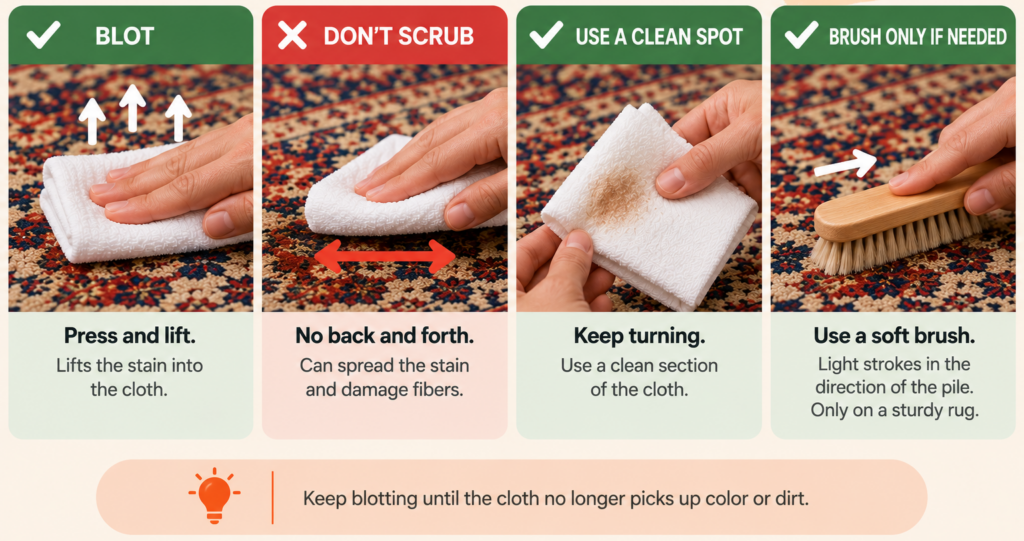
Blotting means pressing and lifting. Scrubbing means dragging the cloth back and forth. They feel similar when you’re annoyed at a stain, but they do very different things.
Blotting lifts the stain up into the cloth. Scrubbing can spread the stain, distort the pile, and make wool fibers fuzz or mat. Keep turning the cloth to a clean spot, and keep blotting until the cloth stops picking up color or dirt. If you really need a brush, use a soft one with very light strokes in the direction of the pile, and only on a sturdy rug.
Remember, patience beats pressure here.
7. Remove Residue Carefully
Cleaning product left in the rug can feel a bit sticky, and sticky fibers attract dirt. That’s how a spot you just cleaned ends up looking dirty again a few weeks later.
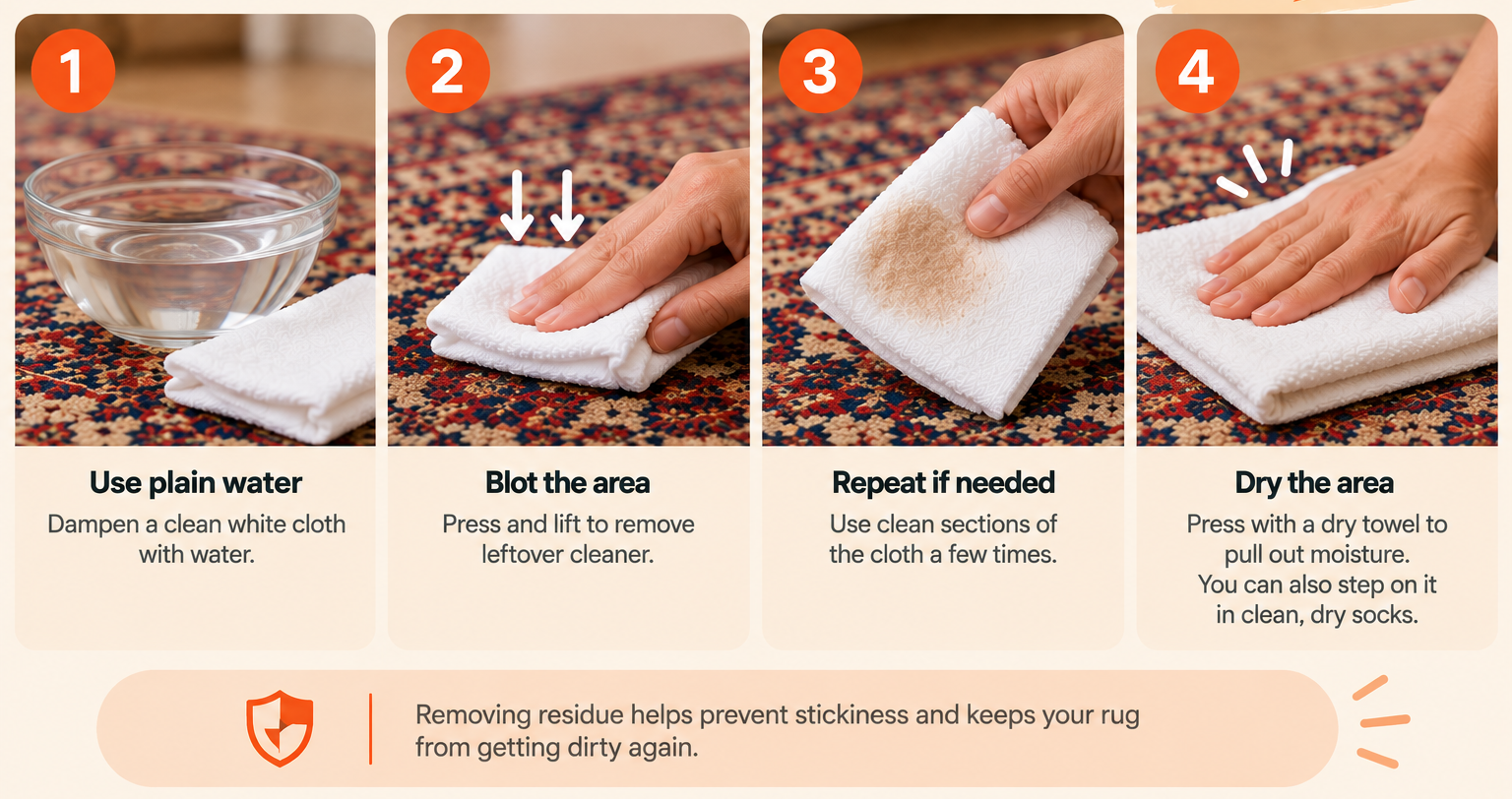
You don’t need a big rinse. In fact, you don’t want one. Go over the area with a second white cloth dampened with plain water, and blot to lift out leftover cleaner. Repeat a couple of times with clean sections of the cloth. Then press a dry white towel firmly onto the area to pull out moisture. Pressing with your hands works, or you can step on the towel in clean, dry socks.
Blotting just a little past the edge of the cleaned spot also helps blend the moisture so it dries evenly.
8. Dry The Rug Quickly And Completely
Don’t skip this part. Drying is part of the cleaning, not an afterthought.
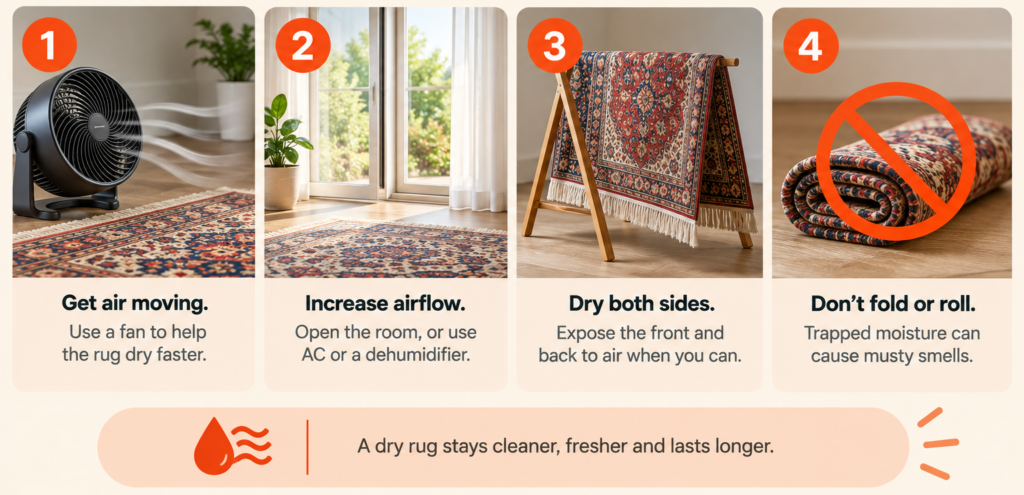
The basics are simple. Get air moving across the rug with a fan. Open the room up or run the air conditioner or a dehumidifier. Expose both sides of the rug to air when you can. And don’t fold or roll a damp rug, because trapped moisture is exactly how musty smells start.
How long does it take? It depends on the rug’s construction, how much moisture went in, the humidity, the airflow, and the temperature of the room. Nobody can give you a single number that fits every rug, so check by touch instead of watching the clock. There’s a full drying section below with more detail.
How To Remove Common Stains From Wool And Persian Rugs
Here’s how to remove stains from wool rugs without making things worse. Stain chemistry varies, and a method that works on coffee may do nothing for grease, so treat this table as a starting point and not a guarantee.
| Stain | What to do | What to avoid |
|---|---|---|
| Coffee | Blot quickly. Then dab with a white cloth lightly dampened with mild wool-safe cleaning solution and blot again. | Scrubbing, which spreads the stain and roughs up the fibers |
| Wine | Blot right away, working from the outside edge inward so it doesn’t spread. Dab with a little cool water on a cloth if needed. | Pouring large amounts of water on it |
| Food | Lift solids with a spoon or dull knife, then blot what’s left. | Rubbing food deeper into the pile |
| Pet urine | Blot up as much as you can, right away. For anything beyond a small, fresh accident, get professional treatment (see [pet stain and odor removal]). | Saturating the rug, or masking the smell with scented sprays |
| Mud | Let it dry when possible, then break up the dried bits and vacuum loose material. Blot any leftover mark. | Scrubbing wet mud into the pile |
| Grease | Blot the excess, sprinkle plain cornstarch to soak up oil, let it sit, then vacuum. Use a suitable wool-safe method for any leftover mark. | Strong household degreasers |
Some stains just won’t cooperate at home, and that’s okay. Old, set-in stains, mystery stains, and anything with dye in it (red drinks, ink, markers) are tricky. So is pet urine that has dried and soaked down into the foundation.
The problem is that every new product you try adds another variable. Stacking one cleaner on top of another can set the stain or damage the dye. If a stain has been there for weeks, or you don’t know what caused it, don’t experiment. Pause and get advice.
What NOT To Do When Cleaning A Wool Or Persian Rug
If you’re dealing with an expensive Persian rug, don’t take chances. Most rug disasters come from a short list of mistakes, and they’re easy to avoid once you know them.
| Mistake | Why it causes trouble |
|---|---|
| Soaking the rug | Water reaches the foundation, and the rug can take a long time to dry. Dyes can bleed, the foundation can shrink, and mildew can start. |
| Using a garden hose | It puts too much water and pressure on the rug, can drive dirt deeper, and can leave the whole rug soaked. |
| Using too much detergent | Leftover soap stays in the fibers and attracts dirt. More soap doesn’t mean cleaner. |
| Using bleach | Chlorine bleach can badly damage wool fibers and strip color. |
| Using harsh household cleaners | Strong, high-pH products (many all-purpose and ammonia-based cleaners) can harm wool and affect dyes. |
| Scrubbing aggressively | It roughs up the pile, can mat the fibers, and pushes the stain deeper. |
| Using very hot water | Heat plus moisture plus rubbing can felt wool and make dyes run. It can also set some stains. |
| Leaving the rug wet | Slow drying invites mildew, musty smells, and water marks. |
| Putting a damp rug back on the floor | Moisture gets trapped, and it can mark or damage the floor underneath. Dye can transfer onto the floor as well. |
| Using high heat to dry it | Hair dryers, heaters, and hot direct sun can dry the rug unevenly, fade colors, and leave fibers stiff. |
| Ignoring color bleeding | A small bleed can spread across the rug if you keep going. Stop the moment you see it. |
| Cleaning a valuable antique rug without checking its condition | Older fibers, foundations, past repairs, and unknown dyes may not tolerate moisture or cleaning products. |
| Using a carpet-cleaning machine without checking that it suits the rug | Many home and rental machines put down a lot of water, don’t pull enough out, and can use brushes that are too rough. |
Notice a pattern? Nearly all of these come down to too much water, too much force, or too much heat.
How Water Can Damage A Wool Or Persian Rug
Wool rug water damage doesn’t always show up right away. Sometimes the rug looks fine on day one and starts to smell or warp a few days later. Here’s what excess moisture can do.
Color Bleeding
Dyes are attached to the fibers, but not always permanently, when the fibers get wet. When a rug is soaked, some dyes loosen and travel along the wet fibers. That’s how red ends up bleeding into a cream border, or a dark blue leaves a halo around a light pattern.
Color bleeding is one of the most common forms of Persian rug water damage, and one of the hardest to reverse. Once dye spreads through wet pile and dries there, fixing it can be difficult. Hot water and strong cleaners can make it worse.
Shrinking And Distortion
Wool can shrink and felt with heat, moisture, and rubbing. The foundation underneath can tighten as it dries too, especially if it’s cotton. If different parts of the rug shrink by different amounts, you can end up with ripples, buckled spots, curled edges, or a rug that won’t lie flat.
Mild distortion can sometimes be improved by a professional, but it’s a lot easier to prevent than to fix.
Backing And Foundation Damage
A rug is built in layers. The pile is on top, and the foundation (or backing) is underneath. If moisture sits in the foundation for too long, it can weaken the threads, break down adhesives on some rugs, or cause the backing to separate.
The tricky part is that foundation damage isn’t always visible from the top. The rug can look okay while the underside is still damp.
Mildew And Odors
Damp wool that dries slowly, especially in a humid room or a basement, can start to smell musty. Materials that stay wet for a day or two can begin to grow mold or mildew. That musty smell is your rug telling you it’s been wet too long.
Mold can also bother people with allergies or breathing problems, so if you smell it or see it, don’t ignore it.
Water Marks
Uneven moisture can leave rings or tide lines. As a wet area dries, dirt and dissolved material get pulled toward the edge of the damp spot and can leave a visible ring. On some rugs, slow drying can also pull yellow or brown color up from the foundation into the pile.
Sounds odd, but a small spill can leave a bigger mark if you wet just the spot and then let it dry unevenly. That’s why you keep the wet area small, blot away residue, and dry the rug evenly.
How Often Should You Clean A Wool Or Persian Rug?
There’s no perfect schedule like carpets, and anyone who gives you one number for every home is guessing. How often you should clean a wool rug depends on a few things:
- Foot traffic. A rug in a hallway takes a lot more punishment than one in a guest room.
- Pets. Hair, dander, and accidents add up.
- Children. Spills and snacks happen.
- Shoes indoors. Shoes carry in grit and outdoor soil.
- Indoor air quality. Homes with smoke, cooking fumes, or lots of dust often need cleaning sooner.
- Allergies. If someone in the house is sensitive to dust, you may want to clean more often.
- Rug color. Light rugs show dirt faster than dark ones.
- Location. Entryways and rooms next to kitchens get dirtier.
- Spills. One big accident can change the schedule.
Regular vacuuming does most of the work between deeper cleanings, because grit is the real enemy. It works its way down and wears at the fibers. Rotating the rug every six months or so also helps it wear evenly.
Here’s a rough starting point. Treat it as a guide, not a rule:
| Situation | Vacuuming | Deeper cleaning |
|---|---|---|
| Low-traffic room, no pets | Weekly or every couple of weeks | Every 2 to 3 years |
| Busy living room or hallway, with kids | Once or twice a week | Every 1 to 2 years |
| Pets or shoes worn indoors | Two or more times a week | Every 6 to 12 months |
| Allergy concerns | At least weekly, with a vacuum that has a good filter | Every 6 to 12 months, or as needed |
Adjust based on what you see, smell, and feel. If the rug looks dull, feels gritty, or smells a little off, it’s probably ready for more than a vacuum.
When You Should Call A Professional Rug Cleaner
Plenty of everyday wool rugs do fine with regular vacuuming and careful spot cleaning at home. But some situations are better handled by someone who does this for a living. Consider calling in a pro if you’re dealing with:
- An antique Persian rug. Older fibers and unknown dyes are hard to predict.
- An expensive or sentimental rug. If losing it would hurt, don’t gamble.
- Extensive pet urine. It soaks down into the foundation, and the odor can come back if it isn’t fully treated.
- Large stains. The bigger the stain, the harder it is to treat without over-wetting.
- Widespread discoloration. Overall dullness or patchy color is tough to fix with spot cleaning.
- Suspected dye bleeding. Sooner is usually better, before the dye dries in place.
- Water damage. If the rug got soaked by a leak or flood, it needs more than towels and fans.
- Mold or mildew concerns. Musty smells or visible growth call for expert help.
- A heavily soiled rug. Deep, embedded dirt is hard to remove at home without using too much water.
- A rug with unknown construction. If you can’t tell what it’s made of, you can’t tell how it will react.
- A rug already damaged by previous cleaning. Don’t add another round of trial and error.
So what does a professional (like Citrus-A-Peel) do differently? Professional wool rug cleaning starts with a look at the rug before anything gets wet. A professional can check the fibers, the dyes, the construction, and the condition, then choose a method that suits how the rug is made. They also have ways to control moisture and dry the rug properly, which is where a lot of home attempts go wrong. If you’re looking into Persian rug cleaning or general area rug cleaning, that assessment is a good thing to ask about.
A pro isn’t magic, of course. Some damage, like dye that has already spread and dried, can’t always be fully fixed. That’s why getting help before things go wrong is usually better than getting help after.
Final Thoughts
You don’t necessarily need to avoid water, but you do need to avoid uncontrolled moisture. Once you know how to clean wool rugs the careful way, most everyday messes are manageable. Work gently, use only as much moisture as you need, dry the rug quickly, and stop the moment something doesn’t look right.
And if the rug is antique, valuable, or badly stained, or you’re just not comfortable with the risk, calling a professional rug cleaner is a reasonable next step. They can look at the rug first and choose a method that fits how it’s made. That little bit of extra caution can save you from a much bigger problem later.
Frequently Asked Questions
Can you wash a wool rug with water?
Yes, but carefully. Wool can handle small amounts of water, so spot cleaning and light damp cleaning are often fine. Fully soaking a wool rug at home is risky because of color bleeding, shrinking, and slow drying. For a full wash, a professional is usually the safer choice.
Can I use a carpet cleaner on a Persian rug?
Usually it’s not a good idea. Home and rental machines can put down a lot of water, use rough brushes, and leave too much moisture behind, and you may not know how the rug’s dyes will react. Wall-to-wall wool carpet is a different story, but check the manufacturer’s instructions first and use only products labeled safe for wool. For help with that, see [carpet cleaning].
Why are the colors bleeding on my Persian rug?
The dyes may not be fully stable when wet, or the rug may have gotten too much water, heat, or a cleaner that was too strong. Stop cleaning right away, blot gently with dry white towels, and don’t use heat. Then call a professional as soon as you can, since bleeding is usually easier to deal with sooner.
How often should a wool rug be professionally cleaned?
Many rug cleaners suggest every one to three years for a typical home. Rugs in busy areas, or in homes with pets, kids, allergies, or shoes worn indoors, often benefit from more frequent cleaning. Your rug’s condition and how it looks and smells are the best guide.
What happens if a wool rug stays wet too long?
A rug that stays damp can develop a musty smell, mildew, water marks, or brown patches. Dye can bleed, the foundation can weaken, and moisture can mark the floor underneath. Mold can start growing on materials that stay wet for a day or two, so increase airflow and dehumidify quickly. If it stays damp or smells musty, get professional help.