

Can you steam clean a couch yourself? Well, sometimes, and the answer is printed on the couch’s tag.
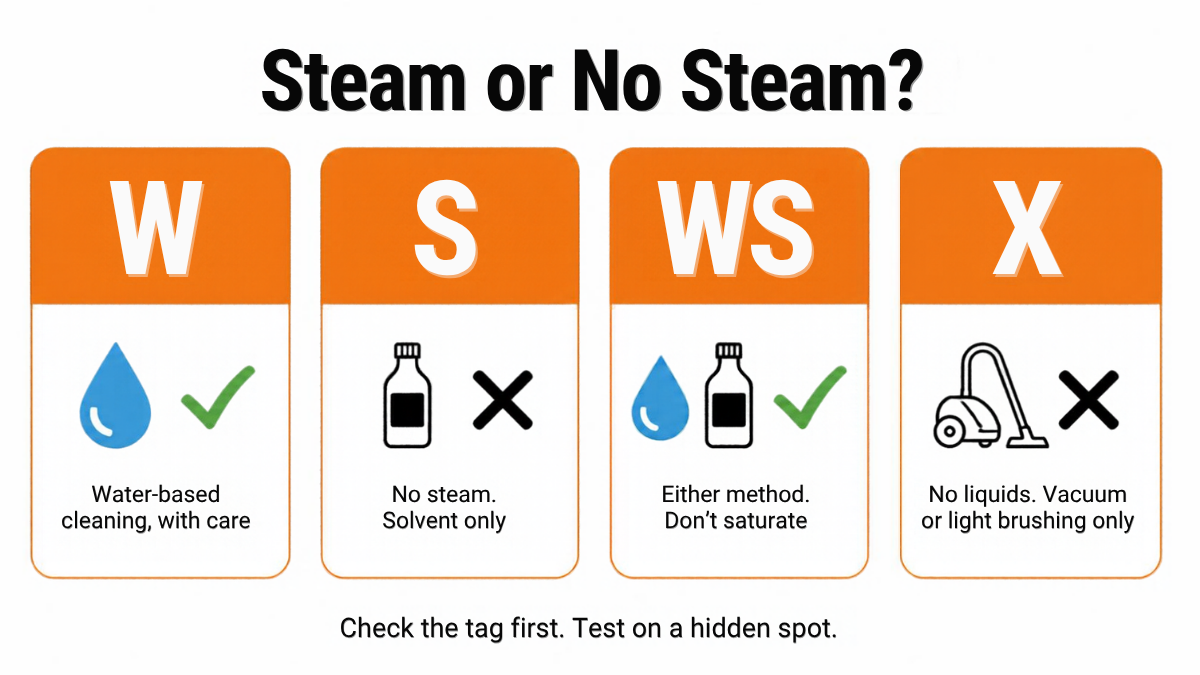
If the cleaning code says W or WS, water-based cleaning is allowed, although even then the maker wants as little moisture as possible.
If it says S, steam can cause shrinkage and staining.
If it says X, no liquid of any kind belongs on the fabric.
You see, the words “steam cleaning” also cover two different machines, a home steamer and a hot-water extractor, and they treat fabric differently. So, all you can do is lift a cushion, read the tag, test a hidden spot, and plan how the couch will dry before you plug anything in.
The sections below cover each code, the terminology, what can still go wrong, and when a professional is the safer choice.
TL;DR
- Steam is only an option when the tag says W or WS, and even then the moisture should stay low.
- S fabrics can shrink or stain with steam, and X fabrics should never get any liquid at all.
- “Steam cleaning” usually means hot-water extraction, not true steam, so ask what a machine or company really uses.
- Dry the couch within 24 to 48 hours with fans or a dehumidifier to keep mold from growing.
What Does Steam Cleaning A Couch Actually Mean?
The phrase covers two things. Some machines use true steam vapor. Others spray heated water and cleaning solution into the fabric and pull it back out with suction, which is hot-water extraction. In the trade, “steam cleaning” is usually a nickname for the second one, and carpet maker Shaw Industries says hot-water extraction is commonly referred to as “steam cleaning,” although no steam is actually generated.
So the useful question is what the machine does to your fabric: how hot it runs, how much water it uses, and how much of that water comes back out. We compared the same trade-offs on carpet in our post on steam cleaning versus DIY, and the moisture rules are tighter on a couch.
Steam Cleaning A Couch By Fabric Code At A Glance
Here is the short version, based on what furniture makers print for each code. “With care” means light moisture, not a soaked cushion.
| Code | Steam or Water-Based Cleaning? | What the Maker Says | Safer Choice |
|---|---|---|---|
| W | With care | Foam from a mild detergent or non-solvent upholstery shampoo | Foam, a soft brush, then vacuum when dry |
| S | No | Steam and water-based cleaners can cause shrinkage and staining | A mild water-free solvent or dry cleaning product |
| WS (or SW) | With care | A water-based agent or a mild solvent, and do not saturate | Choose by stain type and test first |
| X | No | No foam or liquid cleaning agents of any type | Vacuuming or light brushing only |
Can You Steam Clean A Couch With Code W?
Maybe, with light moisture. W means water-based cleaning is allowed, but C.R. Laine tells owners to use only the foam from a water-based cleaner, apply it with a soft brush, and vacuum once the fabric is dry. That is a long way from a machine that sprays hot water into a cushion. Furniture makers describe foam and small amounts of moisture for W fabric, not a method that floods it.
If you decide to use a machine anyway, follow its own manual, keep your passes slow and light, and stop if the fabric starts to feel wet. If you are not sure what the letters on your tag mean, our upholstery cleaning codes guide explains each one.
Can You Steam Clean A Couch With Code WS?
WS, sometimes written SW, allows a water-based agent or a mild water-free solvent, and the stain decides which one. C.R. Laine adds one rule that matters here: do not saturate the fabric. Pile fabrics may also need brushing afterward with a non-metallic, stiff brush to restore their appearance.
An oily stain points to the solvent, and steam adds nothing there. A water-based stain, such as spilled juice, points to light water-based cleaning. The fabric company Reid Witlin notes that the pretest is especially important on WS fabric, so test a hidden spot before anything touches the stain.
Can You Steam Clean A Couch With Code S?
No. The code means solvent only. C.R. Laine states that steam or water-based cleaners may cause excessive shrinkage and staining on S fabric, and American Leather warns that water can cause damage or leave unsightly rings. A steam cleaner adds exactly the thing the fabric cannot take.
Use a mild, water-free solvent or dry cleaning product instead, and treat it as spot cleaning only. Work in a well-ventilated room and keep flames away, since some solvents are flammable and some are toxic.
Can You Steam Clean A Couch With Code X?
No, and neither can foam or a spray. X means no foam or liquid cleaning agents of any type, and the maker’s advice is to clean only by vacuuming or light brushing with a non-metallic, stiff brush. American Leather goes further and calls X a clear sign not to attempt cleaning it yourself.
If a stain needs more than a vacuum, ask the store where you bought the couch or call a professional. A professional can look at the fabric and tell you what, if anything, is safe.
What If The Tag Is Missing?
There is no official rule for an unknown fabric, so leave the steamer in the closet. Ask the store or the maker for the code, and check for a paper hang tag. Then start dry: vacuum the area and blot a fresh spill with a clean, dry white cloth. Our guide to cleaning a couch lists the dry-first steps in order.
Before you use any product, test it in a spot nobody sees. NMSU Extension recommends pretesting in an inconspicuous spot for discoloration, surface damage, or color fading or running. If the test leaves a ring, a color shift, or a stiff patch, stop and ask a professional.
What Else Can Go Wrong, Even on A ‘W’ Fabric?
A code is a starting point, not a guarantee. These are the usual ways a careful job still goes wrong:
- Too much water. NMSU says to use as little moisture as possible, and thick cushions can take a long time to dry if you overdo it.
- Heat on a stain. The same guide warns that heat can set a stain permanently, which is why it says not to press stained fabric. Test how a stain reacts before you add heat.
- Removing cushion covers. Don’t take off zippered covers for separate cleaning or washing, because it can cause shrinkage, damage to the fabric backing, or color change.
- Colorfastness. The code says what kind of cleaner is allowed, not that the dye will hold, which is why the hidden-spot test still matters.
A fresh spill is a blot job first. Our case study of a coffee-stained couch shows what to do in the first few minutes, before any machine comes out.
How Should You Dry A Couch After Steam Cleaning?
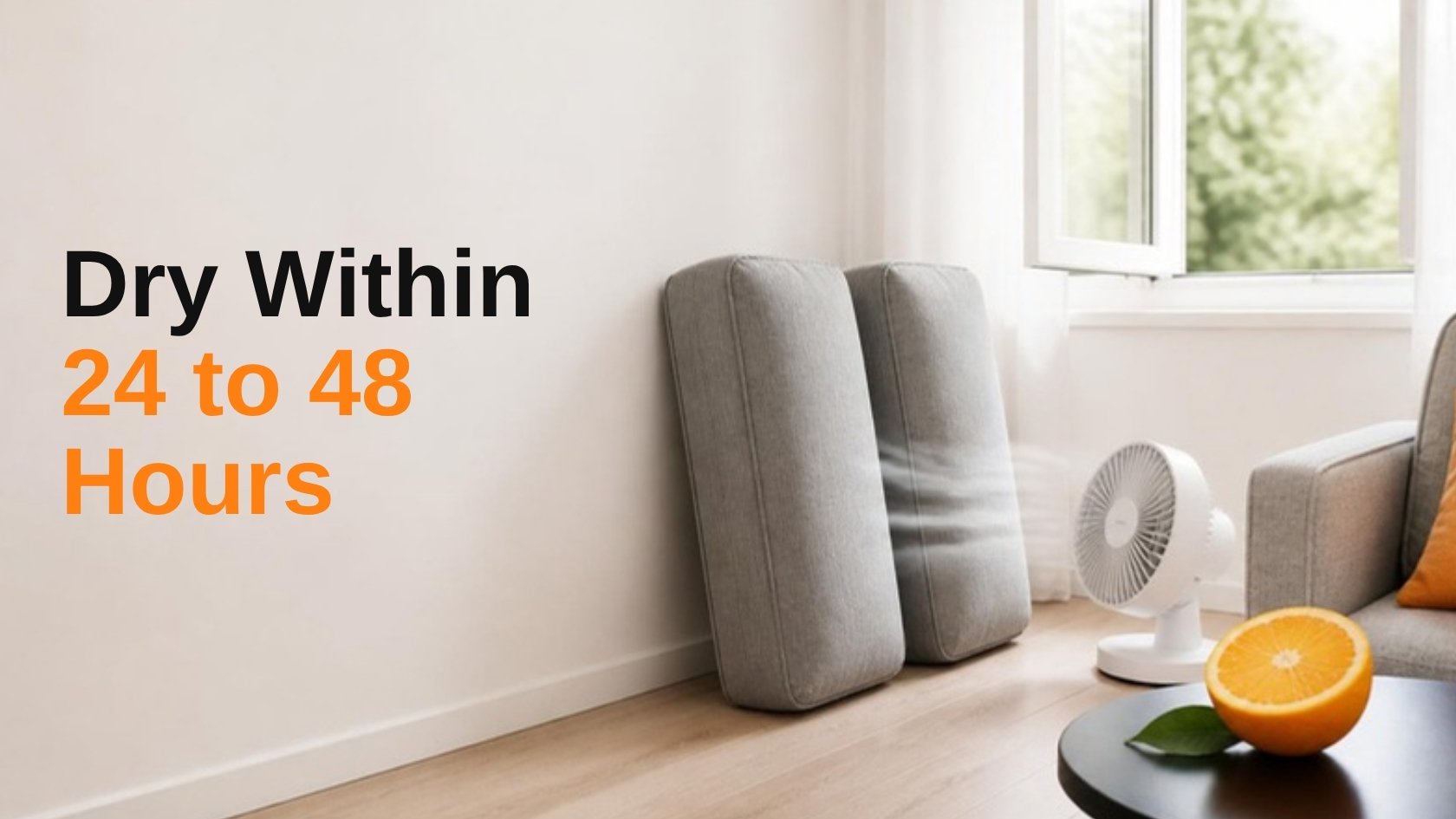
Drying is where a water-based job succeeds or fails. The EPA says to dry wet items within 24 to 48 hours, because in most cases mold will not grow if damp materials are dried in that window. Open a window, point a fan across the cushions, and run the air conditioner or a dehumidifier when the New Jersey air is muggy. Stand the cushions on their sides so air reaches them, and keep everyone off the couch until the fabric is fully dry.
The same moisture rule applies to carpet, and our post on carpet drying times explains what to expect after a professional clean.
When Should You Hire a Professional Instead?
Call a professional when the code is S or X, when the stain is bigger than a spot, when you can’t identify the fabric, or when the whole couch looks dull (our post on professional sofa cleaning lists the signs). Those are the jobs where a rented machine is most likely to do harm. Professional upholstery cleaning has a published standard, ANSI/IICRC S300, which covers fibers and construction, pre-cleaning inspection, cleaning methods, and spot and stain removal.
If your couch is W or WS and needs a full refresh, our carpet and upholstery cleaning service uses hot-water extraction, so tell us the code on your tag when you ask.
Key Takeaway
Steam is not a yes or no question for the whole couch. It is a yes or no question for your fabric, and the tag answers it. Match the method to the letter, keep moisture low, test a hidden spot, and dry the couch fast. If the code is S or X, or you can’t find a tag, a professional look is the safest next step.
When you would rather hand it off, get in touch and mention the code on your tag.
Frequently Asked Questions
Can You Steam Clean A Couch With An S Code?
No. S means solvent only, and steam or water-based cleaners can cause excessive shrinkage and staining. Use a mild water-free solvent instead, tested on a hidden spot first.
Is Steam Cleaning The Same As Hot-Water Extraction?
Not exactly. Hot-water extraction sprays heated water and pulls it back out, and it is commonly called steam cleaning, although no steam is actually generated.
How Long Does A Couch Take To Dry After Steam Cleaning?
It depends on the fabric, the water used, and airflow. Aim for dry within 24 to 48 hours, using fans or a dehumidifier, so mold does not grow.
Can You Steam Clean A Couch With No Tag?
It is risky. Ask the store or maker for the code, test a hidden spot with as little moisture as possible, or have a professional check the fabric first.